Siambr · Member of the Senedd · Register of record
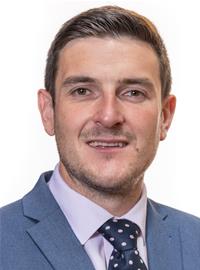
James Evans
Tenures
- Sixth Senedd Brycheiniog Tawe Nedd Reform UK
- Seventh Senedd Brycheiniog Tawe Nedd Reform UK
Ministerial roles
No ministerial roles on record.
Contributions, by sitting day
68 contributions on record, newest first. Official verbatim record.
4
Open this sitting on the stage
7. Reform UK Debate: Prostate cancer strategy en
Would the Member take an intervention?
7. Reform UK Debate: Prostate cancer strategy en
Thanks for taking the intervention. On top of those things that you've just listed, though, I think you have to recognise that, even through my time in the Senedd, when we were looking at waiting lists, actually cancer waiting lists targets were missed almost every time they were coming out from the centre of Welsh Government. So, do you admit that, actually, that's one thing in Government that you actually got wrong, that you never actually got on top of cancer waiting lists in Wales?
7. Reform UK Debate: Prostate cancer strategy en
Diolch, Llywydd. Can I just start by thanking all Members who've contributed to this debate, and also the Members who haven't contributed, but have actually sat through and listened to the debate? Because I think it's very nice that we've got a debate that galvanises the whole Chamber together. With all of the rumpus conversations that we have in here, it is quite nice to have some that do bring us together. Ben opened the debate and, as you said, it's the most common cause of cancer in men: 2,500 people diagnosed and, as many people, like yourself, said, 640 of those sadly passing away—sadly too young, a lot of them as well, because the diagnosis wasn't caught early. And that only 54 per cent of men in Wales are accessing rapid treatment compared to 69 per cent in England, and that's something that should concern us all. I know the Cabinet Secretary highlighted—I'll come on to it later—about wanting to be the best in Europe, and I share that ambition, I'm sure we all do, but we need to put a laser focus on this area of cancer, because it is preventable if it is caught early enough. You also raised the issue, as a lot of Members did, around data. It's something that a number of us who've been here a long time have always heard about cancer care, that the data just isn't there to inform decision making, so having more accurate data is very, very important. You also raised early screening. I know a number of Members raised that and that's something that's also very important. I know Prostate Cymru, for example, have gone out doing screening themselves on top of what the NHS is doing, and I think they've done an absolutely phenomenal job in finding a number of people across the country. Sometimes, those are men, as Members have talked about, who wouldn't naturally go and see a doctor, but they've had the sessions in rugby clubs, in gyms, for example, or down the local pub. So, it's actually been really good that they've rolled that out.
7. Reform UK Debate: Prostate cancer strategy en
And then Paul Davies—and thank you, Paul, for giving your own personal experience. You and I have talked a lot about this in the past, about your own personal experience of living with prostate cancer and the need to include it within that cancer strategy. That's something that we need to see, because it is the biggest killer of men in terms of cancer. We do need to make sure that it is included. You also raised the consultation, and we all need to see that, if consultations are had by Government, then the lived experience of people has to come through that consultation. It can't just be a tick-box exercise, as you raised. It actually needs to be considered and thought out. You also raised, and I know you've been a real champion for it, the national screening programme, when it was first discussed, and then the UK screening committee decided not to roll it out. I know that you were deeply disappointed about that, like a lot of others, and I'd just like to thank you for the work you've done, not just in this Parliament but in other Parliaments across the UK, to understand why that screening programme should be happening. You also talked about the advances in medical technology as well, and that men in Wales should have access to that technology and not outdated technology, and that was picked up a little bit by the Cabinet Minister. Matthew, your commitment to cancer is unmatched, really, in this Chamber. You worked for a number of cancer charities before you even came to this place, and now you're chairman of the cross-party group on cancer. As someone who's been here before, I can say that that cross-party group does an awful lot of very good work, and it's informed a lot of the work of the cancer strategy over the years as well. So thank you for that. You talked about the excitement that there is amongst a number of third sector bodies and our charities about a cancer strategy, something that a number of us have been shouting about for a long time to have, so it's positive that that is coming forward. You raised the cancer pathways as well, and the delays that some people are experiencing through those pathways. I'm sure that's something that the Government will take heed of from your cross-party group as well, to see how we can improve, not just for prostate cancer but all cancers, to improve the pathways. Ken Skates then opened with his support for the motion. I will give credit to the last Government—I don't give them credit much—for the new Velindre cancer care centre. [Interruption.] You can keep rolling your hand, Ken, but that's as far as it's going. And the work it did with the new cancer centre in Nevill Hall Hospital, the Velindre cancer centre there, and just how that's opened up so many more avenues to get care closer to home. I know the new Cabinet Minister has been there, and I've also been there in a personal capacity with a family member. I know just how important that centre is for so many people. He also talked about the strategy being evidence led by stuff that's going on at a UK level. I think that was really important to highlight. Adrian, you raised your personal experience, like a lot of others did, with cancer, and that a lot of men don't seek out help. That's something that we do see across men's health across the country. A lot of people don't seek help with their own health problems, they just tend to deal with it quietly, and they don't go to the GP, and they don't go for tests. They just put it in a box somewhere and say, 'We won't talk about it'. I think that's really important. You also raised screening, and that the Welsh Government here should follow the advice as it develops. You also mentioned the support that can be given to patients and their families. I think that's really important. Janet, thank you very much. I know about your personal experience. As you said, you and I have also talked about that a lot. You raised the point that 40 per cent of people are only caught at stage 3 and 4, which is an absolutely shocking statistic. It's coming well too late. That's probably one of the worst out of all the cancers, actually, except some of our rarer cancers. And you, like others, raised the screening programme as well. So I'm sure the Cabinet Minister has heard that, that a lot of us in this Chamber want that. Gareth, you said that cancer can affect everyone, and that men in deprived areas are actually more likely to get diagnosed later than those in more affluent areas, and that's something about health inequalities, which the health committee have looked at on a number of occasions, and how we do need to make sure there is that health equality across Wales, without detriment to anyone in any part of the country. And the postcode lottery—I don't know how many times the Cabinet Minister and I have both heard that before, and others in this Chamber, about how where you live across Wales can really decide how your outcomes and prognosis look, which is also shocking. Elwyn Vaughan talked about people who live in rural areas. You and I and a lot of others share this as well, about the barriers we face to diagnosis. You talked about the farming community especially. Just raising something from my own community, Shearing is Caring raised an awful lot of money for Prostate Cymru, and that's about the farming community and getting men talking more about their health. You talked about the link with the Farming Community Network at Macmillan. I'll give a shameless plug now that I'm running a Hyrox race next week for Macmillan. So if anybody wants to sponsor me, I'm still taking sponsorship. You also talked about the Welsh Government's plan for the rapid diagnostic centre in Powys. I don't agree with Plaid Cymru on much, but I think this could actually be an area where I think it's really positive for the people who live in rural areas, especially in Powys. Helen Jenner spoke about her own personal experience in her own family, and I think it's very important that people do talk about their personal experience. I think it's something that really shapes a parliamentary democracy, that we've got people in here who actually do understand the issue, that have got family going through it. You also said about your father not wanting to worry people. How many times have we heard that with men who are going through a diagnosis? ‘I'm just not going to tell my family.’ I've even known people who've passed away from cancer, and their own family don't even know why they've passed away until after, because it's been hidden from them, because they just don't want them to worry. So, making sure that men talk more is important. You also raised the data and the years of missed targets, and I think that's something that the Cabinet Minister needs to reflect on, and perhaps other Members in the Chamber who were in Government before, that actually this is a historical issue and a historical injustice that really does need to be sorted. Then we moved on to our Cabinet Minister, and I do not pretend that you're not showing commitment to this area. I know you and I have worked closely in the past on cancer pathways and improving cancer care across Wales, so I don't doubt your commitment to that. As you said, cancer is the leading cause of death for men in Wales. It's still too high, and it needs to be addressed. As I said earlier, you talked about us wanting to be the best in Europe. I want us to be the best in the world when it comes to addressing cancer, especially prostate cancer. We're a small nation that spends an awful lot of our public money on the health service. For the money we put into it, we actually get a pretty poor return. Making that money work better to get better outcomes for the people of Wales, and especially men struggling with prostate cancer, is really important. You also talked about the Welsh Government wanting new technologies and tests. I know there are new lung screening tests that are coming through, but there are new tests coming through as well for prostate cancer, and it would be really good if Wales could be a leading partner with charities and with the university institutions to develop these new technologies so people can get seen quicker. You mentioned screening. Something I haven't heard before, actually, is the commitment from the Government—that they've asked Public Health Wales to look at the screening. It's perhaps not as wide as some Members want, but it's screening for perhaps a portion of the population who are at higher risk of getting prostate cancer. The clock has now gone red, but I'm going to make another shameless plug. It's something that I've always been very keen on. It was something in our manifesto—a proper men's health strategy for Wales. I think that is something that is needed. Prostate cancer is a leading cause of death in men, but there are also a lot of other health areas that need to be addressed for our men across the country. We don't talk about it often enough, and I think that's something that the Government should take into serious consideration—a proper men's health strategy for Wales to address the health inequalities of a number of men across our country. I urge all Members to support our motion this afternoon. Diolch.
2
Open this sitting on the stage
-
Thank you, Deputy Presiding Officer. Can I thank the Minister for her statement this afternoon? As you're very well aware, I have always been against the establishment of a national care service, for reasons I won't go over again because you've heard them 100 times and they are a matter for the record. You mentioned the people who work in social care, and I absolutely agree with you, they do deserve more than thanks. You've celebrated, along with a lot of politicians in here, that we pay social care staff the real living wage. We need to go further than that. If we want to see more social care staff in the system, they need to be paid more than the real living wage. So, I'd like to know from you, when is this Government going to put a proper pay structure in place to make sure that our social care staff are paid appropriately? One way in which we think you could do that is by integrating social care into the health system, something that I've advocated for for a long time. I'd like to hear: is that something that you and the Cabinet Minister for health are looking closely at? Your statement also highlighted equitable and high-quality support across the country, and I think it is very important that we do have equitable care across the country, but we all know the challenges of delivering social care in rural areas, and that didn't come through in your speech. Can you explain to me and the rest of the Members in this Chamber what is the Government doing to ensure that we have good-quality social care in rural areas? We know that is an exceptionally difficult place to recruit our social care staff, so I'd like to know what the Government is doing around that. You did mention in your statement fair funding, but one thing I didn't hear right the way through it was how much funding you're actually going to provide as well, so it would be quite useful to know, as part of the budget discussions that are going on with the Cabinet Minister for Finance, how much money you're allocating to the national care service, as the Cabinet Minister walks in through the door. [Laughter.] We're going to find out how much money you're going to give, Cabinet Minister, to the national care service, and how much you're allocating to this area of policy, because I think that's something that is very interesting to know and not something that you raised in your statement. You also raised unpaid carers as well, and I think they are actually the unsung heroes of our care system across the country. We all know that they save our NHS, not just millions but billions of pounds, and if we actually had to start paying them for the work that they're doing looking after their loved ones, it would bankrupt the Welsh Government, and I'm pretty sure it would bankrupt the UK Government as well. So, I'm interested to know what extra support you're going to put in place for them, because you did mention, as you went through, community-based services, and I'm sure I'm not the only Member in my area that has actually seen those day-centre services being removed from local government control because they can't afford to run them anymore. So, there is a bit of joined-up thinking that needs to happen here, isn't there? If you talk about strengthening community-based services, that means our local authorities have to be funded properly to provide those services as well, because if they haven't got the money to provide them, it puts more pressure back on the people who are caring for people at home. You also mentioned prevention, and it is important that we keep people in their homes for as long as possible, because we do know that that does take pressure off the care service. But as someone who was a local government cabinet minister in a previous life, I also know about the disabled facilities grant, which is actually always overspent in local government. And I'm just interested, from your perspective, how much money, working with the Cabinet Minister for local government, you're putting into this area, because if you are talking about prevention, you need to make sure the measures are in place in people's homes to make sure they can stay there for longer and to make sure they can actually get around their own home. What else did you talk about? You talked about an awful lot today. You raised also the national social care academy. This is something that's actually quite an exciting piece of work—I think there is something that could be developed here—but I'd like to actually know when this academy is going to be developed, because the contract is still on Sell2Wales, and we all know how long things take to move through the sausage machine in Welsh Government, and it's probably going to take an awful long time for this to be developed. So, from yourself, I'd like to know, when do you see that national care academy coming online? Because if there's anything to go by by Government contracting, we're actually not probably going to see it for another three to four years, which I'd actually think would be a big shame, if we're trying to get more people into the profession. And finally, about Senedd scrutiny, I think it is very important, as this piece of work goes through, that the Senedd is given more opportunity to scrutinise this. I know the Chairman of the health committee is in the Chamber here, and I'm sure this is a piece of work they will be looking into. So, I'd just like to know, will you be committed to providing regular updates to the Senedd on the development of this national care service to make sure all Members across the Chamber have got the opportunity to scrutinise you about the accountability, the funding that's going to go into it, and ultimately the delivery? Because that's the way—. I keep saying to this Government, 'Talk is cheap, but delivery is more', and you said at the start that our social care staff across the country deserve more than warm words, and they need action, and they do need it now. So, if you can answer some of my questions, I'd be very grateful. Diolch.
-
The devil is in the detail.
4
Open this sitting on the stage
5. Welsh Labour Debate: Palliative and end-of-life care en
I want to start by thanking the Labour group for bringing this motion forward today, and this important debate. Because this is an issue that should unite every single one of us in this Chamber, regardless of our political differences. Like Sam Rowlands, I want to thank Mark Isherwood, who's no longer in this Chamber, for all the work he did in this space. He was a leader in this area for us. We do miss him, but we look forward to seeing what Sam can do in his stead. Over the years, I've had the privilege of visiting a number of charities and organisations across Wales that provide care and support for people facing some of the most difficult moments of their lives. I've visited St David's, like Natasha Asghar mentioned. But one particular visit that has stayed with me was a visit to a children's palliative care centre, Tŷ Hafan, close to Cardiff. Seeing the compassion, dedication and extraordinary care provided to children with life-limiting conditions, and support offered not just to the children, but the parents and the families, is something that really does put life in perspective. I want to thank all those people who work in Tŷ Hafan for the amazing work that they do. But palliative care isn't simply about helping someone at the end of their life, it's about helping people live as well as they possibly can for as long as they possibly can. It's about dignity, comfort, compassion and giving families the opportunity to make precious memories together. I want to pay tribute to every nurse, doctor, healthcare assistant, volunteer and charity worker who makes that possible across our country. But, Llywydd, behind that incredible work lies a deeply worrying financial reality. Across Wales, hospices support more than 20,000 adults and children every year, yet around two thirds of their income still relies on charitable fundraising. Just last month, Hospice UK and Hospices Cymru warned that an additional £30 million is needed over the remainder of this Senedd term just to protect these essential services. Those are deeply concerning figures for everybody. They're not simply financial pressures on a balance sheet; they have real consequences for patients and families who depend on these services. I welcomed the additional funding that the Welsh Government has provided, including that £4.3 million package announced earlier this year and the work being undertaken to improve how hospices are commissioned, but we must recognise that short-term financial support cannot overtake that long-term security that the service and sector has asked for. We cannot expect our hospices to continue to provide reassurance to families in those most difficult circumstances. I think there also sits a wider issue of fairness. The Welsh Government itself has acknowledged that around one in four people in Wales currently lack access to hospice care or equivalent specialist palliative care support, and that simply cannot be acceptable. Whether someone lives in Cardiff, the Valleys, rural Powys or north Wales, they should be able to access the same dignity and compassion and that quality of care. We must remember that good palliative care is also about supporting families, providing respite, helping people remain in their own homes and reducing unnecessary pressure on our hospitals. People at the end of their life do not want to end up in accident and emergency departments sat on hard chairs waiting to be seen. That's just not where they want to go. But I'd just like to say to the new Cabinet Minister: you made a lot of promises to this sector when you were the shadow Minister for this. In January 2024, you led a debate in this Senedd, calling for long-term funding. On 16 July that year, you also said you were unhappy about the delays to the sector. In September, you talked about inefficient progress, and in January and March of this year, you said that funding levels were unsustainable. So, in responding to this debate, Cabinet Minister, I hope that officials haven't got in your ear and changed your mind, because I think some of those assurances that you have given to the sector over the years are going to be held to account. I would like to see that you've listened and are going to act now you're in Government to deliver for this key sector, and deliver for those families and people across Wales who are relying on you to stand up to your promises. Thank you.
8. Short Debate: Green across the aisle: Making environmental stewardship a common cause en
I'll be short, because I know we're running out of time. As probably the third longest serving Member still left in this Chamber this afternoon, we've been through a lot of different changes, from 'Brexit and our land' to 'Sustainable Farming and our Land', and we've always talked about sustainability through that. I asked the Cabinet Minister a question the other day about the optional and collaborative layers, about ring-fenced funding, and he body-swerved the question quite remarkably, actually. But it'd be quite interesting to know from him, through those optional and collaborative layers, how much are you going to ring-fence for things like biodiversity, for increasing wildlife, for making sure that wildfires are addressed, and flooding. So, through your answer, Cabinet Minister, it'd be quite nice to see if you don't body-swerve the question again.
8. Short Debate: Green across the aisle: Making environmental stewardship a common cause en
Cabinet Minister, will you take an intervention?
8. Short Debate: Green across the aisle: Making environmental stewardship a common cause en
You mentioned wildfires and peatland. I know there are other Members in the Chamber who represent Blaenau Gwent, for example. If you look at Llangynidr, for example, it's almost lost all of its peatland. It would just be interesting to hear from the Government exactly what you're going to do in terms of restoration and the partners you're going to work with up there to make sure the peat is restored. Because if you want to hold water back, that is a way of doing it.
3
Open this sitting on the stage
-
Cabinet Secretary—no, Cabinet Minister now—you mentioned on a number of occasions during your statement the sustainable farming scheme, but actually I think the figure is £102 million, not £100 million, which you quoted. I hope there hasn't been a cut there. There is no actual ring-fenced support within the sustainable farming scheme for flood prevention and mitigation, but it is an overarching aim of the scheme to deliver that. So, I'd actually quite like to know from you today, out of that £102 million, how much of that is going to be identified for flood mitigation. If you want farmers to go into it, you'll have to provide the funding to enable them to go into these schemes. So, I'd quite like some assurances from you today. How much are you doing that and are you going to ring-fence any part of that money to deliver these aims that you've set out today?
5. Statement by the Cabinet Minister for Health and Care: Update on winter preparedness en
Diolch, Lywydd. I thank the Cabinet Minister for your statement today. Can I join you in thanking all those NHS staff across the country doing a lot of work under extreme circumstances? Now that I've stepped back from the shadow health role, and I'm sitting a little bit closer to the exit, I just want to remind you, and just reassure you, really, that it's no reflection on my job of scrutinising you over the NHS performance here in Wales. Because, Cabinet Minister, in opposition, you criticised Labour's winter plans as 'short-term sticking plasters' and 'no solutions' and challenged the absence of clear targets. Today, you said your Government has acted 'earlier than ever before', with health boards' plans being stress-tested and an additional £2 million for urgent and emergency care. Now, I welcome the preparation, but delivery and preparation are two very different things. So, I'd like to know what weaknesses have been identified through the stress-testing so far, and what changes are being made to reassure the public and the clinicians that results will be delivered. And will you today—because I know you do like targets, Cabinet Minister—publish measurable targets, reducing ambulance handover delays, emergency department waiting times, and delayed discharges, so that we can actually judge whether your Government's plans are actually delivering, and worth the paper they're written on?
8. Legislative Consent Motion: The Armed Forces Bill en
Deputy First Minister, as co-chair of the cross-party group on the armed forces and cadets, I welcome this Bill and the strengthening of the armed forces covenant. Our service personnel, veterans and their families deserve our full support. But paragraph 25 of the Government's LCM makes clear that implementation costs in Wales must be met from existing budgets, with no additional UK Government funding. So, I'd like to ask you, Deputy First Minister: what assessment has your Government made of these costs, and how will you ensure that already stretched local authorities and health boards have the resources and the guidance they need to meet their expanded duties under the covenant? Diolch.
2
Open this sitting on the stage
7. Reform UK Debate: Wales and the United Kingdom en
Will you take an intervention?
7. Reform UK Debate: Wales and the United Kingdom en
Diolch, Llywydd. Can I thank everybody contributing to such a lively debate this afternoon? There's nothing more I love in this Chamber than talking about the second greatest union in my life—other than my marriage, of course—and that is the great union of the United Kingdom of Great Britain and Northern Ireland, and the great benefits that it brings to the people right the way across these islands. We opened with Adrian. As you said, we are Welsh, but we are also British. We can be both, and far too often this debate gets polarised between the two. And as we've seen during the election, Plaid Cymru like to politicise Welshness, which is an absolute disgrace. You also raised the point about the United Kingdom being our biggest trading partner. We know that. We know how important the United Kingdom is to us. But what would Plaid Cymru want us to do? They'd want to make us poorer and more reliant on the state, something that we all fundamentally disagree with. You also raised an important point about defence. That's something that keeps us safe at night. It keeps us safe in our beds, and that is something we should always be proud of. Because, as Darren Millar raised, those are questions that Plaid Cymru simply cannot answer when they're asked about it. They dodge the question because they know they do not know the answer. You did raise the constitutional arrangements of these islands. Yes, they're not perfect, but what is the alternative? Who would we see as a President of Wales? Maybe the ex-Llywydd and Minister may be a candidate, who knows? But I don't think we need to change the arrangements that we currently have. Because Plaid would hold us at the back of the queue, and I think the Minister summed this up. They want to join the EU, but they want to leave another union. The hypocrisy in their argument is absolutely astounding. I agree with Huw from Labour. I agree with you on the point that Wales is stronger within the United Kingdom. That is something that we on these benches share with you—that we are stronger together. You said you weren't a member of Plaid Cymru, but by recent events, there is still time. So, just bear with yourself, you never know what could happen. They'll take anybody at the minute. You also talked about the £7,000, about people being poorer. That is something we have to be clear about. The IFS have been very clear on this: that Wales would be poorer if we were an independent nation. But you also talked about wanting to devolve powers down to local government. The irony in that is you had 27 years to do that, and all Labour were interested in was 27 years of centralisation here in this building. So, I don't know when the change is coming. Maybe new leader Ken Skates has different views. That wasn't the view of some of the extreme socialists who were there before. And then we had Carrie Harper. You talked about managed decline. I would just gently say to you that the reason why Wales has had managed decline is because you've propped up previous Welsh Labour Governments for years and years. If there's anyone who's managed decline—. It's not the fault of the United Kingdom, it's the fault of yourselves for propping up Welsh Labour over the years. Gareth, you talked about the First Minister perhaps misleading the public—I can't say the word I said the other day, or the Llywydd will pull me up again—the simple reason being that we were told that independence was not on the ballot paper. This wasn't going to be discussed. But what do we see at the first opportunity? The First Minister is quite happy to stand with the socialist cabal and the separatist cabal who are keen to rip apart our United Kingdom and talk with people who sponsored state terrorism against our country—an absolute disgrace. And you also talked about the Government needing to get on with the day job. How much Government time and money and energy is being wasted on this, looking at Welsh independence, when we have a pro-union majority in this Senedd? I think the Government need to remember that. Darren Millar, I really enjoyed your contribution. I didn't think we could ever get Mystic Meg into a contribution. [Laughter.] I'm not quite sure she'd be happy about the arrangement. You talked about our shared history, the blood, sweat and tears to protect, build and defend these islands. And you also talked about our armed forces, as others did. But as you said, Plaid can't answer the questions on the future. How are we going to sort out our policing? How are we going to sort out our defence? How are we going to sort out social security? Plaid have no answer for that. They're selling a pipe dream to people. And as we've seen through all the polls, the Welsh public are not buying it. Elfed, you said that people in Wales didn't want Labour. And I agree, they didn't want Labour, but they didn't want independence either. What you see in this Chamber is a majority, and people voted in their droves for parties who are pro-union. They even voted for the Lib Dems, who've switched their position to pro-union now as well. Because we want to make sure we are stronger within the United Kingdom. I'm afraid I didn't agree with much else that you said. Francesca O'Brien—a very passionate speech. You highlighted that the United Kingdom is the best country in this world, and I think everybody in this Chamber should agree with that. We should not be ashamed of our shared history. We should not be ashamed of our world history either. Britain built the world. You talked about how Welsh people have shaped our globe, how we have improved democracy, how we have brought freedoms to people around the globe. And I'm afraid to say what we see in this Chamber—[Interruption.] What we see in this Chamber, Llywydd, is political opportunism by others, rewriting our history to suit a political narrative to rip our country apart. Mike Hedges—I always like your contributions, Mike, because you speak with a lot of experience about the Welsh tax receipts, about GVA, and Wales just not being able to afford our public services across this country if we become an independent nation. That is a matter of fact. But it's something yet again Plaid can't talk about. And also, the Institute for Fiscal Studies's report—that has always been very clear that Wales would not be able to afford to be an independent nation. And Iain McIntosh, you raised a lot of points, as others, but you said that that shared history that we have across this country is very, very important. Then we come to the First Minister's human shield, Dafydd Trystan Davies, who seems to be rolled out all the time to deal with things that the First Minister doesn't want to deal with, because he's too busy making a TikTok video somewhere, I suspect. [Interruption.] Yes, I will conclude after this. And you talked about the future of our nation. We want a strong Wales in a strong United Kingdom, because we believe that the people of Wales deserve to be part of our United Kingdom. We have helped to build it. We help to maintain it. And on these benches, we will always support it. So, if Members across this Chamber want to support our union for a safer, stronger future across our United Kingdom, support our motion, reject the amendments and vote with us today.
2
Open this sitting on the stage
6. Reform UK Debate: Cwm Taf Morgannwg University Health Board health visitor pay dispute en
Diolch, Lywydd. And thank you very much, everyone, for taking part in the debate. It is great to see those people up in the gallery with us today, and thank you very much for coming to my office the other day. My tea-making skills can't be that bad because you are still with us, but thank you very much. I also want to pay tribute to you for the difficult choices that you have made to go out on strike. Often, it's not going to benefit you, but actually it will benefit the future workforce across Wales, and that is why people go on strike: it's not about the here and now. Because we have heard about the offers that have been made by the health board, but these people on strike are not interested in that; they're interested in long-term solutions to make that service sustainable into the future, and that's what this Government should be prioritising. Our debate was opened by Ben—very well presented. He talked about how that collapse in service has happened right the way across the area as well. He also showed the Chamber that letter that was signed by the First Minister himself, making promises to those people across that part of the world, that 'We are going to make a difference.' Yet again, Plaid in action and Plaid in delivery are two very, very different things. He also said about how the current health Minister has gone 360 degrees from a letter that he sent, saying that Plaid would support them, that they would actually get this change in Government. I think I sat in a hustings with the health Minister where he said how disgraceful this was and how this needed to change. It seems to be that this hasn't actually changed at all. Mr R.T. Davies stood up there and highlighted that this has happened in Scotland. It happened in 2007, and that the health Minister needs to step up and get on with it and actually make the changes that are necessary. This is something the Government are just dragging their heels over. They just need to move on and get it done, and Andrew did that in a way that only Andrew can. And then we had Vikki coming to the same—. We will be supporting the Labour amendment today, because the points you raised about neonatal health are very important, about the 23,000 missed appointments and only 900 plus appointments being seen. There are a lot of people there not getting the support they need in their homes, and we need to make sure that is addressed. I will just quietly remind Vikki, though, that she and Ken Skates—who raised this in the Chamber at First Minister's questions—were in the Government when this pay dispute started. They could have done something much sooner than the dying days of the last Government, when they decided to send a letter to the health board to get this addressed, knowing full well that nothing would happen. But there we are. Hopefully you can put that to history now and move on and hopefully people will forget about it, but I don't think they will. Sera, your passion came across very heavily during the debate, and I agree with you—the health board has been an absolute sham in the way that it has dealt with these people, the way they have talked to people, the press releases that have gone out, the social media content they've put out, demonising the people who are on strike because they're doing the right thing, and I think that is wrong. I hope that you can put that passion into supporting our motion today, because doing that will bring about the change we want to see. Hopefully you show the same passion towards the health Minister to see if you can get him to change his mind on this matter. Steve, you asked for these commitments from the Government, and I hope the health minister was listening to that, because we need to see those commitments delivered. Too often, we ask Ministers the questions and they just push us to one side. They're not interested in what we've got to say. So hopefully he will answer what you've said. [Interruption.] You can intervene if you want, health Minister—you're chuntering away there from a sedentary position. I'm very happy to take an intervention. Sara, thank you for your thoughtful contribution as well. I thought it was very powerful. As you said, these are hard decisions that these people have taken to go on strike. It's not something anybody wants to do. And there was your personal story of how health visitors helped you during the COVID-19 pandemic. I think that's one thing—they're a part of the health service that isn't really readily seen, but, actually, they do a huge job of going out and supporting people at the most vulnerable time of their lives. And it's those safeguarding referrals as well, making sure that if anything is being noted, they refer that to the appropriate agencies. That is something that gets missed, and that was something that was put in their job description, which, unfortunately, the health board don't seem to want to honour. And then we move to the health Minister. I haven't really got much written down for you, health Minister, because I didn't think you said a great deal. You said this has been going on for years, but your amendment today is just passing the buck, isn't it? You have the power to intervene. We heard from Vikki Howells how Labour in their 27 years intervened twice, but they did intervene when they had to. We've seen the Minister send a letter to the health board, but why can't you do that? Why can't you get on and grasp the nettle and do it? We've had other people around this Chamber asking for you to do it. You've said all this in opposition: you were going to fix all the problems, it was going to be sorted, you were going to intervene. But you haven't done anything. I do recognise that you did talk about the massive impact on babies and families. That needs to be addressed. But the only way to address that is actually getting on with the job that you're paid to do. It's intervening and making sure—[Interruption.] Yes, Llywydd, I can hear you coughing away. I will come to the conclusion very shortly. I've got two points I'd like to make and I'll be done. You've promised as well to the health visitors that you would make a change. You promised them you would do this. You promised, the Cabinet Ministers promised, and the First Minister himself promised. You have lied to these people, and if you want to renege on the promises you made, you will suffer from that at future elections. People will not forgive when you lie to people, and hopefully this Government—[Interruption.] Yes, I will conclude now, Llywydd—
6. Reform UK Debate: Cwm Taf Morgannwg University Health Board health visitor pay dispute en
I withdraw that comment, but I don't think the people in the gallery will see it any differently. We will put this motion forward today and we hope that everybody across this Chamber supports our amendment, because we have to support our health visitors. We need to get this dispute done, and the sooner this Government gets on with it—[Interruption.] No, I don't need help from you, thank you, Mark. The sooner we get on with it, the better.
4
Open this sitting on the stage
1. Questions to the First Minister cy
8. A wnaiff y Prif Weinidog roi diweddariad ar sut mae Llywodraeth Cymru yn gweithio gyda Bwrdd Iechyd Prifysgol Bae Abertawe i ailgychwyn triniaeth ffrwythlondeb yn Sefydliad Ffrwythlondeb Cymru? OQ64431
Official English translation
8. Will the First Minister provide an update on how the Welsh Government is working with Swansea Bay University Health Board to restart fertility treatment at the Wales Fertility Institute? OQ64431
No broadcast timestamp published, so this contribution cannot be placed on the stage. Senedd TV Read this in the Record
1. Questions to the First Minister en
Thank you for your answer, First Minister. It is positive that the system is being started again, but a lot of those people who said their treatment wasn't affected were actually affected, because if you were waiting for frozen embryo transfer, people were told that their treatment was not starting. So, there was miscommunication there from the health board that did cause a lot of upset for a number of families right the way across the country, because, as you know, that centre covers a huge geographical area, all the way from west Wales, east Wales, south Wales and all the way up to Llandrindod Wells. First Minister, we never want to be in this situation again, because it is a traumatic time, not just for the mothers and the fathers, but for everyone going through a fertility journey. So, what can the Welsh Government do to make sure there is resilience in this service, to make sure people are not waiting years and years and years—which people are—for their fertility journey, because people have a body clock, and if we cannot get this system started soon enough, a lot of people across this country will never have the families that they hope to start?
2. Business Statement and Announcement en
Trefnydd, I'd like to bring forward a health statement from the Cabinet Minister for health on a similar issue to what Jane Dodds raised, actually, about what the Minister can do to intervene in Powys health board's plans to close hospitals and beds across our constituencies. We all know a consultation is not a referendum as well, and it does need to follow robust evidence. But one thing we hear time and time again is that Ministers cannot intervene directly in health boards. So, I'd be interested if the health Minister could bring forward a statement on how the law can be changed to give Welsh Ministers the powers to intervene directly in health boards. That's something I would support, and I'm sure a lot of my colleagues would do the same, so that Ministers are actually accountable for the things that they talk about in this Chamber and can't just pass the buck back to to the health board all the time. So, a statement on that would be very welcome.
3. Statement by the First Minister: Weather, wildfires, drought and resilience en
Thank you for your statement, First Minister. I think two things that haven't quite been raised yet by Members are that, actually, a lot of these fires were being brought under control and they were restarted because of arson. That was because of a TikTok sensation of young people going and setting gorse bushes on fire because they think it's cool. And actually, one thing that we need to do is make sure the Department for Culture, Media and Sport come down hard on these companies that are not taking down this content straight away, which is fuelling this sort of online sensation. So, I'd like to hear from you, First Minister, what conversations you're having with other UK Government departments, and social media companies, about bringing these things under control quicker, because that will also help to get some of these situations under control. Also, what we are going to see is an increased cost for our farmers as well. A lot of people have lost a lot of grazing up on the upland areas, which is going to put huge cost burdens onto them. So, I'd be interested to know whether the Welsh Government is thinking of bringing forward any payment window, so farmers can be paid early in their support to make sure they can buy fodder through the winter.
8
Open this sitting on the stage
1. Questions to the Cabinet Minister for Health and Care en
Diolch, Lywydd. Can the Cabinet Minister tell us when two-year waits will be eliminated?
1. Questions to the Cabinet Minister for Health and Care en
It's now 'a matter of months'. We've heard 'a matter of weeks'. We've heard the finance secretary say it's going to be 12 months. We've heard you say it could be years. Now, it is going to be months, not weeks. So, can you tell us what month these are going to be eliminated, because the Government in Wales are very good at doing slick social media clips, but they're not very good on the detail, are they? That's the problem at the minute. You say it's going to be months. People waiting in pain across Wales aren't going to be very happy about that. They want to know an absolute timeline of when they're going to be eliminated, when they can expect their letters to come through for operations, and you should be able to provide that detail today.
1. Questions to the Cabinet Minister for Health and Care en
I want to see more money in our NHS. You could put more money into the NHS if you listened to us and stopped funding some of your vanity projects like planting trees abroad, like some of the projects that you're doing close to home, wasting Welsh Government money looking at Welsh independence, something the public overwhelmingly did not vote for. That's the money that could go into the NHS. We've also heard about 'small change' for overseas offices. That's money that could go into our NHS. That is the reason why we voted against your supplementary budget, because it's a bad deal for Wales. You just waffled then in your answer to me, Minister, because you didn't actually say when we were going to have those two-year waits gone. You've said 'months'. You've mentioned elective care hubs. By the time they go through planning, by the time the Welsh Government shuffles paper around their offices, that's going to end up being years. You know how the system works. You sat on committee with me when we discussed these things. They don't come overnight. So, can you now outline a date when two-year waits will be eliminated in Wales, because far too many people have been waiting in pain? You promised people you would sort this out, and it's about time you started to deliver, because your honeymoon period cannot go on forever.
2. Questions to the Cabinet Minister for Local Government, Housing and Planning cy
3. Pryd fydd Llywodraeth Cymru yn diweddaru 'Polisi Cynllunio Cymru'? OQ64366
Official English translation
3. When will the Welsh Government update 'Planning Policy Wales'? OQ64366
No broadcast timestamp published, so this contribution cannot be placed on the stage. Senedd TV Read this in the Record
2. Questions to the Cabinet Minister for Local Government, Housing and Planning en
Thank you. One area that I could say that definitely needs updating is the way that the Welsh Government's energy policy is in planning policy, especially regarding 'Future Wales: the national plan 2040'. We all know that is outdated in regard to industrial-scale wind turbines and pylons across a vast part of rural mid and west Wales. We all know about the 220m turbines that are going to be erected if Bute Energy have their way. That would absolutely decimate my communities. But, in 'Future Wales', it doesn't actually take into consideration the current size of those turbines that are currently being proposed. It also doesn't take into consideration the low-frequency noise that they generate as well. So, I'm asking you, Minister: are you willing to put a moratorium on these large-scale industrial plans for rural mid and west Wales, because unless planning policy is updated, we are going to see something potentially approved that will have devastating long-term impacts on communities without having updated planning guidance to make an informed decision?
7. Reform UK Debate: Bovine TB en
Will the Member take an intervention?
7. Reform UK Debate: Bovine TB en
Do you not recognise that, actually, where badger culling took place in England, reinfection and incidence rates actually went down? So, it actually does prove that, where you do remove infected wildlife, it actually does improve the overall situation with regard to TB.
7. Reform UK Debate: Bovine TB en
Diolch, Lywydd. I'd like to declare a relevant interest: I have close family who keep cattle. I'd like to thank all Members for their contribution to the debate today, and anyone who is involved in the industry who is watching this and looking for change here, and all those Members who talked about the financial, emotional and human pressures that bovine TB places on our farming families across Wales. Laura Anne Jones opened the debate saying we finally have a consensus in this Chamber that something needs to be changed. You raised the stress and anxiety that farmers face, but also the economic damage to the industry. But you also talked about the human cost, and the cost it has in lives in the industry as well. And you also highlighted the infected wildlife and that we need a step change here. As the Minister highlighted as well, the programme board has said we do need to have a step change here in Wales. You did also reinforce about previous Governments failing to address the disease, with numerous projects that really didn't get us anywhere, just got us in the mess that we're in now. Vikki Howells, it was good that you recognised the pressures that the disease placed on farmers. You also say that cattle-to-cattle transmission is high. I don't dispute that, but they've got to get infected from somewhere in the first place, and that tends to be from the wildlife population. You also mentioned the number of incidents going down, but I'd just like to quietly remind you that the herd of cattle across Wales has dropped by 40 per cent, so there's naturally going to be a drop in the numbers of herds getting infected when fewer and fewer people across this country are keeping cattle, for a number of the reasons that Members highlighted today. You also said that the TAG needed more science and we needed more science again, but we've heard that from previous Labour Governments for a number of years. They know what the science is, but then when they don't like the science advice they're given, they say we need more, and then we need more again. You can't keep asking for more science until you get the answer you want. If the answer is clear from a number of studies, something needs to be done about it. Andrew Griffin raised the 500 new outbreaks and 10,000 cattle lost every year. That's already at breaking point. The critical numbers of cattle across the country are so low now, that's putting huge pressure on the wider system, like our abattoirs. Other Members talked about the economic elements of that, especially the jobs that we're seeing lost in some of the abattoirs across the country. It all feeds into the reason why people are not keeping more cattle, because of the human impact of this disease. Having continuous testing of cattle all the time puts huge stress on our farmers, but also puts huge stress on the animals, which makes them very dangerous when you're handling them all the time. That is why we're seeing a rise in people getting injured by cattle with continuous TB testing. Elwyn Vaughan, thank you for your contribution. I know you've talked on this a number of times when we both sat in the chamber of Powys County Council together. You highlighted the mental impacts that this places on families, and also the work that the young farmers clubs are doing across the country, an organisation that really made me come here a lot of the time. You talked about the work that they're doing to support people with their mental health across the country. And I would just say to anybody watching this debate, if you are struggling with your mental health and well-being in the industry, there are a number of charities in the rural sphere who will step in and help you, because no-one should have to suffer alone. Helen Jenner, you talked about farmers feeling that we need to move on. We've had these discussions, and I can tell you I've probably talked in this Chamber a number of times about TB, probably more than I've talked about anything else here. And we do need to have some movement. It's pleasing to hear that Plaid Cymru will be supporting this motion today from what I'm led to believe, and that is a positive step that we've got a majority now that wants to get on and do something about this. Our farming families have waited far too long, and the time for action is now. Paul Davies, I'd like to thank you for all the work that you've done on this for 20 years, and I also recognise the impact this has had on your family. I know you've been a champion of this. I know your colleague who was here, Sam Kurtz, raised a project in Pembrokeshire around this and the work that they've done, but also the work that the previous Economy, Trade and Rural Affairs Committee did on this. There was another piece of evidence that I'd like to highlight to Vikki Howells. That was a cross-party report that came back that said we do need to take action in the wildlife. But I need to be clear: this isn't, as people talked about, a blanket cull of wildlife. This is a science-led approach, because anybody who knows anything about this subject will tell you that if you have non-infected badgers, the best thing to do with them is leave them well alone. Some people who've had badgers on their farms for a number of years have never had instances of TB. This is a targeted approach where you can go in and remove infected wildlife. I know other Members talked about a vaccine, but the problem we have with a vaccine is that when you have the testing done, they cannot actually distinguish which animals have been vaccinated and which animals have not. So, the vaccine is not quite there yet, but thanks, Paul, for all that you've done on this. Stephen Senior, I agree with everything you said about farmers shaping our environment and how they need to be supported, but also the bureaucratic elements that come with TB—the paperwork that comes with it, with case vets and all the people who come around you all time; it's an absolute nuisance and it puts a lot of stress on our farmers. Thank you, Anna Nicholl, for your powerful contribution, highlighting the Ffermio documentary. I can remember in the previous Senedd when that was highlighted. I don't think anybody across this Chamber could not be moved by what was said on there and the cow that was culled on there that had a calf inside her as well. A lot of people were moved by that. I actually thought the previous Government would move on that. They moved a little bit on policy on it, but it didn't have a huge step change, which we all hoped it would. Paul Rock, I respect your right to an opinion about infection rates, but I'd like to say what I said earlier, that, actually, the herd rate has gone down by 40 per cent here in Wales, so there's going to be less infections. We do need action now and I think we need to have a clear steer in this Chamber for the Minister that, if the technical advisory group comes out and says we need to have a targeted intervention in wildlife, the Minister's got a clear steer that the majority of this Chamber want to move that way and not have more posturing and debates to stall the issue. We need to move on. And, finally, to the Cabinet Secretary—. I think I'm doing all right for time. And, finally, to the Cabinet Minister, I should say, not the Cabinet Secretary—thank you for your response. It's actually very refreshing to hear a Minister sat in that chair actually saying that we need to get on and sort this issue and not defending a failed policy for the last 20-odd years. Because I do agree with you on biosecurity, that this isn't just a one-size-fits-all, and no outbreak is the same. So, we need to make sure we're addressing the biosecurity. Working with vets—I think that's very important—to understand your individual circumstances and put that right, and, hopefully, the Welsh Government, when looking at grants—. They did an awful lot of work, actually, about raising feeders so that people aren't feeding on the floor, making sure that stalls are covered, to make sure we can get this disease under control. But I would just like to say to the Minister, one thing that probably hasn't been mentioned is about case vets—something that you probably have had raised, and me—making sure there is that consistency with case vets when they are going out on farms, because there's nothing more frustrating for people if they have different vets all the time, and that does cause a lot of anxiety in the industry. I'd like to thank all Members, and I'm testing the Llywydd's patience, because it's gone red and people want to go home, but I will say 'thank you' to all Members who have contributed today. There is a differing opinion, but I think there is a majority in this Chamber now that wants us to move on this issue. So, I'd just like to thank all Members today. Let's get the step change we need, let's support those farmers and let's get this disease, finally, once and for all, under control. I advise all Members to support the motion.
7
Open this sitting on the stage
1. Questions to the First Minister cy
11. Sut mae Llywodraeth Cymru yn cyfrifo'r cyllid y mae'n ei ddarparu i Fwrdd Iechyd Addysgu Powys i ddarparu gofal i drigolion Powys? OQ64367
Official English translation
11. How does the Welsh Government calculate the funding it provides to Powys Teaching Health Board to deliver care for the residents of Powys? OQ64367
No broadcast timestamp published, so this contribution cannot be placed on the stage. Senedd TV Read this in the Record
1. Questions to the First Minister en
Thank you for your answer, First Minister. I've raised on the floor of this Chamber a number of times the decisions that the Powys Teaching Health Board have taken: reducing bed numbers, closing hospitals, reducing access to minor injury units, ward closures, and also delaying care across the border in England to meet their financial challenges. Your legislative statement this afternoon is bringing forward a rural-proofing element to legislation. I'm interested, First Minister, in whether that rural-proofing then applies to rural health boards, to make sure that the funding that they receive actually protects the people who pay the same amount of tax as anybody else in this room, but receive a lower standard of service. So, I'd like to hear from you: what is your Government going to do to protect those rural health boards to make sure they get the funding they need, so my constituents can get the care they need and they pay for in their taxes?
3. Business Statement and Announcement en
I'd like a statement from you, Trefnydd, in your capacity as the Minister for culture, on how the books council funds news outlets in Wales. One such news outlet approached me this week asking for the location of a family home. They have also asked other members of the group that I sit in for the names of their family members and also their homes as well and details of their addresses and family members. They say they don't want to publish it, but why ask for it in the first place? I was also told that they have sources who have been to my home and can tell them exactly where I live. They also said they wouldn't publish that, but I can inform you, Trefnydd, and the Senedd, that I've passed it on to Senedd security with the hope of them passing it on to South Wales Police. With attacks on politicians on the rise, and the sad murder of Ann Widdecombe this week, asking for this level of detail is totally unacceptable. So, will you please bring forward a statement on the funding that the books council provides to these news outlets to ensure that they are not putting any politicians at any undue risk or harm?
4. Statement by the First Minister: Legislation en
Diolch, Lywydd. First Minister, your Government says it's going to legislate for rural-proofing, but England's experience shows how easily this can just become another meaningless tick-box exercise, only carried out after decisions have been taken. I welcome anything to strengthen rural communities, but the devil is in the detail, because the key question is not whether rural-proofing should be put into law, but actually what the law forces Ministers and other bodies to do. Will your law require rural impact assessments to be published before policies and budgets are agreed? Will it force Ministers to act on the findings and ensure that funding formulas reflect the higher costs of delivering services in rural Wales? Is this going to end up being a framework Bill with all the power transferred via regulations to Ministers? These are key questions, First Minister, that your Government should have a steer on, because otherwise, is this just not simply going to be another piece of paperwork that's going to be shuffled around Cathays Park, then given to a Cabinet meeting, and then ignored because the decision has already been taken? So, I'd like some assurance from you that you've actually done some detailed work around this before announcing it to the Chamber today.
-
I'd like to welcome the Minister to her post. I'll stop the pleasantries here because people are watching the clock and we'll be here all night. So, anyway, I'll move on to your statement, Minister. It says here that you've had bilaterals with Cabinet Ministers and Deputy Ministers across Government. That's lovely, but I'd like to know what the next steps of those are going to be, really, because if we don't know what's coming out of it, they're just lovely meetings to have, aren't they? You said here as well that you've talked to the First Minister and that Government decision making will be informed by a shared focus on public health. Well, I think we can all agree with that, but what does that look like in practice? We've heard these things before, and it would be quite good if we could get some understanding today as to what actually that looks like. You did say that officials and ministerial and cross-governance and arrangements are all being established. Fantastic, but what does this mean? How much is this going to cost the Welsh civil service, in terms of having all these cross-ministerial portfolios? Is this more civil servants to do this? Is this going to be managed within the current health portfolio? You also mentioned, further down in your statement, creating a new budget line within the Government's overall budget-setting process. Is there a risk with that, even though I'm not against it in principle, that we could end up with a bit of silo working here: that, actually, other departments are all chipping in, trying to look for this pot of money, while, actually, if it sat directly within the departments, it would be easier to spend? If the cross-governmental work was focused on prevention, you maybe wouldn't need a budget line there. I'm sure the Finance Committee would be quite pleased if it wasn't there, as it's something else to look at. You also talked about weight-loss medication. This is something I've been quite involved in, actually. I haven't taken it personally. But I think one thing we have to be careful with, with weight-loss medication, is that, yes, it is changing lives, but it's not changing lifestyles. It cannot be seen as a silver bullet to losing weight long term, because we do know about the longer term health impacts, with osteoporosis in women, with people with cardiovascular problems emerging from these jabs, so I'd just like to know—. There needs to be a way for people to get off the treadmill, as such, of taking these jabs. So, I'd like to know what work you're doing with primary care to understand how you can work with local gyms, leisure facilities, so that when people are accessing weight-loss medication, their lifestyle is changing along with their life, because if you don't, it's just a vicious circle: you'll come off it, you'll put weight back on again, and you're back on the jabs and then end up in A&E with longer term problems, and that's no way to help our health service. You did talk about working quite closely with the wider portfolio across health. I'd be interested to know how much money you're intending to move into the prevention agenda. I know the Cabinet Minister for sport is here as well, and the Government talked an awful lot during the election period about moving money into that portfolio. So, it would be quite good today to get some figures on how much of that prevention agenda is going to be delivered there and what proportion of that is the budget. I think that's really important. You also mentioned working with the Cabinet Minister for Rural Resilience and Sustainability. I think it's very important. We talk about healthy food; I'm a big advocate of that. I know there were Members in the Conservative Party who brought forward a food Bill, which was supported across the Chamber, which is really important. But I think we need to make sure we've got good-quality food in schools. We've all seen the scandal with Thai chicken in our schools. That's not the sort of food we want to be putting into our kids. So, the prevention agenda is moving money into the schools' budget, so you can make sure that they can afford those good things in schools, and not imported food from across the world. What else here? Lung screening. You talked about a lung screening programme. Well, we had the pilot in the previous Senedd. That was a good success story that came out of it. I'm pleased you're rolling that out further and going to develop that. The one thing that was raised at the time was chronic obstructive pulmonary disease screening. If we don't embed COPD screening as part of that lung cancer screening process, you're literally having another test for something else. So, sometimes, it's cheaper to do it all at the same time. Yes, you might be double-diagnosing somebody, but if someone's got lung cancer, you can almost, at the same time, say they've got COPD, or they're developing it, or they have COPD and do not have cancer. So, to get it done first time is the right approach, rather than having numerous different tests for people. Treat it once and get it done with. Then you also talked about substance misuse. I know the Deputy Minister for mental health is also sat to your side. To deal with substance abuse—I think we have to look as well—you have to treat the individual, not the offence, as such. And if you are going to move to try and address this problem, mental health support has to be there. I know when Lynne Neagle, for example, was the Minister for mental health, she actually laboured on this quite a lot: that if you do not put the mental health support in place to support people on their substance misuse journey, whether that's drugs or alcohol, you're just going to have the revolving door of people getting clean and then coming back in again, because you've not dealt with the trauma that's led people there in the first place. And in the interests of time, Deputy Presiding Officer, I think I've taken my five minutes, even though I said I was going to be quite brief. So, if you could answer some of those questions, Deputy Minister, I'd be very much obliged. Diolch.
-
Oh, no, we wouldn't want that. I'd have taken 10 minutes then.
9. Debate: The First Supplementary Budget 2026-27 en
Diolch, Lywydd. I'm pleased to make my first contribution in this Chamber in my capacity as Chair of the Climate Change, Environment, Sustainability and Rural Affairs Committee. Financial scrutiny is an important function carried out by policy committees, alongside our work on policy and legislation. It is essential that we examine how public money is allocated and whether spending decisions support the delivery of Welsh Government priorities within our remit. The committee's role is not simply to note budget changes, but to seek transparency and ensure accountability for the Welsh Government expenditure. We therefore decided at the committee's first formal meeting on 8 July to consider the first supplementary budget as part of that work. We also noted the relevance of the Welsh Government's 100-day priorities in areas within our remit. We are particularly interested in understanding how commitments related to nature recovery, flood resilience, coal-tip safety, the sustainable farming scheme, rural-proofing and the national food strategy will be funded and delivered in practice. These are substantial policy commitments and they raise important questions for financial scrutiny. Will they be delivered from existing budgets or will they require additional expenditure? As no additional money has been provided in the supplementary budget, are we going to have further allocations expected in the draft budget for 2027-28? We have also written to the Cabinet Minister for Finance seeking answers to these questions and clarification on a number of issues. For example, we would welcome further information on the Welsh Government's energy service budget line and the decision to retain it within the rural resilience and sustainability main expenditure group. Despite responsibility for energy policy and strategy sitting elsewhere, it's important that budget structures and ministerial responsibilities are clear and transparent. We have also raised why there are no major changes to the rural resilience and sustainability MEG, apart from the funding linked to Great British Energy, and whether the relevant Government department saw any additional resources during the supplementary budget process, and if not, why not? We further asked the Welsh Government to explain why there is no additional funding for biodiversity within the supplementary budget. Our predecessor committee raised concerns that Wales is currently not on track to meet the 30x30 target and recommended increases in allocations in this area in light of nature decline. Against that backdrop, the fact that there is no change to biodiversity allocations raises questions about whether existing funding is enough to deliver meaningful progress on whether actions will be needed to avoid Wales missing these targets. As Chair, and I know the committee will agree with me, we look forward to continuing the committee's scrutiny of these issues and to considering the Government's response to our questions. While the supplementary budget contains limited changes in the areas within the committee's remit, it also provides an important opportunity to question how the Welsh Government's commitments will be funded and delivered, and to ensure that resources are directed effectively towards climate, environmental sustainability and rural challenges facing Wales. Diolch yn fawr.
1
Open this sitting on the stage
6. Member Debate under Standing Order 11.21(iv): Ophthalmology services en
In many of these debates, people get up and make very grand speeches, but I think probably the best speech I've ever heard was just made by Gwyn. I think he said everything I wanted to say. I don't intend to repeat everything that went on, because I agree with almost 99 per cent of what he put forward. I do want to pay tribute to you for all the work that you have done in your professional life—and your wife as well—serving the people of your health board area. Thank you for your service to our NHS and thank you for your service to this Senedd as well; I know your expertise is going to be really welcomed. I don't want to go over old ground. We agree on a lot of the matters you talked about, especially about how managers and different people in the NHS are very good at identifying what the problems are, but can't actually put anything in place to try and simplify things; that's something that we support very heavily. Gwyn also talked about the fragmentation across health boards; we see that too often. We don't see the sharing of best practice. You could be doing something phenomenal in Swansea Bay, but just up the road in Cardiff and Vale, they won't copy what you're doing because they've got their own structures, their own bureaucracy, and it doesn't work. So we support the motion in the way it's called. You also called for surgical hubs—that's something that our party has called for also, because we do know that surgical hubs can really help get waiting lists down across the NHS. It's not a new concept, it's been happening in England for a very long time, except we've never actually grasped the nettle here and got on with it. So, we support that and the Government's view of doing that. It's about delivery, though. It's how quickly these things can come online to make sure we're getting waiting lists down. Because I sat on that Health and Social Care Committee with the current Cabinet Minister, putting those recommendations forward, and I hope that he, as a co-author of that report, will implement all the recommendations in full and not leave one out or just accept them in principle, which the Government has been quite handy in doing over the years. I support you, Gwyn, in what you're doing, and we support you in this motion. I'm not going to go over old ground, because I don't think there's need to. Thank you very much for what you've brought forward today, and we're very much looking forward to supporting this motion when the vote comes later. Diolch.
5
Open this sitting on the stage
1. Questions to the First Minister en
First Minister, people in Powys are being asked to accept less and less from their health service across the county. First, Powys Teaching Health Board delayed cross-border treatment because of budget pressures, leaving patients in mid Wales waiting longer with fewer options available for care. Now we are hearing discussions about possible hospital closures and reduction in bed capacity to save money. That's simply not good enough. The previous Welsh Government only put in a couple of hundred thousand pounds to address this problem. And when the Liberal Democrats could have stepped in to help, all they got was a ban on greyhound racing—not the sort of thing that the people of Powys were hoping for. I can tell you, First Minister, the people of Powys have had enough of political posturing. So, will the First Minister today commit to—[Interruption.] Do you think it's a laughing matter, First Minister? Because my constituents certainly do not. They want an urgent commitment from you to deliver that money into Powys so we can get waiting lists down, to make sure we open up cross-border care and make sure we protect our hospitals and beds in my communities.
2. Business Statement and Announcement en
Trefnydd, I'd like to ask for two statements, please, the first one on the school organisation code, from the Cabinet Minister for education, because we're seeing yet again in Powys that the local authority is going out to consultation potentially about closing another small primary school, in Gladestry, which would be a huge shame and against the Liberal Democrats' own manifesto, and the council said it wouldn't close any small schools. So, I'd like an update from the Cabinet Minister about the school organisation code, and how we can protect small schools in rural areas. I'd also like a second statement, please, following on from what was mentioned in First Minister's questions, about Powys Teaching Health Board's potential decision to reduce bed capacity in hospitals across the Powys area. This will have a huge knock-on effect for people in my constituency. Yes, I know that Welsh Government has got no direct operational control over this matter, but I'd be very interested to know what steps the Welsh Government can take regarding governance so they can actually step in if a health board is taking decisions against the will of local people.
-
Can I thank the Deputy Minister for her statement today and congratulate her on her appointment? There's a lot in this statement, and Members across this Chamber, I'm sure, will welcome the recognition of unpaid carers, the commitment to improving mental health support and the focus on men's suicide, the focus on women's health also, and the acknowledgement that social care has been undervalued for too long, as it is key if we are to solve some of the problems in our NHS. But warm words also need to be matched by delivery, deadlines and accountability.
-
On social care, the Deputy Minister spoke about a national care service, something I have long opposed as an unnecessary additional level of bureaucracy and a drain on vital public money. A national care academy, fair pay and conditions, better support for unpaid carers—there's something we all want—and those significant commitments that you've made also need to be matched by funding. I would like to know from you today what is the practical timetable for all this work to be developed. When will the national care academy be coming online, and how will that link with the workforce planning, training, and problems we have with recruitment and retention in this sector? Critically, how will the Welsh Government ensure that the national care service does not become another layer of bureaucracy when what the sector actually needs is people, better support, and proper pay? On unpaid carers, the Deputy Minister rightly said that carers want policies, not praise. I agree. Wales needs a clear updated carers strategy as not just a document, but a delivery plan with measurable outcomes. The consultation on the draft national strategy for unpaid carers closed in April, so can the Deputy Minister tell us when the final strategy will be published? Will it include clear commitments on respite, short breaks, financial pressures—especially young carers as well—and the right for carers to be identified and supported early? And will she commit to reporting regularly back to the Senedd on the progress on delivery? The Deputy Minister also made reference in her statement to neurodivergent people and ensuring that people are receiving the support they need. I agree. I've heard plenty of times through committee work in this place that we're not supporting those people. One thing the Government could do is implement a Bill that was proudly championed previously by another colleague in this Chamber, Paul Davies—an autism Bill here in Wales to help people living with that condition. Will the Government commit to bringing forward an autism Bill in this term of the Senedd? On mental health, I welcome the ambition around open-access, same-day support. But again, the question is around delivery. What does same-day support mean in practice? Who are these people going to see? Because there are varying levels of support that someone wants; someone who is at a very critical stage will need a much higher level of intervention than someone who maybe just needs a bit of pastoral support and a bit of a chat on the telephone. So, I'd just be interested to know how you're going to manage that in practice. And how will this work also in rural areas and areas across Wales that are a long way away from other services? How is this going to work? I'm not quite sure. And do you also believe that there is the workforce there to deliver this as well? Because I've done a lot of work in the mental health space, and I don't think the workforce is currently there to meet this ambition. The Deputy Minister also mentioned suicide prevention, with a particular focus on male suicide. I strongly welcome that, because we all know that one of the biggest groups that does suffer from suicide is young white men, and young men in general. They are the people who suffer the most and they do need to be supported. But I would urge this Government to go further. What Wales needs is a dedicated men's health plan. England now has a published male health strategy, Ireland has a national men's health action plan, and I do not think that Wales can be behind the curve. This cannot also be only limited to suicide prevention. That is important, but a proper men's health plan should cover things like men's health, suicide, cancer, cardiovascular disease, lung problems, workplace health, rural isolation, fathers who are struggling with newborns. A lot of men don't come forward because they struggle with these issues and we don't debate them openly in this Chamber. I think something I'd like to see from this Government is a proper men's health strategy. I'd love to know today if you can commit to developing that men's health strategy for Wales. And if you won't commit today, will you at least commit to considering it and setting out a timetable of how this Government may address men's health in a structured and measurable way? On women's health, I do welcome the Deputy Minister's focus on pain, endometriosis, maternity care and the need for women to be listened to. Of course, everybody across our society needs to be listened to; that is important. But I would ask how the refreshed women's health plan will be delivered consistently across Wales. Will the women's health hubs be piloted or rolled out nationally, or are they just being considered, and what funding will sit behind this piece of work? Because if we are going to have them delivered, the funding does need to follow. And how will you also ensure that women in rural Wales do not suffer as a result of this and make sure they've got access to major centres and women's hubs? And finally, Llywydd, I think everyone will welcome the tone of the statement—I would expect no less from the Deputy Minister—but the test for you will not be whether the aspirations are good; the test will be whether people across Wales feel the difference. Will carers get their respite? Will care workers stay in the profession for longer? Will people with mental ill health in crisis get the support they need? And will men and boys in Wales finally see a dedicated plan to address their health needs, too? And I will close here, Llywydd. I do hope that the Deputy Minister will work constructively with all Members across this Chamber, and I look forward to seeing those clear timetables and funding commitments from the Government to deliver the ambition that you've set out today. Diolch.
-
Thank you. Take the romantic argument out of it—let's get down to the pure facts of the matter. Any change to Barnett requires all nations of the United Kingdom to agree to it. Scotland, Northern Ireland and England all need to agree, and I've not heard anybody from Plaid Cymru yet outline how they intend to persuade other countries in the United Kingdom who might lose money to go along with this argument. And I've actually not heard a single person from Plaid yet saying what they would like to change in the formula. So, if you could please outline how you intend to change it and what you want to change, because it's all waffle at the minute.
2
Open this sitting on the stage
-
I'd like to thank the Cabinet Minister for his statement. I welcome the fact that the Minister is taking further action on Betsi Cadwaladr University Health Board, but the people in north Wales have heard strong words before. They have heard promises of improvement before. They have seen reviews, action plans, escalation frameworks and outside support for years. But after 11 years of escalation and more than three years back in level 5 special measures, we are still talking about serious failures in leadership, governance, performance and patient safety. The key question today is simple: what will be different this time? The Minister is right to say that front-line staff are not to blame. Doctors, nurses and the wider workforce are doing their best in extremely difficult circumstances. They're being let down by the system, just as patients are being let down by the system. But the figures remain deeply concerning. Only 58.2 per cent of emergency department patients at Betsi were admitted, transferred or discharged within four hours, and 17.1 per cent waited more than 12 hours. On planned care, 18.6 per cent of pathways were waiting more than a year. Diagnostics were also a major problem, with 43 per cent of pathways waiting longer than the eight-week target. Cancer performance stood at 52.5 per cent against the 62-day target, far below the 75 per cent target that the Welsh Government sets itself. The recent Healthcare Inspectorate Wales decision at Ysbyty Glan Clwyd should also be a serious warning. Its emergency department has yet again been designated as a service requiring significant improvement. HIW raised concerns about leadership, governance and risk management, but we've heard all that before, and I know Members from north Wales have raised it in this Chamber on a number of occasions. The fact that this department has previously been under those arrangements, between 2022 and 2024, shows that, even when progress has been made, it has not been sustained. What is going wrong here? I want to ask the Minister directly: what powers does he currently have to force the change at Betsi, and which of those powers is he prepared to use? Because the danger is that the Government talk a very good game on intervention—I know, I've heard it for the last five years—while then saying that its powers are limited when it comes to direct influence over delivery. If the Minister believes that the current rules do not give him enough power to intervene directly, then he should change the rules. If the escalation framework is not strong enough, then strengthen it. And if Ministers cannot direct the pace and scale of change needed under level 5 special measures, then bring forward the necessary changes so that the Government can. The people of north Wales cannot be asked to sit through another cycle of review, report, action plan and then the disappointment and poor performance that follows. The Minister has announced today an intense support, recovery and turnaround team. It just seems like another board to me. I do not oppose bringing in expertise, but the question is how this taskforce will deliver improvements on the ground. Will it have power to direct operational decisions? Will it report directly to the Minister? Will it be able to challenge the board in real time? And who will be personally accountable again if these targets are missed? Will it be the Minister or will it be someone we've never seen before? I also want to ask what additional measures and support are being put in for the specific areas that the Minister identified. On cancer, will there be extra diagnostic capacity, additional clinics, weekend or evening working, more use of cross-border capacity and a clear recovery plan for the 62-day target? Otherwise, it’s just warm words. On ambulance handovers, what is being done with the Welsh ambulance service, local authorities and social care partners to improve patient flow, speed up discharge and stop ambulances being stuck outside hospitals instead of responding to emergencies? And on two-year waits, will the Minister set out a pathway-by-pathway plan with clear dates, extra theatre capacity, insourcing or outsourcing where needed, and where mutual aid from other parts of the NHS or providers from outside Wales can come in to help? Those are what people need to see with delivery on the ground. The evidence is already there, the failure is already known. The issue now is not whether another review can describe the problem; the issue is whether the Minister is prepared to use every available lever to fix it. Otherwise, this will be just another board that identifies the failures and delivers nothing. To finally close, you said that these issues did not start under your watch, but the people of north Wales will be watching to see whether you can turn this around. Because if you can't, Cabinet Secretary, I think you'll be another one on the long list of health Ministers who has failed to turn Betsi Cadwaladr University Health Board around. Diolch, Deputy Presiding Officer.
-
I'd like to thank the Cabinet Minister for his statement, and I do welcome the fact that preparations for winter have begun early, because if there's one thing we all know, it's that winter pressures cannot be solved in December when the system is already under strain. But there is a concern that I have with this statement, which is that we've heard much of this before. If I closed my eyes and changed the accent a little bit, I think it could have been the previous health Secretary delivering this statement, because we've heard before about the whole system working together, better flows, early discharge, community support, frailty pathways, vaccination, stronger command and control. Those are all sensible aims, but they will only make a difference if they come with the capacity, the workforce, the funding, the accountability and clear delivery targets, because we've said this year after year: if we do not have those things in place, we will see the same problems that we have. And the figures do show that this was why it matters. In May, there were just over 98,000 attendances at emergency departments in Wales, and only 64 per cent of patients were admitted, transferred or discharged within four hours, when the target is 95 per cent. That's well, well below where it needs to be. And 11,000 of those patients waited 12 hours or more, despite the target being that no patient should wait anywhere near that long. These pressures are not confined to the winter; they're already baked in to the system well before winter begins. Audit Wales have also warned that urgent and emergency care in Wales is under consistent pressure. Between April 2024 and March 2026, only one in five patients arriving at a hospital by ambulance were handed over within 15 minutes, despite the target being 100 per cent. In March 2026, the average ambulance handover wait was one hour and 38 minutes, and you and I both sat through a statement by the previous health Minister saying that no-one would wait in an ambulance. So, we're not hitting that target—nowhere near it. And this is not safe. It's not safe for patients, it's not fair to the ambulance crews who are left caring for patients outside hospitals, instead of responding to the next emergency that they need to get to. So, I'd like to ask the Cabinet Minister: how are you going to improve this before the winter comes? Because we do not want to start at the low baseline of where we are now. The Minister also talks about reducing corridor care, and I welcome that, but can he set out how will corridor care be actually measured this winter? How many patients were treated in corridors last winter? We don't have the numbers. What is the baseline and what reduction does he expect to see by January? Because, unless we measure it properly, these is a risk that we simply talk about ending corridor care when patients continue to experience it day after day. The Minister also talks about protecting hospital capacity. Again, I agree with the principle, but I'd like to know what additional beds will be available this winter, where will they be available and whether they'll be properly staffed. A bed without staff is not capacity, and a winter plan without a workforce is not a winter plan at all. You talked about community teams, but they require more nurses, GPs, interacting with social care. We all know that those areas need additional funding to strengthen community teams, but I didn't hear in the statement if any additional funding was coming there to strengthen the workforce. On discharge, Audit Wales has highlighted the scale of the issue: 1,400 patients were delayed in hospital for more than 48 hours after they were fit to go home. That has cost the NHS around £172 million. And Audit Wales have said that, if we could just reduce delayed discharges by 15 per cent, £26 million of resource could be put back in to the NHS to help us with winter pressures. So, I ask the Minister: what specific action is being taken with local authorities and social care providers now to increase dom care, reablement, step-down care and care home capacity before the winter hits? It's not enough to say 'home first' if the care package is not there; it's not enough to say 'seven-day discharge' if therapy, pharmacy, transport and social care are not available seven days a week, and it's not enough to tell hospitals to improve the flow if the bottlenecks are sitting outside the hospital walls. I also welcome the focus on vaccination, but, again, I'd like the detail. What are the uptake targets being set for vaccination? How will the health Minister make sure that the uptake among health and care staff is going to be improved, and what action is he going to take and what measures are going to be taken around that? The Minister also refers to stress testing. I'll check the time, Deputy Presiding Officer. The Minister refers to stress testing the winter plans in September. That is sensible. But when will he publish the outcomes of those assessments by health board area so Members and the public can rightly see which parts of our health service are prepared for winter and which parts are not—and I'll conclude here—because there needs to be proper accountability? If a health board goes into this winter without enough beds, without a safe discharge pathway, without a workforce plan and without a grip on ambulance handovers, what happens? We see bottlenecks in the system and people not getting the care that they need. So, if the Minister could answer my questions on those, I'd be very grateful. Diolch yn fawr.
9
Open this sitting on the stage
1. Questions to the Trefnydd, Chief Whip and Cabinet Minister for Culture and Sport en
Thank you, Llywydd. Cabinet Minister, in the supplementary budget that was announced yesterday, there was an extra £2 million given for school swimming, something that I and my party wholeheartedly support, because we need to make sure that more young people are learning to swim, especially as we're seeing the rise of cold water swimming and people, especially in this hot weather, jumping into rivers and the like. We need to make sure people can swim. What I'd like to know, though, Cabinet Secretary, what additional money is going to go wider than the £2 million into sport? I know this is something that you've spoken on in the past. I would just like to know if there is any other on top of the £2 million that will be given to the sport budget this year.
1. Questions to the Trefnydd, Chief Whip and Cabinet Minister for Culture and Sport en
Thank you, Cabinet Minister. As you talked about cross-portfolio work, one thing that has become clear is access to sports facilities. If we want more people taking up sport and physical activity, they need to have access to good facilities. One thing that I will give the Government in the past credit for is the twenty-first century schools programme, which did develop good sports facilities within those schools that were built. But what we see is that, after school, those gates are closed and the communities have no access to those sports facilities. I'd like to know what work you're doing across the Government with the Cabinet Minister for education to allow those young people—and not just young people, but all the community—access to those sports facilities in school, so that we can increase participation across our communities.
1. Questions to the Trefnydd, Chief Whip and Cabinet Minister for Culture and Sport en
I agree, but one thing we need to see is pace in this. When are we going to see those facilities being open to communities? Because we've had these conversations before. I know that you and I have discussed this in this Chamber in the past, and it's been something that the previous Government talked about, I think, for five years, but never actually got on top of. A lot of our governing bodies and sports clubs across the country are crying out for access to these facilities. Talking is good, but it needs to have some tangible action of when that's going to happen. Can you, today, outline a timetable of when you think that those clubs will have access to those school facilities? Because we need to get this sorted sooner rather than later. I can imagine us having this conversation in four years' time in the lead-up to the next Senedd election.
6. Welsh Conservatives Debate: Hospital services and hospital closures en
Diolch, Lywydd. I formally move our amendment, tabled in the name of Llŷr Powell. The motion before us is very clear: it calls on the Welsh Government to rule out hospital closures and the downgrading of hospital services for the duration of this Senedd. That matters to people across Wales who are worried about the future of local health services. That concern is felt in north Wales, west Wales, our Valleys, towns and cities and in our rural communities across the country. For patients, this is about whether services will be there when they need them. It's about whether emergency departments and minor injuries units, maternity services, diagnostics, planned care or local treatment will continue to be available, and it's about whether people can have confidence that the services they use today will not be weakened tomorrow. I accept that the NHS cannot stand still. Services do need to change over time. Clinical practice changes, technology changes. No-one is saying that every service can or should be delivered in exactly the same way forever—that would be totally irresponsible, because patient safety must also come first. If there are genuine clinical concerns about a service, they have to be taken seriously and we'll support the Labour amendment that mentions patient safety. But there is a difference between improving a service and downgrading it. There is a difference between making a service safer and taking it further away from the people who rely on it. And there is a difference between reform and managed decline. Too often, communities are told that the service changes are temporary. They are told it's because of staffing pressures, estate issues and the need to review how care is delivered. But people have heard all that before. They all know that a temporary change means it's becoming permanent in the end, and that is where trust breaks down. Because people are not against improvements. They're not against better services. What they object to is being told that a service is going to be improved when in reality it's going to be reduced. And if the Welsh Government does not support this motion, then it needs to be honest about what that means. Is it prepared to leave the door open to the possibility of hospital closures during this Senedd? And is it prepared to leave open the possibility of the further downgrading of services? I think that's what the Government amendment means, for everyone to see. And if so, our communities deserve to know that clearly from the Cabinet Minister today, because the answer to fragile services should not be simply about being able to move them elsewhere; the answer should be to fix the problems that made them fragile in the first place. And I know the Cabinet Minister and I share some common ground on how we intend to do that. That's the kind of reform that Wales needs. But time will tell if this Government is up to the challenge of reforming our health service. But we also need to be honest about the NHS estate. The maintenance backlog is not just a number in the budget paper; it affects wards, it affects theatres and it affects the day-to-day working environment of our NHS staff and it can affect the safety, capacity and whether services can be delivered properly. We were very clear in our manifesto that we wanted to get the maintenance backlog down. We didn't commit, like other parties, to building unfunded hospitals, because we thought that was a reckless thing to do and a lie to the public of this country when they're unfunded. So, we will not be supporting the final Labour amendment to this motion, because we do not think that it's something that can be delivered. But I would like to hear from the Cabinet Minister as to how the Government is going to address the maintenance backlog. There has been some money allocated to it, but he knows as well as I do that that is a complete drop in the ocean to what is required to bring our NHS estate back up to where it needs to be. But I will ask the Cabinet Minister very clearly: will this Welsh Government rule out hospital closures and downgrades during this Senedd term, or will it not? Care closer to home has to mean properly funded, properly staffed services. It cannot mean reduced services and expecting GPs, community nurses and our social care staff and our unpaid carers to pick up the pressures. Equitable access cannot mean patients being expected to travel further because services have been centralised further away from them. And if that is the Government's view, then it needs to put an appropriate transport policy in place to allow people to travel. And I hope that the Deputy Minister for Transport is listening very clearly on that. But I will say finally that people do want straight answers. They want to know: is that local hospital service going to be there? Is it going to be downgraded? Because if that is the option, I think the Cabinet Minister needs to be honest with people today, because I think their motion doesn't set out exactly what this Government is planning. Diolch.
6. Welsh Conservatives Debate: Hospital services and hospital closures en
Do you see the benefit of the prevention agenda, though, and the rehabilitation of people and how sport and physical activity can actually help with that to get people fit and ready for their operations? That does fit, in part, with the cultural budget as well. I just wondered if you recognise that.
7. Reform UK Debate: A Welsh Rivers Act en
Will the Member take an intervention?
7. Reform UK Debate: A Welsh Rivers Act en
Thank you. Do you not recognise, though, that farming by calendar doesn't work? What you can have is a very dry period during the closed period when farmers cannot spread slurry, but then in the open period they could actually go spreading when it's pouring down with rain, which is totally irresponsible. So, actually, a more farming-based approach that the Minister actually, in fairness, is moving to is probably the better way to deal with this in the long run, and it was actually recommended in the Bolton review.
7. Reform UK Debate: A Welsh Rivers Act en
Diolch, Deputy Presiding Officer. Although my committee has not met yet, I'd just like to say that I am speaking in a personal capacity, not that of the committee. The motion calls for a Welsh rivers Act to address sewage discharge accountability, support catchment-wide nutrient management and reward measurable outcomes in water quality. The evidence shows why this is needed. Natural Resources Wales water quality assessments show that only 40 per cent of water bodies in Wales are at good or better overall status. For rivers specifically, the figure is at 43 per cent. That means the majority of river water bodies in Wales are still not meeting good overall status. We have seen some progress in some areas, and that should be acknowledged, but the overall picture is still not good enough. The position on protected rivers is also concerning. In Welsh special areas of conservation, only 40 per cent of assessed water bodies passed phosphorus targets in the most recent assessments. There have been improvements in places, including parts of the Usk and Wye, but NRW also records the failures across a number of those SAC catchments. We also need to be honest about sewage discharges. Storm overflows are part of an old Victorian combined sewer system. They're designed to operate in certain circumstances, particularly during heavy rainfall, to prevent sewage backing up into people's homes and businesses. The issue is not that every single discharge is automatically unlawful; the issue is frequency, duration, environmental harm and whether water companies are being properly held to account when systems are not performing as they should. NRW's storm overflow report says that there are over 2,000 permitted storm overflows in Wales, and NRW's own figures show that only 7 per cent of permitted storm water overflows in Wales did not spill at all in 2024, while 15 per cent spilled between 100 and 299 times. That is not a position that any of us should accept as normal. We also know that Dŵr Cymru's performance has been a serious concern. NRW reported that the company was responsible for 155 pollution incidents, including 132 from sewerage assets. Those figures show why accountability has to be central to any Welsh rivers Act. It should not be enough for companies to publish data after the event. There should be clear duties, clear reporting, independent auditing of discharge data and clear consequences when performance falls short. The public should also be able to see not just how often overspills happen, but what is being done about it, when the improvements are being delivered and whether those improvements are making a difference to water quality. But this motion also is right to go beyond sewerage. If we're serious about improving rivers, we have to look at the whole catchment. Pollution and nutrient pressures come from a range of sources—waste water, urban run-off, highways, legacy mine pollution, septic tanks, development pressures and land use across the catchment. If we only focus on one source, we will never solve the problem. That is why catchment-wide nutrient—[Interruption.] Yes, I'll take an intervention, Mike.
7. Reform UK Debate: A Welsh Rivers Act en
Yes. This is why catchment-wide nutrient management matters. The Bolton review into the control of agricultural pollution regulations is clear; it recognises the need for a more evidence-based, proportionate and risk-focused approach. This is important because farmers should not be treated as the default problem whenever river quality is discussed. Many farmers are already working hard to improve soil health, manage nutrients carefully, protect watercourses and invest in better infrastructure. They live and work alongside these rivers, and that's why they want clean water as much as anybody else. A Welsh rivers Act should recognise that farmers and land managers are a part of the solution and are not the problem. That means moving away from blanket approaches that punish many of them for their actions and don't actually do anything about dealing with the polluters, who sometimes base that into their profit and loss margins. They're the people who need to be addressed. Where there are genuine problems, they should be dealt with, but that should be based on evidence, local conditions and a proper source of—. I can't say that word. Not assumptions. My staff are putting words in here that I can't even read. A Welsh rivers Act could provide that framework, I think, going forward. I think it's very important that all Members across this Chamber today support this motion. It needs cross-party support. I do not think there's any need to play party politics with this. Let's just get this done and let's start cleaning up our rivers.
4
Open this sitting on the stage
1. Questions to the First Minister cy
7. Sut y mae Llywodraeth Cymru yn gwella mynediad at ofal iechyd ym Mrycheiniog Tawe Nedd? OQ64233
Official English translation
7. How is the Welsh Government improving access to healthcare in Brycheiniog Tawe Nedd? OQ64233
No broadcast timestamp published, so this contribution cannot be placed on the stage. Senedd TV Read this in the Record
1. Questions to the First Minister en
I thank you, First Minister, for your answer. You mentioned there cross-border healthcare. You’ve announced £140 million to address waiting lists, but the previous Welsh Government brought forward £120 million to address waiting lists, and only £115,000 of that ended up in Powys Teaching Health Board, which was 0.1 per cent of the overall funding allocation. So, I want some sort of assurance from you today that Powys Teaching Health Board will receive more than what it did last time, so we can actually address the cross-border issue. As you know, my constituents are forced to have their care delayed in England due to decisions that the health board take to actually balance their budget, so I'd like to hear from you today that more money will be going to Powys Teaching Health Board so my constituents do not have to wait longer for healthcare when there is capacity over the border in England.
-
I'd like to register a declarable interest. Minister, you and I have both warned, for a number of years, about the reduction of our livestock, across the numbers and the critical numbers coming through our abattoirs, as was raised by Andrew R.T. Davies about the job losses at Kepak, which is one of our biggest abattoirs in the country. I'm interested, Cabinet Minister, are you going to be convening a meeting of all the processors in Wales to discuss this issue and how the Government can respond to it? Because we do not want to see job losses at our abattoirs across Wales. We've lost too many small abattoirs across our country as it is. Will you also be calling Hybu Cig Cymru to account on this as well, to make sure that they can respond to this? Because there's not a lot of faith in them in the industry. If we are going to see faith restored, this is the sort of issue that they need to be stepping up to the plate over. I'd like your thoughts on these matters. Thank you.
-
Can I thank the Cabinet Minister for his statement? There is very little in the statement, I think, that anyone would disagree with—with its principle. We all want shorter waiting lists, better access to GPs, care closer to home, stronger prevention, better use of digital technology, and a workforce that is properly supported. But the problem is that patients across Wales have heard these promises time and time before. What they need now is delivery. And I also gently say to the Cabinet Minister that he should be careful with the suggestion that other parties do not believe in the NHS. We all value the NHS and the principles that it's founded on. The issue is not whether we believe in it, but whether this Welsh Plaid Cymru Government is prepared to reform it, challenge poor performance and ensure that money reaches the front line and is not stuck in back-office functions. The statement refers to £145 million for waiting times. Can the Cabinet Minister confirm today how much will each health board receive, what specialities will be prioritised and what measurable reductions will patients expect to see within the next six months? Because you and the First Minister have said that two-year waits will disappear within a matter of months. You've had a number of opportunities to respond to that, and I still don't think we've received a reply. On surgical hubs, I welcome the direction of travel, but, again, we need the detail. Where will these hubs be located? When will the first one be operational? And how will the Government ensure that rural patients are not left travelling even further for treatment? And can he confirm today how much he estimates they will actually cost? Because £40 million of capital won't go very far. The Cabinet Minister also talks about shifting resources into primary and community care, but the 0.5 per cent annual increase does not begin until 2027. And I ask: why is the Government waiting until then, when GP access is already a major problem? In rural areas, where many people in this Chamber represent, people are struggling to get appointments, practices are under pressure and patients are often travelling long distances for basic care. And I'll give you another opportunity today: when you sat on the Health and Social Care Committee, you endorsed all the recommendations that the committee put forward to improve GP access in Wales. So, I'll give you the opportunity today: will you today accept all those recommendations and not reject a single one of them? Because you were one of the founding Members who put them forward. Can the Cabinet Minister also explain how the shift from secondary to primary care will be delivered without destabilising already stretched hospitals? And can he tell me what discussions has he had with health boards about this plan? Moving care closer to home is the right ambition, but it cannot just mean transferring pressures from one part of the system to another without the workforce, funding and infrastructure in place to deliver it. On workforce, the statement refers to summits, feedback and, yes, the usual plans and next steps, but graduates and NHS staff need more than meetings—what they need is concrete action. So, will this Government commit to publishing that workforce plan this side of Christmas that matches the training places to actual jobs here in Wales? And I hope it'll be soon, and I hope we don't get the reply, 'It will be coming in a matter of months.' Finally, the statement refers to national oversight and performance, so will the Cabinet Minister confirm whether this means real accountability for health boards that fail to deliver, and whether Ministers will intervene earlier when performance is not good enough or when they're not listening to what you have told them? And if executives are not delivering the change that you want to see, will you then bring forward a regulatory change here to allow you more direct intervention when senior managers fail to deliver on your asks and priorities? Because what we see, Cabinet Minister, is that patients do not need more warm words here in Wales; they need those GP appointments, they need operations, they need cancer treatment and diagnostics and social care packages that deliver on time. So, I do welcome the ambition because we do share some common ground on how we want to change the NHS, but we need to see actual, real delivery. We can't have more plans, we can't have more strategies. People need to see real investment and real changes now. And if you could answer my questions, I would greatly appreciate it. Diolch, Presiding Officer.
2
Open this sitting on the stage
-
Diolch, Weinidog Cabinet, am y datganiad heddiw.
Official English translation
Thank you, Cabinet Minister, for your statement today.
-
Gweinidog, I never thought I'd find the day that you and I would agree on quite a lot of what's in your statement. I do agree with the need for investment in sport, because we do know that that is a key part of the prevention agenda, but warm words in a statement are cheap if they don't actually mean how much money is going to come through. So, I'm actually interested, Gweinidog, in how much of a proportion of the NHS budget have you and the Minister for finance and the Minister for health and care identified to move into the sports budget. Because we've heard a lot today about money being moved, but I think a lot of the sports organisations listening to today's proceedings would like to know exactly what proportion that's going to be. If you look at Scotland, for example, which is something I've heard you and the Minister for care reference during hustings, to match that, that's £80 million-worth of investment that Scotland put into sport. Is it your ambition to match that, and when can the sport sector in Wales see that inward investment into their sector here in Cymru?
2
Open this sitting on the stage
2. Questions to the Cabinet Minister for Rural Resilience and Sustainability en
Cabinet Minister, during the previous Senedd, we brought forward the greyhound racing ban here in the Senedd and I know that, at the time, you had concerns about that piece of legislation, about it being rushed and perhaps not looking at the fullness of the legislation. I'm just wondering: now, in your new role, will you do some post-legislative scrutiny on that piece of work to make sure that it's in the best place possible and that there are no unintended consequences of this ban going forward on the welfare of greyhounds in Wales?
5. Reform UK Debate: Childcare offer en
Diolch, Lywydd. I'd like to raise a point of order that, during the debate, I believe that Kiera Marshall described the motion tabled in a way that does not reflect what it actually says, and has deliberately misled the Senedd on what has been tabled before us. Of course, Members are entitled to disagree and make political points, but could you please advise how Members can make sure that the record is clear when the wording of the motion has been misrepresented in this Chamber?
3
Open this sitting on the stage
2. Business Statement and Announcement en
Diolch, Lywydd. Trefnydd, I'd like two statements, please. First, I'd like a written statement from the Cabinet Minister for Health and Care on waiting lists. We've heard a number of weeks in this Chamber now that waiting lists will be eradicated—our longest waits—in a matter of months. I'd like to know how many months that's going to be and how that's going to impact people who are accessing their care in England. So, a written statement actually setting out a timetable would be very useful for me and, I'm sure, for other Members in this Chamber. I'd also like a second statement, please, from you as the Minister with responsibility for sport. In Powys County Council, the Liberal Democrat administration are doing a review into leisure services. In the past, they've called for closing swimming pools and also closing leisure centres, and that goes, really, contrary to what you have said in the past about the prevention agenda and making sure we've got services closer to people's homes. So, I'd like a statement from the Government about what support you're going to provide for leisure services in our communities.
-
I'd like to welcome the Cabinet Minister to her position. One part of your portfolio is the development of national significance. We've seen in my own constituency the Nant Mithil planning application for large-scale wind turbines—that's had huge local opposition. But we've seen in the past that ideology can overtake actual planning decisions. If we look at Hendy windfarm, for example, Planning and Environment Decisions Wales said 'no', local people said 'no', the local planning department said 'no', but a Welsh Labour Minister approved the planning application, putting ideology ahead of facts. So, I'm just interested, Cabinet Minister, in how you intend to take developments of national significance forward. Will you listen to the advice of local planning authorities, the views of local people and PEDW in your considerations? And will you not go against their planning advice, if it is given to you? Diolch.
5. Statement by the Deputy Minister for Transport: Key Infrastructure Resilience en
I'd like to thank the Cabinet Minister for your statement. It's a shame the title said 'key infrastructure resilience' when it's only really covered two parts of infrastructure, but I'd just like to ask, other parts of infrastructure resilience are things like the A470, which goes through my constituency, and there were key safety upgrades planned for that piece of infrastructure by the previous Government. I was just interested, are those things that your Government are going to continue, or are they something you're going to scrap?
3
Open this sitting on the stage
1. Questions to the First Minister cy
10. A wnaiff y Prif Weinidog amlinellu blaenoriaethau Llywodraeth Cymru ar gyfer amaethyddiaeth? OQ64067
Official English translation
10. Will the First Minister outline the Welsh Government’s priorities for agriculture? OQ64067
No broadcast timestamp published, so this contribution cannot be placed on the stage. Senedd TV Read this in the Record
1. Questions to the First Minister en
First Minister, over two decades, the Welsh suckler herd has fallen by over 40 per cent here in Wales, and that's put a huge pressure on our critical mass of livestock numbers. We've seen it in our abattoirs across the country. With the numbers dropping, that puts huge pressure on jobs and future security for those abattoirs. Your party in the past has supported the Climate Change Committee's recommendations on lowering livestock numbers. So, can you today—? You have, First Minister; I've seen you support policies in this Chamber on it. I see you indicating that you don't agree with me. First Minister, I want to know clearly, and I'm sure the agricultural community do as well, what is your Government going to do to make sure we increase the number of livestock units across Wales to safeguard our food security and make sure we protect jobs in our abattoirs across Wales?
5. Statement by the Cabinet Minister for Health and Care: Health and Care Priorities en
Can I thank the Cabinet Minister for his statement today and welcome him to his new role? I’d like to take this opportunity to thank all our NHS staff and health and social care staff across Wales. Health and care is one of the greatest responsibilities any Minister can hold, because behind every statistic is a person, a family, and often someone who has waited far too long. You have said, Cabinet Minister, that the system is beset by crisis. You’ve said patients and staff are being failed. You’ve said emergency departments are buckling. You’ve said corridor care is becoming normalised. You’ve said cancer is lagging behind. You’ve said the workforce is stressed and financial pressures are acute. On that assessment, Cabinet Minister, you are right. But here is the problem: you cannot diagnose a crisis and then prescribe another strategy. The people of Wales do not need another speech about renewal. They need treatment; they need appointments; they need operations; they need an ambulance to arrive on time, and they need to see a GP. The Welsh NHS doesn’t need any more slogans; it needs delivery. You talked about the spirit of Bevan. Well, Bevan did not build the NHS with a press release or something swanky on social media. He delivered it. And now that is the real test for you. And there are areas where we can agree. We support a health service free at the point of delivery. We support better prevention. We support GP services, faster cancer diagnosis, improved dementia support, proper support for unpaid carers, and a social care system that treats care workers with the respect that they deserve. But warm words will not be enough: Wales has had plans after plans, target after target and promise after promise, and what patients need now is a Government prepared to be judged on results. On waiting lists, you said the immediate priority is to tackle the backlog. You promised that two-year waits will be eliminated within a matter of months and the overall backlog will be reduced to pre-pandemic levels before the end of this Senedd term. So, let us have a straight answer today: how many months? Three, six, nine? Because 'within months' might sound good in a press release, but it means very little to someone who’s waiting in pain at home for their operation. On surgical and diagnostic hubs, I welcome the principle—high-volume elective care hubs can make a real difference in areas such as orthopaedics, ophthalmology and general surgery. But you said an expert group is being convened to develop a delivery plan for 10 hubs across four years. So, where will they be? Where will each one open? Who will staff them? And how will rural patients be able to access them? Because a hub without staff is just a sign on the door. Wales has had enough of announcements that sound big on the day and then disappear into a system never to appear again. On primary and GP care, Cabinet Minister, I want to put this to you directly, because I’ve sat with you in this Chamber, I’ve sat with you in committee, and I have heard you, time and time again, call for more support and more funding for primary care. You also backed the Health and Social Care Committee’s report in the previous Senedd on GP practices in Wales. Now you’re no longer asking the questions; you are the person who has to answer them. So, will you implement those recommendations in full: yes or no? On social care, you are right: too many people are stuck in hospital beds because care is not available in the community. That is bad for patients, bad for families and bad for the NHS. But a national care service must not become another expensive layer of bureaucracy. So, will you guarantee today that money will go to front-line care, not more boards, not more structures and not more administration in Cathays Park? On unpaid carers, Wales does rely on these every single day. They save our public purse billions of pounds. They feel invisible, exhausted and unsupported. And timely carers’ needs assessments are welcome, but they must lead to real support—respite, practical advice and emergency help when families need it—and we need that now, not months down the line. On cancer, you admitted Wales is lagging behind. That is a serious admission, and I agree with you: Wales does need a cancer action plan. So, I ask you: when will it be published? Is it going to include proper targets for diagnosis, for treatment, for outcomes? Let’s have the answer. On workforce, you said a long-term strategy will come in the autumn. Cabinet Minister, autumn is becoming this Welsh Government’s waiting room, isn’t it? Because everything you want to seem to be doing is going to be done in the autumn. We have staff pressures now; we have graduates worried about jobs, we have vacancies, now. What immediate action are you going to take before the autumn, because time is ticking? And on prevention, I agree with you. We cannot keep treating in a system that actually waits for people to become seriously ill before acting. Sport, physical activity, reducing obesity and making sure people stay healthy are very important. So, can you outline, Cabinet Secretary—no that's the previous name; Cabinet Minister—how you're going to make sure money flows? I'll come to the end now, Presiding Officer; I can see you looking at me. Cabinet Minister, you have the biggest job in Government. You have made big promises to the people of Wales, and I'll just tell you that we will be watching; the people of Wales will be watching. You asked for power; now it is your time to deliver. Diolch.
1
Open this sitting on the stage
3. Statement by the First Minister: The First Minister's Priorities en
First Minister, during the election campaign, a number of issues were raised by my constituents. One of the most prominent issues was the industrialisation of mid Wales by Bute Energy and Green GEN Cymru with their pylons and turbines. A number of your candidates, some of whom are sitting in here, and Ministers of your own Government, have called these proposals out and said that they need to be stopped. So, can you take the opportunity today to say that your Government will refuse planning applications that currently sit with Planning and Environment Decisions Wales? You did say that, if it sits right with the community, you will listen to them. The community overwhelmingly—the largest response PEDW ever had to a planning application—said it wasn't required. So, hopefully, you'll take that opportunity today to say that that application will be refused. The second issue was on cross-border care and my constituents in parts of Powys having their care delayed in England because the health board couldn't meet the funding requirements to pay for those operations. Your candidates again said that they supported calls that I and other people—previous colleagues like Russell George—made to make sure that we could get the care that people needed. So, can you take the opportunity today, First Minister, to outline that you stand with those communities in their fight against pylons and turbines, and to make sure that we get people having that care in England when they need it? They should not be delayed because we cannot meet the funding requirements that people need to get their operations done.
Roll-call divisions, by sitting day
70 recorded votes. Official division result.
- For
- 25
- Against
- 24
- Abstain
- 2
- Did not vote
- 19
Counted by Siambr: a sum of the official division rows.
For Against Abstain Unlit desk: did not vote
3 divisions
Members' Legislative Debate under Standing Order 11.21(iv): An NHS first Bill
Watch it in the chamber Read the debate
- Motion For Agreed
Reform UK Debate: Prostate cancer strategy
Watch it in the chamber Read the debate
- Motion For Agreed
Welsh Labour Debate: The M4 around Newport
Watch it in the chamber Read the debate
- Motion For Agreed
3 divisions
Reform UK Debate: Local referendums on council tax rises
Watch it in the chamber Read the debate
- Motion For Not agreed
- Amendment 1tabled in the name of Heledd Fychan Against Agreed
- Motion as amended Against Agreed
6 divisions
Reform UK Debate: Regional rugby
Watch it in the chamber Read the debate
- Amendment 1tabled in the name of Heledd Fychan Did not vote Not agreed
- Motion Did not vote Not agreed
Reform UK Debate: Access to HMOs and social housing for foreign nationals
Watch it in the chamber Read the debate
- Motion Did not vote Not agreed
- Amendment 1tabled in the name of Heledd Fychan a Lynne Neagle Did not vote Agreed
- Motion as amended Did not vote Agreed
Member Debate under Standing Order 11.21(iv): Family Drug and Alcohol Courts
Watch it in the chamber Read the debate
- Motion Did not vote Agreed
1 division
Debate: Fiscal Reform
Watch it in the chamber Read the debate
- Motion Did not vote Agreed
4 divisions
Reform UK Debate: Default 20 mph speed limit
Watch it in the chamber Read the debate
- Motion Did not vote Not agreed
- Amendment 1tabled in the name of Heledd Fychan Did not vote Agreed
- Motion as amended Did not vote Agreed
Welsh Conservatives Debate: The defence sector
Watch it in the chamber Read the debate
- Motion Did not vote Agreed
5 divisions
Reform UK Debate: Wales and the United Kingdom
Watch it in the chamber Read the debate
- Amendment 2tabled in the name of Lynne Neagle Against Not agreed
- Motion as amended Against Agreed
- Motion For Not agreed
- Amendment 1tabled in the name of Heledd Fychan Against Agreed
Welsh Labour Debate: Further education
Watch it in the chamber Read the debate
- Motion For Agreed
10 divisions
Reform UK Debate: Grooming gangs
Watch it in the chamber Read the debate
- Motion For Not agreed
- Amendment 1tabled in the name of Heledd Fychan Against Agreed
- Amendment 2tabled in the name of Paul Davies For Not agreed
- Motion as amended Abstain Agreed
Reform UK Debate: Cwm Taf Morgannwg University Health Board health visitor pay dispute
Watch it in the chamber Read the debate
- Motion For Not agreed
- Amendment 1tabled in the name of Heledd Fychan Against Agreed
- Amendment 2tabled in the name of Heledd Fychan Against Not agreed
- Amendment 4tabled in the name of Lynne Neagle For Agreed
- Motion as amended For Not agreed
- Amendment 3tabled in the name of Paul Davies For Not agreed
5 divisions
Welsh Conservatives Debate: Deposit-return scheme
Watch it in the chamber Read the debate
- Motion For Not agreed
- Amendment 1tabled in the name of Heledd Fychan Against Agreed
- Motion as amended Against Agreed
Reform UK Debate: Bovine TB
Watch it in the chamber Read the debate
- Motion For Agreed
Member Debate under Standing Order 11.21(iv): Young people and employment
Watch it in the chamber Read the debate
- Motion Against Agreed
2 divisions
Legislative Consent Motion: Steel Industry (Nationalisation) Bill
Watch it in the chamber Read the debate
- Motion For Agreed
Debate: The First Supplementary Budget 2026-27
Watch it in the chamber Read the debate
- Motion Against Not agreed
4 divisions
Member Debate under Standing Order 11.21(iv): Ophthalmology services
Watch it in the chamber Read the debate
- Motion For Agreed
Reform UK Debate: The tourism sector
Watch it in the chamber Read the debate
- Motion For Not agreed
- Amendment 1tabled in the name of Heledd Fychan Against Agreed
- Motion as amended Against Agreed
4 divisions
Debate: Fair Funding
Watch it in the chamber Read the debate
- Amendment 1tabled in the name of Lynne Neagle Against Not agreed
- Amendment 2tabled in the name of Llŷr Powell For Not agreed
- Amendment 3tabled in the name of Paul Davies Against Not agreed
- Motion Against Not agreed
4 divisions
Reform UK Debate: Nation of Sanctuary
Watch it in the chamber Read the debate
- Amendment 1tabled in the name of Heledd Fychan Did not vote Agreed
- Motion as amended Did not vote Agreed
- Motion Did not vote Not agreed
Welsh Labour Debate: Funding for additional learning needs in the first Supplementary Budget 2026-27
Watch it in the chamber Read the debate
- Motion Did not vote Agreed
10 divisions
Welsh Conservatives Debate: Hospital services and hospital closures
Watch it in the chamber Read the debate
- Motion Against Not agreed
- Amendment 1tabled in the name of Heledd Fychan Against Not agreed
- Amendment 2tabled in the name of Lynne Neagle For Agreed
- Amendment 3tabled in the name of Llŷr Powell For Agreed
- Amendment 4tabled in the name of Lynne Neagle Against Not agreed
- Motion as amended For Agreed
Reform UK Debate: A Welsh Rivers Act
Watch it in the chamber Read the debate
- Motion For Not agreed
- Amendment 1tabled in the name of Heledd Fychan Against Not agreed
- Amendment 3tabled in the name of Paul Davies For Not agreed
- Amendment 2tabled in the name of Lynne Neagle Against Not agreed
4 divisions
Reform UK Debate: Government international spending
Watch it in the chamber Read the debate
- Motion Did not vote Not agreed
- Amendment 1tabled in the name of Heledd Fychan Did not vote Agreed
- Motion as amended Did not vote Agreed
Reform UK Debate: Statutory register for lobbyists
Watch it in the chamber Read the debate
- Motion Did not vote Agreed
5 divisions
Reform UK Debate: Childcare offer
Watch it in the chamber Read the debate
- Motion For Not agreed
- Amendment 1tabled in the name of Heledd Fychan Against Agreed
- Amendment 2tabled in the name of Lynne Neagle For Agreed
- Motion as amended Against Agreed
Welsh Labour Debate: School support staff negotiating body
Watch it in the chamber Read the debate
- Motion Abstain Agreed