Siambr · Member of the Senedd · Register of record
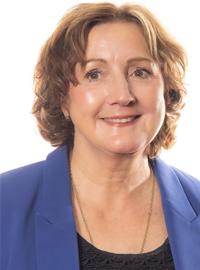
Janet Finch-Saunders
Tenures
- Fourth Assembly Bangor Conwy Môn Welsh Conservative Party
- Fifth Senedd Bangor Conwy Môn Welsh Conservative Party
- Sixth Senedd Bangor Conwy Môn Welsh Conservative Party
- Seventh Senedd Bangor Conwy Môn Welsh Conservative Party
Ministerial roles
No ministerial roles on record.
Contributions, by sitting day
85 contributions on record, newest first. Official verbatim record.
7
Open this sitting on the stage
1. Questions to the Cabinet Minister for Enterprise, Connectivity and Energy en
Diolch, Ddirprwy Lywydd. Of course, Cabinet Minister, our portfolio covers connectivity across Wales, and good broadband and strong mobile signal is certainly a huge component of that. Ofcom found that much of Wales has the poorest broadband provision in the UK. Wales has an average broadband speed of 6.5 Mbps compared with the UK average of 7.5 Mbps. Twelve local authorities across Wales are classified as having the poorest broadband provision, with some areas receiving speeds of only around 2 Mbps. I've spoken so many times about this with the previous Government, and it is fair to say that, in rural areas, parts of my constituency of Bangor Conwy Môn, some residents are still facing extremely poor broadband connectivity. Now, we need to see increased emphasis—
1. Questions to the Cabinet Minister for Enterprise, Connectivity and Energy en
Yes. We need to see a greater emphasis on funding. How will you address these notspots?
1. Questions to the Cabinet Minister for Enterprise, Connectivity and Energy en
Diolch. I just need to correct you. In the previous UK Conservative Government, under David Cameron, £56.9 million of funding came directly into Wales for superfast Cymru broadband. And we then had Project Gigabit under Boris Johnson, the Right Honourable, again under a Conservative Government. This must continue. And additionally, companies are now phasing out copper cables. So, my residents in Bangor Conwy Môn are really struggling, because, with the phasing out of copper cables, which connect many residents to landlines, there's growing concern about people living in rural areas with poor mobile phone coverage. What steps are you taking, Cabinet Minister, to ensure that those households in rural, isolated parts—and there are many within Wales, but there are a lot in Bangor Conwy Môn—? How are you going to support them as a Government throughout this transition, and how are you going to work with the UK Government now to ensure we get much better funding into Wales for this? Diolch.
3. Questions to the Senedd Commission cy
5. A wnaiff y Comisiwn nodi costau'r gofod swyddfa dros dro i staff yn ystod y gwaith adnewyddu yn Nhŷ Hywel? OQ64763
Official English translation
5. Will the Commission set out the costs of the temporary office space for staff during the Tŷ Hywel renovations? OQ64763
No broadcast timestamp published, so this contribution cannot be placed on the stage. Senedd TV Read this in the Record
3. Questions to the Senedd Commission en
Diolch. Over 500 Commission staff work in Tŷ Hywel, and then, of course, you do have the 96 Members and our members of staff. The refurbishment of Tŷ Hywel is set to last approximately three years. We've only got three and a half years left of this current term. These refurbishments, complete, are set to cost around £42 million, but with the relocation and decanting of this high number of staff and Members, it is bound to be a very costly exercise. You could even have duplication. You could have a situation where you're keeping all the lights and all the heating going in this building whilst it's being refurbed, and we're paying those heating costs—a duplication of costs. This at a time when people are facing so many increased costs of living themselves within their families. As a previous proud Conservative Commissioner, it is true, and it should be on record, that I opposed such a massive spend of taxpayers' money, because I believe that it is taxpayers' money that's being spent, and it is vital that we are as transparent as possible.
3. Questions to the Senedd Commission en
Yes, it’s coming right now. Will the Commissioner commit to providing a complete and transparent breakdown of these ever-increasing costings as the plans progress? Diolch.
7. Reform UK Debate: Prostate cancer strategy en
I will declare an interest in this debate, because this particular cancer has come knocking at my own door for a loved one of my family. I would first of all like to thank my colleague, though, Paul Davies MS, for all the brilliant work that he's already done to raise awareness of prostate cancer. By sharing your own experiences, Paul, which was very brave, you've already actively played a part in encouraging more men to come forward for screening. More than 2,500 men are diagnosed with prostate cancer in Wales every year. Around 640 men in Wales die from that disease annually. And the reason I'm speaking up is because what has happened to me and my family, it can happen to anybody. We shouldn't just stand by and read out numbers any more of how many people have died annually. In my particular case, two years of monitoring—diagnosed two years ago, two years of monitoring—and the condition was going worse and worse during monitoring, to such a degree now that more extensive surgery is required than would have been had this been picked up sooner. Almost 40 per cent of prostate cancer cases are diagnosed at stages 3 or 4. That is not good enough. When the disease is more advanced, the treatment becomes more challenging. These figures should concern everybody sitting here, including you, Cabinet Minister for Health and Care. Behind every statistic is a man facing the devastating consequences of cancer, prostate cancer being the most common cancer to affect men. Yet it remains one of the cancers where diagnosis too often comes too late. That is why, as has been said many times here today, and I endorse, early detection must be a priority. The Welsh Conservatives firmly believe that a national prostate cancer screening programme could help to identify the disease earlier, improve survival rates, reduce inequality and raise awareness across Wales. We recognise that screening must be evidence-based and carefully designed. Concerns have rightly been raised about false positive results, unnecessary treatments and the pressure a screening programme could place on NHS capacity. I also understand that there's been a pushback, certainly from our health board, but also the Government, that too much testing can actually identify problems that could lead to more problems. I'm never convinced by that. A raised PSA result does not automatically mean a man has prostate cancer, but an ever-increasing PSA result is very worrying indeed for the family. Screening can identify some slow-growing cancers that may never cause serious harm. But these challenges should drive us here, as Senedd Members, to develop a far better approach. Advances in diagnostic technology, including MRI and improved testing pathways, offer opportunities to make diagnosis more accurate, and for better treatment decisions when better informed. We should ensure Wales keeps pace with these developments and adopt proven innovation and evidence as it emerges. We should also recognise that a consistent national approach will tackle those very inequalities that have been described today: black men, men with a family history of prostate cancer and men with certain inherited genetic variations. It is fair to say that a very close member of my family has already died with prostate cancer, so why those warnings were not heeded earlier—who knows? We acknowledge the recommendations of the UK National Screening Committee, including targeted screening for certain men with a confirmed BRCA2 variant and a relevant family history. The Welsh Government must carefully consider these recommendations. However, we also believe Wales should be ambitious. We should work with clinicians, researchers, charities, and patients and their families, to establish the strongest possible screening approach, informed by evidence and designed for the needs of our Welsh men. We must also ensure that earlier diagnosis is matched by timely access to high-quality treatment, sufficient NHS staffing and the resources needed to meet demand. I will say this here today: patients from north Wales, patients within the Betsi Cadwaladr University Health Board, should not be going to London for operations. Devolution was always supposed to be about providing those kinds of treatments here in Wales, and I was really shocked to learn that the robotic equipment that was purchased in the Betsi Cadwaladr University Health Board was not the right equipment—that is why we're sending people from north Wales to London. And it has to stop now. Diolch.
3
Open this sitting on the stage
1. Questions to the First Minister en
We on these benches very much value greater co-operation and increased trade with Ireland. Around 1.5 million passenger journeys are made between Wales and Ireland each year through Holyhead port, making it a vital gateway between the two nations. Holyhead handled 4.3 million tonnes of freight between Ireland and Wales in 2024, which is more than any other Welsh port. The 2.4 km Holyhead breakwater is approximately 150 years old and needs work done to it. First Minister, closer co-operation with Ireland must be demonstrated through delivering not simply warm words. Your Government inherited a £40 million commitment to Holyhead breakwater, together with a clear warning that its failure could ultimately close the port. With Welsh-Irish connectivity, trade and around 700 local jobs dependent on resilient port infrastructure, why is there still no firm timetable, and when exactly will the refurbishment begin and be completed?
-
Well, thank you for your strategy announcement again today, and I look forward to more meat on the bone as this goes forward. I'm not a lover of strategies, as people well know, but this is looking at the future of moving towards renewables. Now, interestingly, you've just said it mustn't be a just transition. During the co-operation agreement that you had with Labour, every other word on climate change policy was talking about a just transition. We believe, quite firmly, and it was the UK Conservative Government, first starting with Prime Minister Rishi Sunak, who pushed the move to the climate targets and everything back a little, in order to take people with them. And it's been continued by our leader, Kemi Badenoch MP, that we believe in the development of a sensible approach, and one that is not making a very expensive transition for those already facing an increased cost of living. I'm very wary of the approach by this Plaid Cymru Government and the approach previously by the Welsh Labour Government, at a time when your own hypocrisy is so paramount, when you have actually, with Ed Miliband, supported the stopping of the oil and gas fields that were providing us with good energy sources, and under the Welsh Labour Government and the co-operation agreement, we saw numerous large-scale wind and solar farms approved across Wales. Those of us who live in Llandudno, and there are other Members here, actually face hundreds of turbines out in Llandudno bay, and yet we have the highest electric bills in the whole of north Wales and Wales. So, there's got to be this sensible approach. If you look at Alaw Môn, the solar farm on Ynys Môn, 660 acres taken out of agriculture to facilitate generating 160 MW. Llanwern solar farm near Newport, 250 acres with a capacity of 75 MW. Clocaenog forest windfarm, 27 turbines. These developments disrupt our natural environment, affect the views enjoyed by visitors and residents, and take valuable agricultural land out of production. Now you talk about, and we have got a climate emergency, but we've also got an energy security issue. Global fighting across the world is very paramount currently. Sorry, I thought you were looking at me then.
-
We don't need more state-owned companies being established, nor do we need more large-scale wind and solar developments without proper consideration. What Wales needs is cheap, reliable energy to keep our existing factories running, help our businesses remain competitive and keep household bills low. These should be the priorities; they're my priorities for my residents. But none of this must come at the expense of Wales's food security. We need to strike a sensible balance between meeting our energy needs, protecting our countryside and preserving the agricultural land that helps to feed our communities. That's why we are reiterating our call for a moratorium on industrial scale solar and windfarm developments. You've referenced using tidal stream and lagoons, and I actually agree with that, but it would be interesting to see how you as a Government put money behind that and make that an action, not just words. Cabinet Minister, your strategy must also focus on restoring the marine environment. During the fourth carbon budget, I met with Lord Deben, and he noted that I was the only Member who had picked up on that we're not doing enough in our marine environment in terms of carbon sequestration, and I'd like to know what you're doing on that going forwards. When people think of renewable energy now, they just think of solar, wind and tidal power. But Gwyndod power station on Ynys Môn is a significant asset that deserves to be focused on, and again is thanks to the UK Conservative Government, who actually purchased the land. It has the potential to provide energy, create jobs and strengthen our economy. We must ensure that nuclear energy is properly considered. I'm really pleased with Morlais and the work that's going on there. We must remember oil and gas production—to ignore it and then import inferior quality oil and gas is not what you should be looking at as a Government here. So, Minister, I hope you'll hear our calls from these benches, and I hope that we can have a sensible strategy going forward. Diolch yn fawr iawn.
2
Open this sitting on the stage
6. Reform UK Debate: Local referendums on council tax rises en
Diolch, Lywydd. Cor blimey, I'm on my hobby horse now, I'm afraid. Now, this may shock some, but I have to begin by congratulating Reform. [Interruption.] Not because you've come up with a brilliant idea of a new policy, but because once again you've demonstrated an impressive talent for taking good Conservative ideas and applying the Reform logo to them. Now, as they say, imitation is the sincerest form of flattery. But let's just remind people in this Chamber who weren't here years ago—. I'll just remind you that you did that, of course, with your pre-election manifesto launch, which was a direct copy-and-paste job of good Conservative policies. Now then, it was a Welsh Conservative manifesto pledge to fix council tax, and has always been a solid manifesto pledge not only to fix council tax, but to reduce council tax. Indeed, it was the Conservatives who have long noted the importance of low council tax, and, in 2011, I was proud to have been elected here when the Right Honourable David Cameron, Conservative Prime Minister, actually provided a three years' council tax freeze—£50 million—to the Welsh Government, Labour propped up by Plaid Cymru. But guess what, folks? They did not pass those moneys on to secure reductions in council tax, instead spending it on their own pet projects. We as a party, we fight to keep all taxes low. It is the solid foundation of the Conservative Party to allow those who work hard, and our cash-strapped pensioners, to have more money in their pockets, not just at the end of the week or the end of the month, but day in, day out. Now, we have long advocated—. And I can name the Secretaries, Cabinet Secretaries, Ministers that have been in post here—there isn't one that we haven't raised with, on these benches, the idea of a 5 per cent cap on council tax increases. If you look at our own local authority in Conwy, over the past three years nigh on 10 per cent—9.8 per cent; 9.6 per cent—and people are getting less. We've got more weeds than ever before, toilets closing down, we've got litter on our streets, and people genuinely wonder what on earth they pay their council tax for. Now, this system already exists in England, where referendums are required for what Government determines to be excessive council tax increases. The principle has been established for more than a decade and it does provide an important democratic safeguard. What is perhaps most remarkable is hearing this proposal from Reform, a party whose own councils in England have discovered that campaigning against tax rises is rather easier than governing in those councils. So, you say one thing before an election—. And this is pre-local government election talk and spin. [Interruption.] No, we mean it, every day. It's not a come-day, go-day. We believe that there should be a referendum on council tax. And, of course, we've made these same arguments for years; long before you were ever a twinkle in Nigel Farage's eye. [Laughter.] Across Wales, residents are facing average council tax rises—average—of 7.2 per cent. But, as I've mentioned, there are others who have the audacity to try getting 10 per cent. Now, after 26—actually, it's 27 now—years of a Welsh Labour Government, propped up by Plaid Cymru, the council tax system in Wales is broken. [Interruption.] Yes. From you, Sarah, any day; yes.
6. Reform UK Debate: Local referendums on council tax rises en
Sarah, you are right to point out that Reform say one thing and do another. Now—[Interruption.] The figures, I won't repeat them again, but—. A £600-plus increase in the average band D council tax bill in Wales over the past five years. The annual band D council tax bill in Conwy County Borough Council being £2,472 and in Kensington and Chelsea, £1,643. How can that be right? After more than two decades of Labour-led Government, with Plaid Cymru support, residents are paying more, but are not necessarily seeing improvements in services they deliver. I would ask, Cabinet Secretary, please have a look at ensuring that referendums are brought into Wales for council tax increases of 5 per cent or more. I think that way it would be very fair for our residents, our hard-working families, and, indeed, our cash-strapped pensioners. Diolch.
5
Open this sitting on the stage
2. Business Statement and Announcement cy
Diolch, Lywydd. Hoffwn i ofyn am ddatganiad gan y Gweinidog Cabinet dros Iechyd a Gofal am sut maen nhw'n gweithio i ddileu sgabies yng Nghymru. Dros y mis diwethaf, rydyn ni wedi gweld dau ysbyty yn cau wardiau achos presenoldeb sgabies Norwyaidd. Mae nifer yr achosion o sgabies yng Nghymru wedi cynyddu o 1,300 yn 2018-19 i dros 12,000 o achosion yn 2023-24. Mae hyn yn bryderus iawn ac yn achosi anghysur sylweddol i gleifion ac yn gwneud i bobl feddwl ddwywaith cyn mynd i'r ysbyty. Mae angen cymryd camau brys i ddelio â'r clefyd erchyll hwn.
Official English translation
Thank you, Llywydd. I would like to request a statement from the Cabinet Minister for Health and Care on how they are working to eradicate scabies in Wales. Over the last month, we have seen two hospitals close wards due to the presence of Norwegian scabies. The number of cases of scabies in Wales has increased from 1,300 in 2018-19 to over 12,000 cases in 2023-24. This is deeply concerning and is causing patients significant discomfort and making people think twice before going to hospital. Urgent action needs to be taken to eradicate this horrific disease.
2. Business Statement and Announcement en
Bit of a long one that one, sorry.
-
Diolch, Lywydd.
-
Thanks for your statement. [Laughter.] Now, as someone who uses the train service in particular—I'll mention buses in a minute—this summer in particular highlighted to me just how we always tend to think it's the winter, with the leaves and everything on the line and the bad weather, where disruptions come, but we've faced it all in terms of the transport network here. Extreme weather is becoming a more frequent occurrence, and nobody in this Chamber can deny that. We're already seeing the consequences of inadequate planning across our transport system. Direct train services between Pontypridd and Cardiff Bay have been cancelled for a prolonged period, because more trains than usual are requiring repairs. And I think it's the 137s. Those trains are just—. In this day and age, I can't, for the life of me, imagine why we put a load of trains on a line whereby if the air conditioning in summer packs up, there are no windows, so, basically, it's very, very uncomfortable, and I would just say that the thinking behind that just baffles me. In north Wales, we're also facing significant disruption, and I think Mair mentioned it earlier. I am dreading January to 6 February next year, with rail replacement buses being provided. Because, quite often, when I get on a train to come down here, I don't know whether it's going to be a four-hour journey or a five-hour journey. I've even had a seven-hour journey on more than one occasion down here. So, how you're going to make sure that, not just for us as Members, but anybody using the rail service and then having to rely on buses—. I think you're really going to have to make sure that it is a very easy flow-through for passengers. Of course, while essential engineering works are sometimes unavoidable, passengers require and deserve clear communication. My biggest bone of contention when I'm on a train is, sure enough, we have to get up and we have to change to another train, but the lack of information is just—it's unbelievable. You get told different stories by the conductor. I then have been known to contact Transport for Wales myself directly and you get told something completely different. And I remember a time when Tom Montgomery had to wait several hours—. I was lucky because somebody came to give me a lift, but I think he had about nine hours to get from north Wales down here. Now, these closures are going to place already enormous pressure on other transport services and cause considerable stress. Points have been made about people with disabilities, older passengers and those with limited transport alternatives. Disruption can create additional barriers to accessing essential services. These pressures are not confined to particular routes or specific times of the year; they do reflect wider challenges. Jason mentioned the reputation that Transport for Wales has, and I've done a survey today and I make no apology for, when responding, saying, 'Poor, poor, poor'. I'm sorry but the facts speak for themselves: 14,272 trains were cancelled in Wales throughout 2025; 880 cancellations were attributed to points failures. Another thing, Cabinet Minister, is that I'm told in letters by James Price, 'We don't have a points problem in Wales'; I'm sorry, but you do, because, quite often, signalling and points failures put lots of extra time onto our journeys. So, whatever needs to be done, sort the points and the signal failures out. Driver-related issues—this surprised me—were responsible for 843 cancellations. There must be other Members here who've got to a station only to be told, 'We're waiting for the driver; we haven't got a driver.' In this day and age, I can't understand why we end up in those situations. Severe flooding, of course, caused 250 cancellations. But it just demonstrates the scale of disruption that passengers experience and it does raise important questions about how effectively our transport network is being maintained and prepared for the future. Every cancellation represents more than a statistic. It can mean a missed medical appointment. I was sat with a young man who was deeply stressed because he had an interview to go to and, whilst he was there, he actually had the job turned down because he couldn't get to his appointment on time. You don't need me, Minister—and I've run out of time anyway—to tell you all the problems that—. I could speak for an hour on this alone, but I'm not going to, I won't be allowed—
-
Yes, over to you.
12
Open this sitting on the stage
2. Questions to the Cabinet Minister for Rural Resilience and Sustainability en
Yay. [Laughter.]
-
Minister, UK average petrol is now averaging around 173.5p per litre. In real terms now, I've seen it over £2 per litre—diesel that is—and north Wales is paying above the UK average. In terms of energy production, we have the Gwynt y Môr windfarm right off our coast, yet we have the highest fuel costs in north Wales. Minister, Wales is being hit from both directions: rising prices at the pump and an energy policy that leaves Britain increasingly dependent on imports. Higher fossil fuel prices are estimated to cost Welsh households, businesses and public services an additional £5.64 billion. In our rural communities, certainly in Bangor Conwy Môn, travelling by car is not a luxury but a necessity, particularly for our carers, farmers, healthcare workers and small businesses. The previous UK Conservative Government froze fuel duty and cut it by 5p per litre. Conservatives then campaigned against its planned reversal, now that diesel is so extortionately high. At the same time, an industry taskforce reports that 25,000 UK oil and gas jobs have been lost since the general election, while UK energy import dependency stands at 43 per cent. Will you work with the UK Government to cut fuel duty, reverse its restrictions on new North sea oil and gas licences, protect skilled energy jobs, or will rural Wales once again be expected to pay more while Labour and Plaid Cymru prioritise ideology over the practical concerns? And I know that my colleague Andrew wishes to ask a question on the Veolia refinery.
5. Member Debate under Standing Order 11.21(iv): Contaminated land en
Thanks, Niamh, for bringing this debate forward. This subject of contaminated land and pollution in our water supply is unfortunately a frequent topic in this Senedd Chamber and has been over the past number of years. Now, we have a new Plaid Cymru Government, and certainly when I was on the committee with Llyr Gruffydd as our Chair in the environment committee, this was a very big issue for us as a committee. And it's nice to see Carolyn Thomas up there, a former colleague of ours here in the Senedd, who also used to speak up very passionately and very strongly about contaminated land. Thank you, Carolyn. I strongly believe that in incidents involving contamination, leaks or the illegal dumping of waste, the perpetrator should be held responsible and required to cover the cost of clearing and restoring the site. This is especially important in cases that involve repeat offenders, such as Dave Neal. My colleague Paul Davies, over the years, has represented so many constituents who were badly affected, so much so that they used to have to keep their windows closed, and yet for years it went on and on and on. Fines aren't enough. Many of these environmental polluters simply add them as a business cost because the fines—. They make more money doing what they do than the cost of a fine, and it's wrong. We must take a stronger stance against illegal dumping that contaminates our land and threatens our natural environment. Failure to take stronger action against these criminals has even brought down a former First Minister here. Accepting funding from individuals involved in this activity was shameful. So, I reiterate my call for stronger action to be taken against these organisations and for a clear message to be sent out today that this behaviour cannot and will not be allowed to continue. You pollute our land in Wales and you will pay. In a freedom of information request conducted by Friends of the Earth, it was found that potentially over 45,000 contaminated land sites exist in Wales, yet only 82 sites are designated as contaminated. So, data collection and investigations and inspections are key. Only six out of our 22 councils provide a full public register online. Fifteen councils have an inspection strategy, but only four have updated it in the last five years. I'm sorry, but you need to really get a grip of this. These figures are deeply concerning, especially as we all know that contaminated land can have a significant impact on our health, our environment and our water supplies. Today, there have been some shocking examples of illnesses that people have contracted—some terminal—and we cannot stand by any more. And I thank the people in the gallery for the work that you do. You're not elected; you're volunteers, you're activists against these environmental criminals. It is vital that these sites and other potential sites of contaminated land are reviewed, monitored and registered. This will ensure that we have current and up-to-date figures, allowing contamination to be identified and contained as effectively as possible. It is essential that joint action is taken by the Welsh and UK Governments, and appropriate resources to identify, assess, monitor and register are key. We also need to ensure that responsibility does not simply fall on local authorities and taxpayers when pollution has been caused by those who have chosen to break the law. Where wrongdoing can be established, those responsible should face appropriate enforcement and be required to contribute towards the costs of remediation. And if you think that a fine is enough, it isn't. If you keep polluting, you should go to prison. The public should not be left to carry the financial burden of dealing with pollution caused by illegal activity. There must also be greater transparency around contaminated land. Communities should be able to understand where these sites are located, what risks have been identified, what action is being taken and whether that action is satisfactory. Regular inspections and up-to-date public registers would help. We must ensure that lessons are learned from previous incidents. Where contamination occurs, the response should be timely, co-ordinated and proportionate, with clear responsibility for investigating the source. This is not simply about dealing with contamination after it has occurred; it is about prevention, enforcement and accountability. If we really are serious about protecting our land, our water supplies, our environment and the health of our people, then we must ensure that contaminated land is dealt with. Those who illegally dump waste or cause contamination must understand that there are serious consequences. I'll just say this: I would like the First Minister now—. And I am not calling for any further devolution, but I've called for this numerous times before. Currently, any fines from environmental pollution go to the UK Treasury. That is morally wrong. That money should come to Wales. So, do your best, First Minister; you will have my support. That money should come to help to pay for the pollution. But let you now, as the new Plaid Government, work with us all, because we're all against allowing these criminals to pollute. Diolch yn fawr iawn.
6. Reform UK Debate: Default 20 mph speed limit en
Now, of course, I was here when this legislation came forward, as were my Welsh Conservative colleagues, and right from day one we said 'no' to the 20 mph default, blanket—call it what you like. The fact was that the majority of our roads were being turned back—
6. Reform UK Debate: Default 20 mph speed limit en
I used both. [Laughter.]
6. Reform UK Debate: Default 20 mph speed limit en
I apologise for using the word 'blanket'. Anyway, we knew at that time, when the road network was subjected to 20 mph, 2024, it increased from 2 per cent to 37 per cent by road length. The Welsh Government's 2022 impact assessment estimated direct financial costs of around £33 million and a central net economic disbenefit of £4.54 billion over the years. Now, what kind of Government actually persuades or brings forward legislation that then damages its own residents and businesses? Absolutely rubbish. Now, in October 2025, Ynys Môn county council's planning and orders committee approved 22 of 25 exception proposals to return sections of road from 20 mph to 30 mph. And as Helen Jenner has quite rightly mentioned, the cost of this makes this institution, actually, and those in Government at that time, a laughing stock. Only it would be, if it wasn't so serious. Now, I support the motion calling on the Welsh Government to scrap Labour and Plaid Cymru's default 20 mph speed limit. Let me be clear, this is not an argument against 20 mph limits outside schools, near playgrounds, around hospitals or on highly populated residential streets, where evidence does show a genuine safety need. It is an argument against a blunt, one-size-fits-all default that treats very different roads as though they were the same. The Welsh Conservatives are clear: restore the 30 mph default while retaining 20 mph limits where they protect pedestrians and vulnerable road users. Now, Labour and Plaid Cymru, you chose the opposite approach, and, to this day, your co-operation agreement has left the legacy of this Senedd and, indeed, Wales with some terrible decisions made during that co-operation agreement, this being one of them. They imposed the default first, leaving councils and communities to work backwards, road by road, and traffic regulation order by traffic regulation order. And do you know what? It actually cost the Minister at the time their job. Public opposition could not have been clearer. A record nearly 500,000 constituents out of a just over 3 million population said 'no', but they were ignored. Public opposition should be listened to. These people were not opposed to road safety. They simply wanted common sense, local knowledge and the right speed limit on the right road. Lee Waters, the Minister responsible, told the Senedd that the Buckley pilot showed that an area-wide approach does not work. He also said that piloting involves failing and learning from the failure. So, if the pilot showed an area-wide approach had not worked, why was a nationwide default imposed before those lessons were reflected in the roll-out? The public were assured that the policy had been carefully designed, yet, in 2024, the Welsh Government—oh, Ken's gone now—revised its guidance, allowing councils to identify roads. And, Helen, we've still got roads in Conwy, actually, that haven't gone back to 30 mph. They just haven't put the signs up yet. The consequences are visible in my constituency. Now, this is Government in reverse. Ministers imposed the default nationally, rejected an unprecedented public demand for change, and expected councils to sort out the consequences locally. The costs are substantial. I get in a taxi now when I get here from Bangor Conwy Môn, and I ask the taxi driver, 'How does the 20 mph affect you?' And they hate it. They say it actually hits their pockets. And taxi driving isn't the easiest job in the world. I'm going to finish now. Look, we didn't put any amendments forward. We wholeheartedly support this debate. And if you had listened to your residents during election time, and even now since, you would all be supporting this 20 mph.
6. Reform UK Debate: Default 20 mph speed limit en
Would you take an intervention?
6. Reform UK Debate: Default 20 mph speed limit en
That's very generous. Would you not agree with me that the reason why there's so few Labour people sitting on benches now—? This was one of the fundamental reasons why the people of Wales were so angry—that their petition of 0.5 million people was completely ignored. They were furious about the 20 mph policy. It has actually changed the Government here.
6. Reform UK Debate: Default 20 mph speed limit en
Llywydd, on a point of order, I find it really bad that the Minister is sat almost intimidating—
6. Reform UK Debate: Default 20 mph speed limit en
The Minister is completely reversed in his chair, almost intimidating a Member that is speaking.
7. Welsh Conservatives Debate: The defence sector en
There's some irony here that only last week, when we were scrutinising and challenging your ethical defence framework, the aircraft went down at RAF Valley. I would hope that everybody on these benches is glad that those two pilots were able to eject and that they're well now after receiving treatment for minor injuries. I'm incredibly proud of that base. I'm also incredibly proud of the defence industry across Wales and the United Kingdom. And I'm incredibly proud of those who serve, and have served previously, in our armed forces—those who have lost their lives so that we have the freedom of speech here in this place. I've enjoyed so many excellent contributions today, bar one. I will leave it at that. It should be noted that the ejection seats in that aircraft were made by Martin-Baker, a company based in Denham. The company's own data notes that these seats have saved almost 8,000 aircrew lives around the world, but it is shocking to note that this essential business has been subjected to vandalism and factory occupation by Palestine activists simply because the Israeli air force utilise their ejection seats. This type of behaviour should be firmly reprimanded and these essential companies should be protected. This crash last week served rightly as a reminder to us all of the risks that each and every one of our brave servicemen and women take in protecting our country. And when I say 'our country', I mean the United Kingdom, to include Wales. Our vital defence sector uses a wide range of high-value skills that makes it naturally an ideal partner for schools, colleges and universities. It also employs over 18,500 people, has a turnover of more than £5 billion and contributes around £2 billion of gross value added to the Welsh economy. This industry contributes significantly to both our Welsh economy and our nation's safety. It provides highly skilled employment, supports supply chains across Wales and creates opportunities for collaboration between industry and education. Following the crash last week, when I got out of this Senedd, even though I had to go on somewhere, I made a point of contacting RAF Valley, sending them my best wishes and assuring them of our 100 per cent support. Unlike the Welsh Government, some within Plaid Cymru in particular want to move the arms industry out of Wales due to what they describe as a feeling of complicity in death. Other Plaid Members use the pretence of an ethical defence framework that will push back defence spending in Wales. This is absolute madness at a time—well, it's madness at any time, but particularly now—when we are under such global threat. This is also reflected in the ideological blacklist that's set out in the form of the ethical framework for Welsh Government engagement with the defence sector. There's one that already exists in the United Kingdom Government. The Conservatives understand the importance of this sector because of the global unrest and have instead set out a plan. We would increase defence spending to 3 per cent of GDP. It is also important to remember that, in the last Senedd term, the Welsh defence growth deal memorandum of understanding was signed. This agreement allocated £50 million to Wales from £250 million of UK-wide investment in regional growth as part of growing investment in defence. Following this, the regional defence and security cluster was established. This helps Welsh businesses, universities and colleges access Ministry of Defence contracts, develop their supply chains and grow their share of defence spending. It also connects businesses with Wales's eight universities and further education colleges, making use of their research and their expertise in areas such as cyber security, optoelectronics and artificial intelligence. The UK Government has pledged to work collaboratively with the Welsh Government to establish a new defence technical college by September 2027. This will train the next generation of defence engineers and help support Britain's growing autonomous capabilities. There is a clear opportunity here for Wales, Cabinet Secretary. We have a strong—. We were in committee this morning—
7. Welsh Conservatives Debate: The defence sector en
Yes, I will. It's essential we have productivity in Wales. We are lagging behind because of the previous Welsh Labour Government, supported by you. The evidence is clear: the defence sector is a vital component. We need the Welsh Government to commit to ensuring this industry has the support and what it needs to thrive here in Wales. I hope that you have a change of heart and that you support this motion today. Diolch yn fawr iawn.
5
Open this sitting on the stage
2. Questions to the First Minister en
It's an excellent question, Carmelo. First Minister, the latest dedicated national data on construction and demolition waste is from 2019. It estimates that the sector generated 3.43 million tonnes of waste, of which 45 per cent was mixed waste, 38 per cent was soil, and 213,000 tonnes were sent to landfill. Without up-to-date information on the quantity, type and destination of this waste, how can you as First Minister, or your Government, credibly increase the use of high-quality washed recycled aggregates in construction projects across Wales, and measure whether your actions are succeeding? So, when will you be doing the next data collection on this? Thank you.
2. Questions to the First Minister cy
10. Beth yw blaenoriaethau cyfansoddiadol Llywodraeth Cymru ar gyfer Cymru? OQ64572
Official English translation
10. What are the Welsh Government’s constitutional priorities for Wales? OQ64572
No broadcast timestamp published, so this contribution cannot be placed on the stage. Senedd TV Read this in the Record
2. Questions to the First Minister en
Diolch. The latest YouGov polling, conducted between 7 and 13 September this year, found that just 20 per cent of people in Wales support Welsh independence—the lowest recorded level since 2023. Meanwhile, 72 per cent of people in Wales reported dissatisfaction with the NHS, 57 per cent of Welsh voters placed the economy among their three most important issues, and, furthermore, 20 per cent of pupils leave primary school functionally illiterate, whilst Wales remains at bottom of the UK Programme for International Student Assessment rankings. First Minister, it has been pointed out by our colleague here, Helen Jenner. It has been pointed out by many other Members. We represent those very people who put us here in this Senedd. With no parliamentary majority for it here in the Senedd—and I’d defy you to prove me otherwise—why is constitutional change taking priority for you, above fixing our NHS, fixing our economy and fixing our schools? It's a downright disgrace.
-
I will declare an interest, as my family and I have been affected deeply by this very issue over the past seven days, and continue to be so. I'm sure Members would also agree with me how tragic it is that North Wales Police have been in touch with us as Members to say that a baby's body has been found on the shoreline near Bangor, in my constituency. There are calls for the mum to come forward. Please contact North Wales Police or the Betsi board. They will give you the support that you very much need at this moment in time. I'd like to thank you, Delyth, for bringing forward the update on the Bliss baby charter, and thank every single person that's involved in trying to improve neonatal care here in Wales. The core principles are around family-centred care and are known as the seven standards, with further standards being published as we go along—specialist services and staff, benchmarking, unit information and support for families. The Bliss baby charter is now a tool that helps to examine the procedures, practices and environment of a neonatal unit. Whilst this is good, there is still a long way to go. And I have to say it now, being as I've declared an interest: I want to put on record my deep thanks, and that of my family, to Alder Hey, and to Ysbyty Gwynedd, who recognised the emergency. We need that over-the-border continuation of fantastic neonatal care.
-
The model is about no two births are the same. We need this individualised care process. And bear in mind that, sometimes, it isn't mum and baby, it can be a mum and twins or triplets. So, all I would ask you, Deputy Minister, is if you will commit to ensuring that you work, as far as I am concerned, with the Betsi Cadwaladr University Health Board—and the other health boards—to establish a comprehensive review of its maternity services and neonatal care, and ensure that there is absolute implementation of individualised care plans. Because no two births are the same and no two babies are the same. Diolch.
2
Open this sitting on the stage
1. Questions to the Cabinet Minister for Enterprise, Connectivity and Energy en
Diolch, Ddirprwy Lywydd. And pen-blwydd hapus, Cabinet Secretary. Minister, there is potentially a very expensive problem with the Global Centre of Rail Excellence. Now, my colleague Andrew R.T. Davies yesterday raised it, and I'm not sure that the answer that you gave yesterday actually addressed the very fundamental point of such an amount of wasted taxpayers' money. When the Welsh Government announced this scheme, the Global Centre of Rail Excellence—sounds good, doesn't it—it explicitly stated that Celtic Energy would gift all the land necessary for the project, yet the site was subsequently described as having been purchased by GCRE, and it was transferred before restoration of the former Nant Helen opencast mine had been completed. So, will you tell us today, plainly, was the land gifted or purchased? If it was purchased, how much did GCRE pay, and what restoration liabilities did the previous and now this current Welsh Government-owned company take on when it acquired the site? Most importantly, if the money available for restoration is not enough to finish the job, exactly who does pick up the bill, Celtic Energy or the Welsh taxpayer?
1. Questions to the Cabinet Minister for Enterprise, Connectivity and Energy en
Diolch. I hope you can answer this one. Minister, the original plan was that £70 million of public money would help unlock around £330 million of private investment. For years, we were told there was serious private sector interest. GCRE talked about credible bidders and international interest, even from the middle east and America. And as recently as March last year, the First Minister at the time told this Senedd that GCRE was in detailed discussions with a potential funder, yet the private investment still hasn't materialised and the rail testing centre still hasn't been built. So, what exactly went wrong? Was there ever an investor genuinely prepared to put up the money needed to build the project, and, if so, why did they walk away? Because, at this moment in time, it does look as though your Government has inherited a large hole in the ground, a project nobody is prepared to invest in, and, potentially, a very large bill for putting the site back as it was. How much more taxpayers' money are you prepared to put into this scheme? Diolch yn fawr.
2
Open this sitting on the stage
3. Business Statement and Announcement en
I'd like to request two statements, one from the Cabinet Minister for Social Justice and Equality on how they are working with councils and the UK Government to prevent rogue builders and their ability to phoenix, which is starting up again after you've left people with incomplete builds and in lots of debt, and also on identity fraud, quishing and other scams that are taking place in north Wales, where it has emerged that there is a higher degree of scams now affecting our older constituents. I'm working with trading standards and the BBC, as north Wales does seem to be this key place where it's happening. The Federation of Master Builders Cymru have called on the Welsh Government to work alongside the UK Government to produce a mandatory licensing scheme for building companies. Will your Government support that? And a second one from the Cabinet Minister for Health and Care on the parking provision at Ysbyty Gwynedd—and Ysbyty Glan Clwyd is just as bad. Patients and visitors are continuously struggling to find appropriate parking, despite driving around continuously for almost an hour sometimes, and sometimes they will actually accept that they're going to get a fine because otherwise they would miss that appointment. This has been going on for too long now, so we need something from the health Minister to say that he's accepting that this isn't adequate. Please help.
-
Thank you for the statement, but I have to say, I'm really disappointed. This is not an ethical defence framework. It is nothing more than an ideological blacklist that risks Welsh jobs, investment and national security. Defence and aerospace employ 16,000 people in Wales, they generate £3.7 billion in turnover and they contribute around £1.5 billion in gross value added. These are highly skilled, well-paid jobs supporting communities across Wales, and I thank each and every one of those working in our defence industry and, indeed, in our defence forces. Yet, just when defence investment is increasing, this Plaid Government has ordered investment decisions involving the sector to now be put on hold. There has rarely been a more dangerous time to send such a hostile message. Russia is waging war in Europe, hostile states are targeting our infrastructure, NATO allies are strengthening their defences. It is almost, with making statements like this, that old saying, isn't it, 'Nero fiddles whilst Rome burns.' Our freedom and democracy exist, Wales exists, because brave men and women, previously and now, in our British armed forces are willing to put their lives on the line to defend them. But courage alone is not enough. They need aircraft, they need vehicles, communication systems, protective equipment and ammunition. And we need those jobs for Welsh people here in Wales. If Members support our armed forces, they must also support the people who design and manufacture the equipment that they have to go to war with and fight with, that keeps them safe. There is nothing grubby or unethical about that work. It is honourable, and it is vital to our security. Wales should be competing for a greater share of rising UK defence spend and encouraging responsible defence companies to invest here. Instead, this Government—Plaid Cymru Government—is creating uncertainty as businesses decide where to place new contracts and jobs. Mind you, that attitude is unsurprising from a party that has refused to commit an independent Wales to full NATO membership. Your hypocrisy—not yours personally, but your group, your Government—is breathtaking. Defence workers are treated as morally suspect while an Opera Cymru production is advertised as a 'celebration' of nationhood, honouring as three giants the men responsible for a terrorist attack on an RAF bombing school less than three years before the second world war. One of those, of course, was Plaid's then leader, Saunders Lewis. Plaid subsequently adopted neutrality in the war against Nazi Germany. Lewis used explicitly antisemitic language, and wrote that Hitler had 'fulfilled his promise' to remove Jewish financial power from German economic life. Instead of subjecting the people who equip our armed forces to an 'ethical' test, Plaid Cymru should apply one to publicly supported arts organisations that celebrate or platform those who have committed or glorified violence against the British state, whether it is an opera hailing Saunders Lewis and his fellow arsonists as national heroes, or public funding connected with Green Man while the festival gave Kneecap a stage. And in its first week back, it is absolutely disgusting that this Plaid Cymru Government shared a platform with Sinn Féin leaders, despite that party's long association with the IRA's campaign of terrorism. So, Minister, how many investment decisions have been suspended? How many jobs, do you believe, are at risk? I agree with you, Jason—not often, but today, on your comments today. Were employers and trade unions consulted? Will lawful Welsh firms be blacklisted simply because Plaid Cymru disapproves—and you do disapprove—of their industry? An ethical defence policy distinguishes between aggressors and those who protect us from them. Wales should stand firmly with our armed forces, with the workers who equip them and with our NATO allies. We should also stand firmly with the ethical framework that the UK Government has in place. This framework should be withdrawn, and I will be more than happy to vote against this later today.
2
Open this sitting on the stage
1. Questions to the Trefnydd, Chief Whip and Cabinet Minister for Culture and Sport cy
4. Beth mae Llywodraeth Cymru yn ei wneud i gefnogi datblygiad tîm rygbi proffesiynol yng ngogledd Cymru? OQ64432
Official English translation
4. What is the Welsh Government doing to support the development of a professional rugby team in north Wales? OQ64432
No broadcast timestamp published, so this contribution cannot be placed on the stage. Senedd TV Read this in the Record
1. Questions to the Trefnydd, Chief Whip and Cabinet Minister for Culture and Sport en
Diolch. A hundred and twenty-one million people worldwide watched the 2023 six nations championship across 209 international territories. Six nations matches regularly attract UK television audiences of up to 4.5 million viewers. Welsh rugby generates an estimated £225 million to £250 million annually through the professional game and match-day activity. An independent study commissioned by the Welsh Rugby Union found that Principality Stadium contributes £2.75 billion in economic output and supported around 2,500 jobs annually. Now, despite this, there does remain a clear imbalance in the professional game. Professional men's rugby has long been concentrated in Cardiff, Swansea, Llanelli and Newport, leaving north Wales without a professional regional team. As the WRU moves towards a three-region model, there are concerns that opportunities for supporters and talented young players in north Wales could be further diminished. How exactly are you going to redress this inequality?
6
Open this sitting on the stage
1. Questions to the First Minister en
I thank you, John, for bringing this question, because it's really important that we don't allow Bangor high street to continue suffering as it is. When I was campaigning, and since, residents stated that there just are not enough shops, cafes or restaurants in the area. Now, I welcome the announcement of £654,000 of funding to reinvent struggling high streets in Wales, and in particular in Bangor, but some of the projects are for new street furniture and an amphitheatre. Businesses themselves are concerned as to how they will be involved in the spending. And if anyone's ever looked, when the previous Welsh Labour Government put funding grants into towns, it didn't make any difference whatsoever. Now, I note that I have previously asked, in terms of hospitality businesses, for VAT to come down to 10 per cent, and I'm pleased to say that one of your party members in Parliament is also making that call for VAT on hospitality businesses to drop to 10 per cent. Do you support her calls, and the calls of the Welsh Conservatives, to really help our tourism and hospitality businesses?
2. Business Statement and Announcement en
I would like to request a statement from the Cabinet Minister for Health and Care on the high number of operations that are now being cancelled due to delays in patients passing the pre-operative assessment clinic assessments. This has been raised with me at a very senior level within the Betsi Cadwaladr health board. Clinicians are reporting that four to five operations a day are being cancelled in Ysbyty Glan Clwyd, despite being fully staffed, despite having the consultants there ready, waiting to do the operations. This means that a normal operating day that often runs from nine to five are seeing some surgeons finishing the day at 11 a.m. It has been noted that a main cause of the delay is due to staff sickness, but the real truth is that admin staff are not being able to book POAC appointments at present without having to go to senior management for an approval to book the POAC. This includes cancer surgery, which means now that cancer patients are waiting considerably longer for their operations that the consultants are wanting to do. At a time when waiting lists are high and there are promises from your Government to get those waiting lists down, will you ask the Cabinet Minister to make a statement on those claims that I've made here today to ensure that the delays that are currently in existence now are seen to and dealt with immediately? Diolch.
2. Business Statement and Announcement en
Just hang on a second. I need to get my—
2. Business Statement and Announcement en
I did ask the question in English.
2. Business Statement and Announcement en
It is now, yes.
2. Business Statement and Announcement en
Sorry, I can't hear it properly.
8
Open this sitting on the stage
-
Thank you, Mair, for putting your question in. We actually did table an emergency question ourselves, the Welsh Conservatives, first thing on Monday morning; somehow that seems to have been rejected. But I'm glad that you put one in as well. So, I would like to endorse all the thanks that have gone before me: North Wales Fire and Rescue Service, Conwy County Borough Council and other partner agencies. Their incredibly fast response saved considerably more acres. I'd also like to pay tribute to local residents who evacuated quickly, but also did what they could to try and help. It could have been far more serious, though it was incredibly serious in itself. Our farmer, Gareth Wyn Jones, who had to go himself in searing heat to try and rescue pigs from up on the uplands. The impact that this fire has had on local residents who have been forced out of their homes, there have to be questions now, asking how we can support them, because it's a frightening experience. There were 36 homes evacuated, one family noting it was actually in their driveway, and 200 acres of land have been affected. We all have to be cautious. I wonder whether some messaging could go out in terms of graphics or something. Do you know, you only need, these days, glass? If you're carrying clear glass on hot, dry grass, it can easily turn into a fire. Not a fully extinguished cigarette butt: we should not be having people, you know—. They can unintentionally spark a fire, leading to significant damage whilst also putting lives at risk. It was a very, very resource-intensive, financial-resource-intensive operation for all those partner agencies. I suppose what I'm asking for is: will you put some resources forward now for the aftermath of this? Will you contact those partner agencies and see how your Government can financially support them? But we also need a strategic plan. I'm not a lover of strategic plans, but we need something in place, because this could happen again. We're only halfway through the summer; this could happen again and again, and I want to be sure that all those partner agencies and rescue services are not stuck for finance in any way, shape or form. Diolch.
6. Member Debate under Standing Order 11.21(iv): Young people and employment en
Since the dawn of devolution 27 years ago, the young people of Wales have been let down, both in terms of their education received and their attempts to find good employment, and the two are inextricably linked. It's unforgiveable that a nation like ours with so much potential has become such an unattractive prospect for young people seeking employment, and that we are haemorrhaging precious home-grown talent in our youngsters and they are leaving Wales. But it's little wonder. Wages here are lower and people pay a greater proportion of their income in tax than anywhere else in Britain. So, why would a young person, fresh out of education, yet to put down roots, not seek opportunities and settle elsewhere? The same stands for our businesses. Our young people—some of our young people—are the innovators of the future, the ones leaving education with fresh ideas for business start-ups. But with sky-high business rates and a poor infrastructure, transport wise, naturally, any business-savvy young person will look beyond Wales to minimise their costs and maximise their earnings. But even before our young people look at the job market, their choices have been limited by the worst performing education system in the UK. And I blame Welsh Labour and Plaid Cymru. They have far fewer opportunities than their counterparts over the border for courses, apprenticeships and degrees. Our infrastructure and transport networks play their part in this problem. They are suffering from a chronic lack of investment, and virtue-signalling policies like 20 mph and a ban on road building have damaged us and meant that business and jobs are not coming to Wales in anywhere near the numbers they should. I will say though that I very much welcome the commitment from the Welsh Government to a third Menai crossing in my own constituency of Bangor Conwy Môn, something that we have campaigned for for a long time. This will be critical to the expansion and new job opportunities at Wylfa, and that is exactly what we need to be replicating across Wales: investment in our transport infrastructure, building a much needed M4 relief road. Other harmful policies like the tourism tax. It just beggars belief why you keep hitting the very businesses, as Tom Montgomery actually put across quite well, that youngsters want to go into, in the hospitality industry. They want to work in a fish and chip shop or serve slushies at Woolworths. But we're just doing everything we can to make it difficult for businesses to actually then encourage young people to go and work there. During the election, the Welsh Conservatives had a robust plan for economic growth. It really was the only credible plan to deliver more jobs and prosperity, and, critically, to bring us in line with the rest of the UK. Now, we are happy to work with Plaid Cymru, and I had a very constructive meeting with the Minister yesterday, Adam Price. We need to work together, as has been said, cross-party, but we need to be serious about using the levers that you have as a Welsh Government. You need to scrap business rates for small firms, pubs and post offices. We need to make public procurement contracts more accessible, particularly to our small business. We've been talking about this for 15 years, but it's not happened. We must give priority to Welsh local firms. We need to work with education providers to expand the choice of courses available to young people, particularly in STEM subjects and apprenticeships. We need to take action to address mobile blackspots and poor broadband speeds, so that our young people in remote and rural communities aren't left behind and their studies aren't hindered. Crucially, we need to look at the problem with young people and unemployment in the round, starting with the improving of our education system, finishing with fixing our economy. That is the only way to create secure, well-paid jobs for our young people, to rival those of other UK nations and indeed the rest of the world. So, I agree with many of the really good points that have been made in this debate, but let's not forget who is responsible for the mess we're in with our job market. For Plaid, they've said all the right things about young people and employment before the election, but as I said on the day of my re-election, I will be really watching on this, because you will not grow Wales without growing your young people. I don't feel very optimistic that you will deliver all you have promised, and we will hold you to account on it—
6. Member Debate under Standing Order 11.21(iv): Young people and employment en
—but we stand ready to work with you on this.
6. Member Debate under Standing Order 11.21(iv): Young people and employment en
We will be abstaining, however.
6. Member Debate under Standing Order 11.21(iv): Young people and employment en
Will you take an intervention?
6. Member Debate under Standing Order 11.21(iv): Young people and employment en
Thank you. So, I represent Bangor Conwy Môn, one of the largest towns is Llandudno, and we have the largest bed space, really, across Wales for the tourism industry. We are not suffering from immigration, I can assure you. We're suffering from too high business rates and all the things I've mentioned in my speech. I can honestly tell you we are not suffering from immigration. Immigrants are not taking people's jobs.
8. Welsh Conservatives Debate: Deposit-return scheme en
Diolch, Lywydd. Wales has every reason to be proud of its recycling record. We have the second highest recycling rate in the world, with a national recycling rate of 68.4 per cent. Twelve of Wales's 22 local authorities have already met the Welsh Government's statutory target of recycling 70 per cent of municipal waste, and I have to say, my own local authority, Conwy County Borough Council, get brownie points from me on the fact that they are one of the most successful ones. These achievements are testament to the efforts of our Welsh households, local authorities and businesses, who have embraced recycling and sustainability. That is why the Welsh Conservatives have continuously supported the principle of a deposit-return scheme, because we believe that it can reduce litter, increase recycling rates, encourage responsible behaviour and help protect our environment, our sea mammals and our wildlife. Now, in 2016, I was incredibly proud to have brought forward a successful legislative proposal for a Bill that would make provisions to introduce a deposit-return scheme and reduce waste in Wales. We're now in 2026. Around the world, successful schemes in countries such as Germany and Norway consistently achieve return rates of over 90 per cent, minimising litter and keeping valuable materials in circulation. So, this debate isn't about whether Wales should have a deposit-return scheme, it's about whether the proposed scheme is fit for purpose, affordable and works for businesses and customers alike. The former Welsh Labour Government chose to create a system that differs from—and this is after 10 years—the rest of the UK by including glass within the scheme, despite all the evidence suggesting it is unworkable. This divergence for the sake of divergence will have very real consequences for the Welsh economy. Wales already collects 92 per cent of glass at the kerbside, so I fail to understand why including glass in the DRS is such a priority for this Plaid Cymru Government. I fear this is shaping up to be yet another Welsh taxpayer-funded disaster.
8. Welsh Conservatives Debate: Deposit-return scheme en
The inclusion of glass makes the scheme significantly more complicated and substantially more expensive, as glass requires dedicated collection infrastructure, specialist handing, expensive transportation because of its weight compared to plastic and cans and paper, and more costly reverse vending machines, all of which means increased operational costs for retailers and producers alike. And I'll say that again: for retailers and producers alike. We're talking, again, about another hit on our businesses. The British Soft Drinks Association has warned that this decision could increase the cost of some bottles by up to 50p, which on something like a small bottle of water would be a huge proportional increase. Leading Welsh manufacturer Radnor Hills described the Welsh Government's plans as a complete and utter mess. Industry representatives have warned that manufacturers may pass additional costs directly on to consumers or even withdraw products from sale in Wales altogether. Now, I don't know about you, but certainly, if I'm having a beverage, I prefer it out of glass. There's far too much ingestion of plastic now from drinking from plastic bottles. So, there is a consumer choice at stake here. These are not theoretical concerns, they are warnings from the businesses expected to deliver this scheme, and I've always listened to my businesses in Aberconwy and now Bangor Conwy Môn. Even more worrying is the Welsh Government's failure to appoint a deposit management organisation to run the scheme. With a launch date of October 2027, little more than a year away, there is still no confirmed administrator, IT, infrastructure or real implementation plan, just ideology and an insipid plan that doesn't stand up to any scrutiny and has the potential to damage our businesses. Serious questions do remain unanswered: how will this scheme operate on a day-to-day basis? How much financial support will retailers receive for operating return points? Which small retailers will qualify for exemptions? How will producers prepare their supply chains? Why is the Welsh Government effectively creating a hard border by introducing Wales-only labels? This is the same Government that only yesterday was talking about looking outward, looking out internationally and everything, and yet you want Wales-only labels on bottles. How will local authorities fund glass collections? Businesses simply cannot invest without certainty, yet certainty has been entirely absent throughout this whole process. The Association of Convenience Stores has made its concerns abundantly clear. It warns that local shops may be forced to purchase more expensive soft-drop reverse vending machines capable of safely handling glass or face the risks associated with manually accepting broken glass. This is a clear health and safety concern. Ed Woodall, chief executive of the Association of Convenience Stores—a cross-party group that I was proud to chair for a full term—warned that, unless an administrator is appointed urgently, Welsh businesses will fall behind the rest of the United Kingdom. He also made another important point: the best chance of success is a deposit-return scheme that is the same throughout the UK. That is what the Welsh Conservatives have always supported from the outset. Sainsbury's, the Co-operative Group and Coca-Cola have all written directly to the First Minister warning that the current policy risks increasing prices, reducing customer choice and creating growing uncertainty for businesses operating in Wales—concerningly, discouraging suppliers trading in Wales altogether. So, why are these warnings from these important businesses, these important industry experts, falling on deaf ears? These leading industry figures also urge the Welsh Government to appoint Exchange for Change immediately, because they believe it represents the only realistic route to delivering a scheme on time, while ensuring compatibility across all four nations. Yet, despite being the only applicant, Exchange for Change was initially rejected, which is extremely concerning. If this tender is not an attractive proposal to those in the industry, how do you, Cabinet Minister, think you could do a better job of running it? Where would you find the expertise? Where would you create the necessary infrastructure in such a short time frame? With time running out, the new Welsh Government finds itself struggling to resolve problems of its own making, and the former Welsh Labour Government's own stubbornness. The Welsh Conservatives have consistently warned against creating a separate Welsh system. Businesses trading across the England-Wales border should not be forced to operate different labelling systems, separate supply chains and conflicting regulations. Small Welsh producers should not face unnecessary bureaucracy. Consumers should not face confusion over which containers qualify and which do not. And taxpayers should not face the additional costs of implementing a more complicated system than our neighbours. The inclusion of glass has already delayed full reuse arrangements involving glass until 2031, recognising that substantial complexities remain. If glass cannot realistically be fully integrated for several more years, why insist on making the initial scheme so unnecessarily difficult now when we want to get on with it? Now we, the Welsh Conservatives, would take a different approach. We would deliver a deposit-return scheme that works from day one. We would align Wales with England, Scotland and Northern Ireland to create one seamless UK-wide system. We would remove glass from the initial phase of the scheme to reduce costs, simplify operations and avoid unnecessary burdens on businesses. We would work in genuine partnership with Welsh manufacturers, convenience stores, hospitality businesses and recycling organisations, rather than imposing these bureaucratic and not-wanted solutions without listening. Cabinet Minister, surely you can recognise you've backed yourselves into your own corner with this ill-thought-out scheme and unachievable time frame. You said in your own manifesto earlier this year that you would introduce a Welsh deposit-return scheme for plastic and metal drink containers, including glass, when this becomes practically feasible. It isn't practically feasible. You acknowledge the inclusion of glass is problematic, so what has changed? Why are you hellbent on pressing ahead with this plan? It's going to fail. The cost, the potential for fraud, the cross-border interoperability impact on existing collection systems, the cost to local authorities, the risk of suppliers ceasing trading in Wales and, above all, the cost to the public purse, should this fail, makes the scheme completely unviable and impossible to implement by October 2027. A practical, connected deposit-return scheme would reduce litter, increase recycling and improve environmental outcomes, while supporting Welsh businesses and protecting consumers from unnecessary costs. The inclusion alone of glass threatens to ruin this scheme before it's even implemented. So, Cabinet Minister, we have so much to be proud of in Wales on our recycling rates. In fact, we've been trailblazers and achieved one of the highest recycling rates in the world. So, it's absolutely critical we get this DRS right. I urge you to support scrapping the inclusion of glass from this scheme, and I urge other Members here to support our stance on this. Diolch.
1
Open this sitting on the stage
8. Legislative Consent Motion: Steel Industry (Nationalisation) Bill en
Of course, this Bill does confer powers on the Secretary of State to make regulations to nationalise a steel undertaking in the United Kingdom. While it will not immediately nationalise any steel company, it does give the Secretary of State powers to take action in certain circumstances, which could include steel undertakings in Wales. These are significant powers, and whilst I understand the reasons they are being sought, I believe they should be approached with caution. Before the closure of Tata Steel's blast furnace at Port Talbot, Wales's steel accounted for 60 per cent of total UK crude steel output and primary iron, it employed over 4,000 people—a figure that has now sadly halved—it contributed around £3.2 billion per year to the Welsh economy, and it represented approximately 3 per cent of Wales's total economic output. These figures demonstrate just how important the steel industry is to Wales, not only to our economy, but to thousands of families and communities that have depended on it for generations. Any decisions affecting the future of this sector will have lasting consequences. Of course, the Conservatives have always recognised the vital importance of our Port Talbot Tata Steel site and, to help secure its long-term future, it was, in fact, the UK Conservative Government that agreed a joint investment package with Tata Steel. Rather than taking the company into public ownership, it chose to work in partnership with the private sector to deliver a sustainable future for steel making in south Wales. That package included a £500 million Government grant to help fund a £1.25 billion transformation to a modern, greener electric arc furnace. This was a substantial commitment by the UK Conservative Government, demonstrating that Government can play an active role in supporting strategic industry whilst also encouraging private investment and innovation. Whilst it is important that Governments are able to step in and support our vital steel industry when circumstances demand it, we must never forget the benefits that come from Governments working constructively alongside the private sector. Partnership can deliver investment, safeguard jobs, modernise production, help secure the long-term future of our steel industry, and without making nationalisation the default option. Our focus should actually here remain on creating the conditions that encourage investment, protect skilled jobs, and ensure that Welsh steel continues to have a strong future. Whilst I do understand the intentions behind this Bill, my Welsh Conservative colleagues and I cannot and will not support this LCM.
6
Open this sitting on the stage
1. Questions to the Cabinet Minister for Enterprise, Connectivity and Energy en
Diolch, Lywydd. Cabinet Minister, do you agree that the Welsh free ports have a major role to play in delivering offshore renewable energy projects in Wales? As well as supporting our renewable energy ambitions, the free ports will attract nearly £5 million of investment, create up to 16,000 jobs and provide a huge boost to the Welsh economy. As we're all aware, free ports were put in place by the former Conservative UK Government, with the then Secretary of State for Wales, David T.C. Davies, working tirelessly to get two free ports delivered for Wales. When the last Conservative UK Government took advantage of the freedoms provided by Brexit to establish free ports, Plaid Cymru were sceptical. But now, given the economic benefits that these offer, do you fully accept the role that they will play in driving growth, attracting investment and creating jobs in Wales? And do you welcome the great Brexit benefits that they are going to bring?
1. Questions to the Cabinet Minister for Enterprise, Connectivity and Energy en
Minister, diolch. Thank you for setting out your unequivocal support for Welsh free ports. I'm pleased that your Government is now willing to take advantage of some of the freedoms that Brexit has made possible. Free ports work because the businesses inside benefit from lower taxes and lower red tape. As a result, investment is attracted, jobs are created and economic growth follows. So, do you agree that free ports are a living example of the fact that cutting taxes and reducing red tape help to create jobs and prosperity? And if you have now abandoned your stance of opposition to free ports and recognise what low taxes can do, why not go one stage further and abandon the outdated socialist dogma that is holding Wales back with its enterprise investment across Wales? Scrap the tourism tax, cut business rates, join the Welsh Conservatives in supporting—[Laughter.] Well, not literally, I might add. Join the Welsh Conservatives, I'll say it again, in supporting low tax, lower bureaucracy.
3. Questions to the Senedd Commission cy
8. Faint o staff y Comisiwn sy'n gweithio pum diwrnod yr wythnos ar ystad y Senedd? OQ64271
Official English translation
8. How many Commission staff work five days a week on the Senedd estate? OQ64271
No broadcast timestamp published, so this contribution cannot be placed on the stage. Senedd TV Read this in the Record
3. Questions to the Senedd Commission en
Diolch. Of course, 65 per cent of the Commission's operational revenue expenditure relates to staffing costs, with the Senedd Commission employing around 500 members of staff before the Senedd expansion. And I have to say, I was a commissioner in the last term, but prior to that, I have seen differences since we have actually gone—where a number of staff are working from home. I find that staff are harder to contact and things like that. However, we've now got 96 Members, and £2.7 million is paid by the Senedd Commission on the rent of Tŷ Hywel alone. Apart from Tuesdays and Wednesdays, it's fair to say that this building sometimes seems relatively empty. Often, only a handful of cars are in the car park, especially on a Friday. It has been mentioned about the very costly renovations of Tŷ Hywel—
3. Questions to the Senedd Commission en
I am. What steps are you taking as a Commission to encourage more members of staff to return to working on the Senedd estate, especially given that several million pounds is now going to be spent on Tŷ Hywel? Frankly, we need to see our staff coming back to work.
7. Reform UK Debate: Nation of Sanctuary en
Llywydd, I can't hear because of the—[Inaudible.]. I think there's a protocol—[Inaudible.]
3
Open this sitting on the stage
-
Diolch, Ddirprwy Lywydd, and thank you for extending the time on this. O me of little faith, Cabinet Minister—we've heard it all before. You may have a different way of going about things, but we desperately need quick action. You know, 50 days in to all these different changes that were going to be coming in, the health board was one of the most key priorities for me. I'd like to thank Nigel for bringing forward those accusations of bullying, and I'd like to meet with you, because I have also received—. Believe it or not, I think there are some concerns that maybe the Cabinet Minister does need somebody like Donna Ockenden to actually come in and look at this board, because it's not necessarily where you think the bullying may be actually taking place. Some senior—very senior—members of this health board have also felt under—. You can't forget that the buck stops with this Welsh Government. You can blame—. As you were, you opened up your statement with quite accusatory comments: 'If they don't do this, if they don't do that.' They need your help and support. They also need the help and support of the director general of the health board. So, really, what I want to ask you is: in your first 50 days, given the immediate outcomes that are needed—and immediate can't come soon enough—what have you actioned, other than announcing some funding and another review board, to address these failings? And how is the director general a part of the actions needed to support the chief exec, the chairman of the board and their members? This health board needs help. It needs support. It doesn't need that hard hand that you've delivered here today. So, I ask you that question: how are you working with those executives that Ken Skates mentioned, because they have to bear some responsibility also? Diolch.
5. Statement by the Deputy Minister for Transport: Integrated Transport: North-South Coach Services en
I welcome this statement wholeheartedly. Interestingly, when devolution was first on the cards, one of its primary objectives, if devolution came in, was to ensure that we'd have a north-to-south road infrastructure in place that would connect north Wales with the capital city and Government of Wales. But we've been 27 years in the waiting, and that hasn't happened. So, I welcome this as being another way to get people from north to south. When you consider that 71.7 million passenger journeys are undertaken on local bus services each year, and remember that 19 per cent of the population of Wales has no access to a car, this demonstrates the importance of accessible and reliable public transport for many communities. Published in 2025, Transport for Wales undertook a feasibility study into introducing a TrawsCymru express coach service that would connect north and south Wales via the western corridor. Because for anyone doing this on a weekly basis, let alone if you want to come here more often, it can take four to four and a half hours, and since the 20 mph and the 50 mph on some roads, I find it's more likely to be more than four and a half hours, sometimes five hours, coming down here. I regularly travel on the direct train service from Holyhead, and that can take around four hours, although I will say last night—and I have raised it with you—I boarded at 15:29, arriving at my flat at 21:30, and I was asking for a bus to be laid on, because there were other Members here who didn't get home until much later than that. That is something that you need to do. It cannot be that you allow the poor performance of TfW and the trains, the lack of information, the miscommunication, which is so bad at the moment. I believe that quicker public transport journeys are already achievable on parts of the Welsh transport network. I know great work is going on, and I know you'll announce this in the next week or two, as regards the bus franchising. Transport for Wales estimates that the proposed TrawsCymru express service will take around four hours and 45 minutes—can't knock that at all—cutting approximately 90 minutes from some journey times. We've got to enhance sustainable transport options along Wales’s western corridor, but we must never forget that a lot of people do want the road infrastructure to be easy to use, because there are many people who love having their cars, love driving their cars, and there has to be that choice. We can't push everybody, and I've said it before here—. I'll leave the Lycra out, but we can't push everybody onto cycles, trains and buses. There are people who will want to use their cars. But we've got to reduce the travel times—that's the biggie, really. Currently, there's low public transport demand along the proposed corridor, and only 4 per cent of visitors to Wales currently travel by bus or coach, so there's work to be done there. If we're serious about improving transport links between north and south Wales, we need to see better continued investment in rail infrastructure, road infrastructure and integrated public transport. Improving one mode of transport in isolation will not be enough. A co-ordinated approach that strengthens bus, rail and road networks will deliver the greatest benefits for passengers, businesses, tourism and communities across Wales. Will you commit to ensuring, going forward, that all of the transport infrastructure is reviewed alongside the review of the integrated bus network between north and south Wales? Can you be more specific than 'autumn', because autumn, technically, is a three-month season? Can you be more specific as to when you think these buses will start running? Diolch yn fawr iawn, and thank you again for bringing this forward. We need some good news in this Chamber. Diolch.
5. Statement by the Deputy Minister for Transport: Integrated Transport: North-South Coach Services en
Will it be tap on, tap off?
8
Open this sitting on the stage
-
Thank you, Deputy Minister, but I also share the concerns raised about the impact of the extreme heat and our resilience as a nation to cope with such events. Whilst, of course, safety is paramount, our ability to withstand extreme weather does not feel as robust in Wales as it should. Not only were rail services severely impacted yesterday, causing chaos and leaving communities stranded, many businesses felt compelled to shut, damaging them financially, and critically, as has been raised, many schools across Wales have closed today and tomorrow. Now, not only does this leave working parents struggling to find last-minute childcare, but it's yet another educational absence that has already been imposed on our children, many of whom have already lived through the COVID era and have already missed a great many months of their education. We should be able to withstand severe weather, whether snow, rain or extreme heat, so that transport, businesses and education are not negatively affected as they have been this week. As has been said, it's likely to happen again, and we don't know—. We're actually coming into the hotter part of this summer. So, Deputy Minister, I would be grateful to know what conversations are happening now to plan more for longer term future events and how do you plan to mitigate the impact, so we don't see the chaos that's transpired here in Wales this week?
5. Member Debate under Standing Order 11.21(iv): Stillbirth and neonatal mortality en
I thank the Member for tabling this important debate, given that Sands Awareness Week was just last week. And I speak on behalf of Natasha Asghar, who isn't able to be with us today for her own personal circumstances on another matter. It is all too easy to think that Wales as a nation is impervious to the loss of our babies. However, it is shocking to see figures from Sands and Tommy's showing that if we improved our maternity and neonatal care to the levels of the best performing countries in Europe, 1,000 babies, which has been said, born between 2019 and 2023, could still be alive today. The number of stillbirths and neonatal deaths remain higher in Wales than the rest of the UK. Behind every baby lost is a mother, a father and a family, all coping with the loss of a life they have waited for and nurtured. It is so important to recognise those who have lost a baby and to support them through their immense grief. And I should know, because I too have been through this process.
5. Member Debate under Standing Order 11.21(iv): Stillbirth and neonatal mortality en
So, obviously, I agree entirely with the point that bereaved families must be able to access the high-quality bereavement care they deserve. This is all the more important after we saw truly awful accounts of poor maternity and neonatal care in Cwm Taf Morgannwg in 2019. Pregnancy is actually one of the most dangerous times in a woman's life. The problem is that it is now still happening. Maternity services in Swansea bay are still in targeted intervention because of repeated failures in the level of care of mothers and babies. This cannot and must not be repeated. The largest maternity review in the history of the NHS is being published today, which details widespread failings that led to the deaths of babies and avoidable harm. More than 2,500, and more than 800 members of staff, have contributed to this review at Nottingham University Hospitals NHS Trust. So, I therefore hope that, as a health Cabinet Minister, you will look at these kinds of learnings, because it's imperative that we up our game here. Obviously, there is a lot to unpack in this report, and there is an ongoing criminal investigation. But there will undoubtedly be lessons that need to be learnt as a result, to ensure something as horrifically tragic as this does not happen ever again. These reports are imperative, but they do not bring those lost ones back. This week, my colleague Natasha Asghar MS, who was hoping to contribute to this debate, met with Sands, and she also has met with bereaved parents to discuss the new Welsh Government's priorities for maternity and neonatal care. What the parents felt was simple and raw, and they told Natasha, and I quote, 'Grief is love with nowhere to go.' What they also asked for is simple, better care for mothers and babies, and better bereavement care. It is heartbreaking to hear accounts from parents that there is either one bereavement midwife that covers the whole health board area, or other bereavement midwives who are only available once a week—babies are born every day—leaving families without the required support for weeks. We also see parents given different types of support. In some cases, perinatal mental health is being used for parents who do not have a mental health condition. In others, bereavement support is simply not there. Just one service provides specialist support here in Cardiff, which only provides support for one year. Believe me, grief like that goes on for longer than a year. And while we seek to ensure that all of Wales can access this specialist support, we need an evaluation of how well it's working. So, I would be grateful to the Deputy Minister to see whether this will be carried out. Each health board also has different guidance on bereavement. So, there is a lack of joined-up thinking, and a lack of data sharing on how many parents and families have been affected. I note that, before the Senedd election, the Deputy Minister had been calling for targets on stillbirth and neonatal mortality. So, I would also be grateful for confirmation that these targets will be introduced, data collected, and whether a single set of guidelines will be introduced. I want to highlight the inconsistency in care across services and guidance, and, in particular, the findings of a review into the perinatal mortality review tool, which is a tool used to review baby deaths from 22 weeks' gestation onwards, including late miscarriages, stillbirths and neonatal deaths. This includes care during pregnancy, neonatal care, as well as bereavement care for families. Thirty-six per cent of reviews identified at least one issue with care that may have been relevant to the outcome, either for babies or the psychosocial outcome for parents. The report also found that one in five late miscarriages, stillbirths and neonatal deaths could have been affected by the quality of care. Adopting targets would send a clear message that the Government are making saving lives a political priority. Listening to the experience of parents who have lost their cherished babies brings it home that we must do better as a country to both prevent stillbirths and neonatal deaths, and to support families who are still grieving to this very day. Diolch yn fawr.
6. Welsh Conservatives Debate: Hospital services and hospital closures en
I was going to say that I'm pleased to speak on this debate today, but I have to say, I didn't think we would have to be raising this again so soon, but appropriately, in a new Government. We’re now six weeks into the seventh Senedd, so that’s nearly halfway through your 100 days plan, and I have to say, it is now time to see real action, not more words, not more reviews or strategies. We need to see more action from you.
6. Welsh Conservatives Debate: Hospital services and hospital closures en
You said, Cabinet Minister, that nothing less than bold, radical action is needed to create a strong, resilient and thriving health and care system. I agree. Whilst £145 million of the supplementary budget is no small amount, I see no real plan to support your words in terms of action. You talk of recruitment and summits with NHS chairs. This doesn’t sound bold and radical to me. It sounds like a rehash of what’s been said before. In my constituency of Bangor Conwy Môn, Betsi Cadwaladr being in special measures is the norm, and corridor care is now shamefully a part of everyday working life for staff and patients alike. Now, you know, Cabinet Secretary, in the previous Government, which you were very keen to support at all times, I raised corridor care. It's just inhumane. I've put a freedom of information request in, asking how many times the previous First Minister/health Minister attended the A&E department at Ysbyty Glan Clwyd. Because she told me, when my colleague and I suggested that she came with us, especially when she was coming up to open and grandiose the opening of the new surgical hub in Llandudno General Hospital, she told me she'd been there several times. And I said, 'Well, what have you done? Have you seen people lying in the corridor, on the floor, being treated in cupboards, on chairs?' 'Oh yes, rest assured, I have been.' So, I put a freedom of information request in. Not once had the previous Minister—[Interruption.] You were, but you've not come back and actually told us what was the point of your meeting, did you address corridor—[Interruption.] No, not really. Did you address corridor care? Corridor care is a stain on this Welsh Government, no matter who the ones in power are. The Welsh Conservatives would have grasped this. It would not be happening today. We would have focused our attention. You cannot have a situation when the most vulnerable and the elderly go there and come out with bedsores, after being sat in a chair for three days. I've even got constituents now who have told me, 'No matter how ill I am, no matter the situation, I will not go in an ambulance again to the local A&E department at Ysbyty Glan Clwyd.' We've also seen A&E waits increasing from 10,000 in April 2016 to 11,066; waiting lists in Wales increasing to 680,000 different pathways; two-year waits rising to 3,694; and one in three of the sickest emergency department patients in Wales now experiencing corridor care. It should be a never happen, but it's now expected that it will happen if you go in to the A&E department. I do not blame the nursing staff, the junior doctors or the consultants. They are desperate for the beds. They're desperate for the nurses to support those beds. Previously, Mr Drakeford said—and I had a lot of respect for him—'We do not need any more beds.' Well, oh yes we do, and I hope you have got that message loud and clear. We need more community hospitals opening. We will need those that have been closed reopening. Take Llandudno General Hospital. We've just had a £31 million hub—an orthopaedic surgical hub, and women's health. It's closed. It has not opened yet. It was due to open in April. What are you doing about that? I'm told there are difficulties with the build. I asked at Christmas, 'Were there difficulties with staff recruitment? Will there be any difficulties with the build?' What are you doing to get that online quickly, so that we can get those orthopaedic patients through? Some of the services they're offering there are go in one day, out the next, and they would be able to really get your waiting list down, but you're just sitting quietly by whilst this is closed. Cabinet Minister, as I said on day one, I'm happy to give each and every one of you, as portfolio holders, the chance to change things. I'm asking everybody here to pester you now to stop corridor care. It's a stain on your Government, as it was on the previous one. Diolch.
7. Reform UK Debate: A Welsh Rivers Act en
Well, I've spoken about this issue so many times in this Chamber, and I have to say, the hypocrisy I've heard here today, where we've seen—with your Government now, and in cahoots with Labour—where, for years, it was always the farmers that polluted our rivers. Well, I can tell you, in my constituency, of the 15 pollution incidents where we've seen huge numbers of fish die—when I first came here, it was six pollution incidents—not one of them was down to farmers. It was down to Dŵr Cymru, people logging into the system illegally, which is something that NRW were not doing much about. If I look at my own area, 13 pollution alerts were issued for our own sea in Llandudno last week. Four alerts were issued last week within a space of 48 hours: West Shore, Llyn Padarn, Craig Du beach central, and Barmouth. I've raised the issue about river pollution, lake pollution and sea pollution. In 2025, untreated sewage was discharged into waters in England and Wales 400,000 times, for more than 2.5 million hours. Raw sewage was discharged into Welsh rivers alone for 777,545 hours, a total of 94,974 times. These figures are just unacceptable. They pose a serious risk to our wildlife, our public health and our environment. Dŵr Cymru has played a key role in these horrifying statistics: 2,266 overflows, 96,653 discharges, 783,268 hours. It's due to these breaches that Ofwat have now imposed a £44.7 million enforcement package in place of a fine, and that means if Dŵr Cymru do not spend money on the infrastructure to stop these overflows breaching, then they will actually be in more serious problems. Ultimately, who picks up the can for this? That is our taxpayers. This enforcement package will fund measures to reduce spills at specific overflows and improve river water quality in highly sensitive catchments, and this funding will be provided by the company rather than initially added to customers' bills. Preventing as many of these spills as possible will help to keep our waters cleaner and healthier. It is important to remember that this is not a one-off incident; this has now become the norm. Where Natural Resources Wales are concerned—. I don't know whether any of you as new Members have actually reported a breach, but the water company is then supposed to contact NRW. Too often, I have to do it, and quite often I report Dŵr Cymru to NRW. I actually believe there's a clear and direct failure of our water companies and Natural Resources Wales. When the chief executive of Dŵr Cymru took home just about £800,000 as a salary—we've had him before our committee, previously, that is—it's just not good enough. I admire the passion that we all are joined together on. And I would just say to Plaid Cymru that this is another debate you should be backing today because, at the end of the day, if you want this cross-party cohesion to go forward, to improve our rivers, to make our environment better, then you've got to put your money where your mouth is. It's a sensible proposal, it's a sensible motion. Back it.
7. Reform UK Debate: A Welsh Rivers Act en
Will you take an intervention?
7. Reform UK Debate: A Welsh Rivers Act en
The reality is that whilst the pollution levels have been going up, so have the bonuses the chief exec got. He actually got bonuses, which are supposed to be for when you're providing a good service. He actually got more bonuses when we saw the pollution levels at some of their highest. That is just insane, and how any previous Government could allow that baffles me now to this day.
2
Open this sitting on the stage
1. Questions to the First Minister cy
2. Pa gymorth y mae Llywodraeth Cymru yn ei gynnig i fusnesau twristiaeth ym Mangor Conwy Môn? OQ64199
Official English translation
2. What support is the Welsh Government offering tourism businesses in Bangor Conwy Môn? OQ64199
No broadcast timestamp published, so this contribution cannot be placed on the stage. Senedd TV Read this in the Record
1. Questions to the First Minister en
Diolch. Of course, up to 20 per cent of the workforce in Bangor Conwy Môn is in tourism and hospitality. North Wales tourism generates around £1.58 billion annually from around 9.39 million visitors. And of course, some of the best tourism and hospitality can be found in this constituency. The World Economic Forum's travel and tourism index ranks Britain as a whole one hundred and thirteenth out of 119 countries for price competitiveness. We know, I know, that the tourism and hospitality businesses in my constituency have been dealt blow-by-blow poor policy decisions, not least the tourism tax. The industry itself now is looking at a way to safeguard itself and have raised with me numerous times the rate of VAT. First Minister, will you consider working with the UK Government and look to bring a lifeline in for those valuable tourism businesses by looking to introduce a VAT rate of 10 per cent on tourism and hospitality? Diolch yn fawr.
1
Open this sitting on the stage
3. Business Statement and Announcement en
Ambulance waiting times I'd like a statement on, please. Emergency category 1 red ambulance response times in the Betsi Cadwaladr University Health Board are now facing severe and over delays, as a result, of course, of something I raised last week, that being corridor care. So many examples are coming in through my mailbox of our vulnerable elderly adults lying for hours, sometimes outside. It's just not acceptable. So could I have—? I actually submitted a freedom of information that showed that 2,149 people were declared life extinct whilst in an ambulance in the 24 months leading up to December 2025. Will the Cabinet Minister for health or yourself clarify what actions you are actually doing to reduce the waiting times? How are they working with the ambulance trust to ensure that the 45-minute target is now adhered to, rather than what can be often where the paramedic goes home, leaving a patient in an ambulance with a new member of staff coming on, coming back the next morning seeing that same patient? It's unacceptable, and we need urgency on this now.
1
Open this sitting on the stage
-
Diolch, Ddirprwy Lywydd. The BBC reported a few days ago—. And if I might also add my thanks to the very brave firefighters, and, indeed, our thoughts are with the Tata steelworkers. Now, the BBC reported a few days ago that the delay to Tata's new electric arc furnace may be due to National Grid connectivity problems. It is further reported that these concerns were discussed with investors during a conference call last month. Of course, one of the biggest investors in this project was the previous UK Conservative Government and that was contributing £500 million towards the £1.25 billion scheme. Cabinet Secretary, can you tell me whether this issue was discussed with UK Government Ministers last month, and if so, whether those Ministers informed the Welsh Government about the grid issue? When you took office yourself, were you briefed that there was a potential connection problem that could delay the very important project? Llywydd, everyone seems to be assuming that the delay, now, is linked to the recent awful fire, but a closer reading of the report suggests that this is an entirely separate issue and one that may have been known about for several weeks. So, can you, Cabinet Secretary, tell me when you first became aware of the potential delay arising from National Grid connectivity issues? Can you confirm that the £80 million transition fund established to support workers affected by the closure of the blast furnaces still remains in place, and if this delay results in further job losses or economic disruption? And if so, how much funding will this Welsh Government provide in further additional support to affected workers and their families? Diolch yn fawr.
4
Open this sitting on the stage
1. Questions to the First Minister en
I'll certainly be watching to make sure that we see those improvements to our high streets, because that question that you raised, Mair, has been very well rehearsed here over the past number of years. Now, talking about Bangor High Street, in 2023 there were 42 empty shops. In 2025, £2.25 million was invested to revitalise Bangor High Street. And, in May 2026, we saw another 5 per cent decrease in high-street footfall. There are people in the private sector, First Minister, who are doing their very best now to regenerate High Street, and I'll mention him here now, Nick Pritchard, a businessman who is investing in Bangor High Street and working really hard. One of the things that we promised the electorate before the last election, and we stand by it, is that we would abolish business rates for small businesses. You were part of a Welsh Government, previously, that actually supported the withdrawal of the rate relief and the formula for business rates. Now that you've got your hands on those levers, will you now look again at reviewing and perhaps abolishing small business rates for our high streets? Diolch.
2. Business Statement and Announcement en
I would like to request two statements, with one being an urgent statement from the Cabinet Minister for Health and Care on the immediate eradication of ending corridor care. We know that, in Ysbyty Glan Clwyd, it is absolutely disgusting what is going on there. We see people treated in corridors, cupboards, in chairs for several days at a time. Thirty-two per cent of these patients are being treated in non-designated clinical spaces. I put an FOI in several months ago and found that, across Ysbyty Glan Clwyd, ysbyty Maelor and Ysbyty Gwynedd, nearly 1,000 people had died whilst waiting in a corridor or waiting on a chair. Recently, one of my constituents died after several hours of waiting there, and somebody just placed a coat over that person. That is unacceptable. It's inhumane. I know you'll probably refer me to, as you did my colleague Paul Davies, that the Minister made a statement of his priorities. I did not hear about the eradication of corridor care in his priorities. If that isn't a priority, what is? The second statement I would like is on the very delayed—
5. Statement by the Deputy Minister for Transport: Key Infrastructure Resilience en
Well, congratulations, Mark, and welcome to your role. I suppose I can't really blame you for anything, because you're new to the Senedd and you're new to your role. [Laughter.] I won't blame you just yet. But let's just be realistic now. So, under the last Welsh Labour Government—supported, of course, by your party now, Plaid Cymru—we did see significant damage done to our transport system through a series of misguided policies and decisions. The scrapping and freezing of major road-building projects has definitely been very retrograde in terms of north Wales and the travel there. The prioritisation of active travel schemes that Lee Waters introduced, which saw everybody supposed to suddenly start wearing Lycra and going on cycles on cycle paths, when, in fact, after the £184 million spent, when I asked what the increase in actual numbers of cyclists using these very expensive active travel routes was, the percentage increase was nil. The continued funding, or—I don't think you can just call it funding, really—the giveaways to Cardiff Airport at significant public and taxpayer expense. Thirty-two million pounds spent implementing the 20 mph policy. A loss of around 20 per cent of bus passengers across Wales. Poor reliability across large parts of the rail network—and, for any of the north Wales Members, we know. We've been there. We've been on those trains that have been late, not attended—a really, really poorly performing rail service. Now, I don't need to tell you, Mark, that the key to a strong economy and a strong society is a strong transport system and modern infrastructure. Our businesses, our visitors, our residents and all those people using our roads, like our road hauliers, depend on reliable transport to move goods and services. Employees need dependable routes to get to work, communities rely on good connectivity to access education, healthcare and leisure opportunities. But, despite how we all know what the importance of transport is, we've seen these continued challenges. Seven point six per cent of planned Transport for Wales services—sorry about this, Ken—between January and September 2025 were cancelled. It doesn't sound a lot, but that amounts to 15,958 cancellations, causing disruption for thousands of people. The closures of the Menai bridge—. Now, you've highlighted the recent closures; that's been going on over four years now whilst those works have been going on. It's not something new. Those closures have been happening on a frequent basis. [Interruption.] James. In my constituency of Bangor Conwy Môn, strong transport links are absolutely vital. Our area is one of Wales's—. If Paul Davies was here, he'd argue with me, but he's not. Our area is one of Wales's premier tourism destinations, attracting thousands of visitors from across the United Kingdom and internationally. Tourism supports thousands of jobs and contributes significantly to our local economy. When our transport networks fail, it is not a good look. And when I see the traffic gridlocked along a lot of the A55, to include Menai Bridge, it does make you ask the question. It's just not a good thing, is it, for tourism. To be fair there has been some progress in improving transport infrastructure in north Wales. In north Wales we have seen major service improvements, but some of these, we, the Welsh Conservatives, have called for. So, the increased rail services linking Llandudno with Liverpool—we'll take credit for that—the extension of Manchester Airport services through to Holyhead, and continued investment in parts of the rail network to improve regional connectivity. These improvements are welcome, and you've mentioned about us all working together—we need to do that in terms of this infrastructure and transport ambition. We need to see a lot of unfreezing of those road projects that are currently on hold. We need to deliver the long-promised M4 relief road. We need to electrify the north Wales main line. We need to upgrade the A55, removing the junction 15 and 16 roundabout bottlenecks. We need to build the third Menai crossing. And I have to say, it's only relatively recently that it's been mentioned that a plan has—
5. Statement by the Deputy Minister for Transport: Key Infrastructure Resilience en
—been looked at before and it might come forward. I'm just looking at the time. I wish you well in your role. I want us to work together positively, not for any other reason than that we are in a bad way in terms of transport infrastructure in Wales. I'm going now. [Interruption.] Yes. I look forward to working with you, Mark.
5
Open this sitting on the stage
1. Questions to the First Minister en
The reality is, of course, the former Welsh Labour Government, propped up by Plaid Cymru, have let down our pupils, our teachers and school staff across Wales, and that's been for 27 years. For too long, standards have fallen whilst excuses have risen. Our schools are underperforming, are underfunded, and are failing to deliver the outcomes that our young people deserve. Wales has the lowest Programme for International Student Assessment results of all UK nations. Attendance remains below pre-pandemic levels. One in five pupils is reported to leave primary school functionally illiterate. The evidence is clear: standards have slipped, discipline has deteriorated, and too many children are left behind. To be fair, when it comes to ALN—
1. Questions to the First Minister en
Yes, okay. When it comes to ALN, they are the unheard children of Wales. Will you now, as the First Minister, commit to delivering a purpose-driven curriculum that raises standards, ensuring that every young person develops the essential life skills they need to reach their own full potential? Diolch.
-
Twenty-seven years.
-
It's a bit late now.
-
Congratulations, Adam, on your new role. I have to say that I'd like to stop, right from the start of this new Government, where we talk Wales down—and I don't mean you; one of the spokespersons here today, actually, was just about talking Wales down. Now, I have more confidence and some faith in the new Government; we have to give them—. I've worked with them for over 15 years, many of their Members, so I'm willing. And Rhun knows, when we both were elected on that day, I said, 'I'll be watching you, and I'll be watching Reform too.' But the thing is that we've got to be positive now, because, as has been said here today, Wales is in a mess business wise, and there's a lot to be done. Now, today, they've mentioned about the Menai bridge, and I am disappointed that I did put an urgent question in—it was a very urgent issue, and I do feel that it merited the urgent question—but, for some reason, that question was denied. But it won't stop me doing it when urgent issues—. So, last week, in May half term, whilst competitors from schools from all over Wales were competing in the Urdd Eisteddfod—and I'd like to pay tribute to everybody involved in that and the organisation, massive organisation, that went on behind it—it was bedlam, and we've still got bedlam today, on the Menai bridge. So, when you've said that you want to meet with me—and, Mark, you've said the same—that will be one of my priorities, and the A55, those roundabouts. And generally, though, in your statement today, I haven't seen much about infrastructure, enterprise, connectivity, and that's what the portfolio is all about. As you know, I've got my meeting next Friday in Llangefni. I've made it cross-party; we've invited the Bangor Conwy MP for Labour and also Llinos Medi, the MP in Ynys Môn, and I've invited all the other MSs, the other five, and county councillors from Anglesey, because I believe that it's time to start working together more collectively. When I was out knocking doors, people were saying, 'Why are you always arguing? Why don't you work together more cohesively?' And where you've got good ideas, I'll work with you, Rhun, and I'll be bringing many good ideas to you, as will other Members, but we've got to be positive. Now, I've mentioned previously about junctions 15 and 16. I do believe that, on broadband connectivity, the previous Welsh Labour Government let us down fundamentally, because 96 per cent of all households was their commitment, but it's around about 93 per cent that actually have broadband connectivity. But there was no mention at the time about businesses, and I have businesses now who are really struggling to function. We want more and more Welsh businesses starting up, staying in business, but they need that broadband connectivity. So, you're not going to have a good economy in Wales unless you've got good road infrastructure, good broadband connectivity. We've also got very poor mobile phone connectivity, and I've been working single-handedly with Vodaphone and all the phone companies, and we've now got—. It's taken time, I have to say; planning permission went through quite some time ago. But bringing those masts to Venue Cymru is a priority for me. You talk of Wales being open for business, but, in your first statement as Cabinet Sec, there is a complete absence of a plan to fix our roads. So, I feel that's a glaring omission. Our transport system is not fit for purpose. We have to get more inward investment into Wales, but, unless you put those priorities in place, then we're not going to see any improvements. But I say let's stop talking Wales down in the first instance. Who would want to invest in Wales as a business if all you do, the politicians, and new politicians, who have come here to make all these changes, or so you say—? We can't judge you on your record, because you haven't previously had any elected Reform Members. I can only talk about the experience I've had of being here 15 years, and I've seen Welsh Labour, and Plaid to some degree, because you've propped up the Welsh Labour Government—. I've seen many of your failings. I'm prepared to give you a chance now, and I will work with you. We will be a constructive opposition. Diolch yn fawr.
Roll-call divisions, by sitting day
70 recorded votes. Official division result.
- For
- 32
- Against
- 20
- Abstain
- 2
- Did not vote
- 16
Counted by Siambr: a sum of the official division rows.
For Against Abstain Unlit desk: did not vote
3 divisions
Members' Legislative Debate under Standing Order 11.21(iv): An NHS first Bill
Watch it in the chamber Read the debate
- Motion For Agreed
Reform UK Debate: Prostate cancer strategy
Watch it in the chamber Read the debate
- Motion For Agreed
Welsh Labour Debate: The M4 around Newport
Watch it in the chamber Read the debate
- Motion For Agreed
3 divisions
Reform UK Debate: Local referendums on council tax rises
Watch it in the chamber Read the debate
- Motion For Not agreed
- Amendment 1tabled in the name of Heledd Fychan Against Agreed
- Motion as amended Against Agreed
6 divisions
Reform UK Debate: Regional rugby
Watch it in the chamber Read the debate
- Amendment 1tabled in the name of Heledd Fychan Did not vote Not agreed
- Motion Did not vote Not agreed
Reform UK Debate: Access to HMOs and social housing for foreign nationals
Watch it in the chamber Read the debate
- Motion Did not vote Not agreed
- Amendment 1tabled in the name of Heledd Fychan a Lynne Neagle Did not vote Agreed
- Motion as amended Did not vote Agreed
Member Debate under Standing Order 11.21(iv): Family Drug and Alcohol Courts
Watch it in the chamber Read the debate
- Motion Did not vote Agreed
1 division
Debate: Fiscal Reform
Watch it in the chamber Read the debate
- Motion Did not vote Agreed
4 divisions
Reform UK Debate: Default 20 mph speed limit
Watch it in the chamber Read the debate
- Motion For Not agreed
- Amendment 1tabled in the name of Heledd Fychan Against Agreed
- Motion as amended Against Agreed
Welsh Conservatives Debate: The defence sector
Watch it in the chamber Read the debate
- Motion For Agreed
5 divisions
Reform UK Debate: Wales and the United Kingdom
Watch it in the chamber Read the debate
- Amendment 2tabled in the name of Lynne Neagle Did not vote Not agreed
- Motion as amended Did not vote Agreed
- Motion Did not vote Not agreed
- Amendment 1tabled in the name of Heledd Fychan Did not vote Agreed
Welsh Labour Debate: Further education
Watch it in the chamber Read the debate
- Motion Did not vote Agreed
10 divisions
Reform UK Debate: Grooming gangs
Watch it in the chamber Read the debate
- Motion For Not agreed
- Amendment 1tabled in the name of Heledd Fychan Against Agreed
- Amendment 2tabled in the name of Paul Davies For Not agreed
- Motion as amended Against Agreed
Reform UK Debate: Cwm Taf Morgannwg University Health Board health visitor pay dispute
Watch it in the chamber Read the debate
- Motion For Not agreed
- Amendment 1tabled in the name of Heledd Fychan For Agreed
- Amendment 2tabled in the name of Heledd Fychan Against Not agreed
- Amendment 4tabled in the name of Lynne Neagle For Agreed
- Motion as amended For Not agreed
- Amendment 3tabled in the name of Paul Davies For Not agreed
5 divisions
Welsh Conservatives Debate: Deposit-return scheme
Watch it in the chamber Read the debate
- Motion For Not agreed
- Amendment 1tabled in the name of Heledd Fychan Against Agreed
- Motion as amended Against Agreed
Reform UK Debate: Bovine TB
Watch it in the chamber Read the debate
- Motion For Agreed
Member Debate under Standing Order 11.21(iv): Young people and employment
Watch it in the chamber Read the debate
- Motion Abstain Agreed
2 divisions
Legislative Consent Motion: Steel Industry (Nationalisation) Bill
Watch it in the chamber Read the debate
- Motion Against Agreed
Debate: The First Supplementary Budget 2026-27
Watch it in the chamber Read the debate
- Motion Against Not agreed
4 divisions
Member Debate under Standing Order 11.21(iv): Ophthalmology services
Watch it in the chamber Read the debate
- Motion For Agreed
Reform UK Debate: The tourism sector
Watch it in the chamber Read the debate
- Motion For Not agreed
- Amendment 1tabled in the name of Heledd Fychan Against Agreed
- Motion as amended Against Agreed
4 divisions
Debate: Fair Funding
Watch it in the chamber Read the debate
- Amendment 1tabled in the name of Lynne Neagle Did not vote Not agreed
- Amendment 2tabled in the name of Llŷr Powell Did not vote Not agreed
- Amendment 3tabled in the name of Paul Davies Did not vote Not agreed
- Motion Did not vote Not agreed
4 divisions
Reform UK Debate: Nation of Sanctuary
Watch it in the chamber Read the debate
- Amendment 1tabled in the name of Heledd Fychan Against Agreed
- Motion as amended Against Agreed
- Motion For Not agreed
Welsh Labour Debate: Funding for additional learning needs in the first Supplementary Budget 2026-27
Watch it in the chamber Read the debate
- Motion For Agreed
10 divisions
Welsh Conservatives Debate: Hospital services and hospital closures
Watch it in the chamber Read the debate
- Motion For Not agreed
- Amendment 1tabled in the name of Heledd Fychan Against Not agreed
- Amendment 2tabled in the name of Lynne Neagle For Agreed
- Amendment 3tabled in the name of Llŷr Powell For Agreed
- Amendment 4tabled in the name of Lynne Neagle Abstain Not agreed
- Motion as amended For Agreed
Reform UK Debate: A Welsh Rivers Act
Watch it in the chamber Read the debate
- Motion For Not agreed
- Amendment 1tabled in the name of Heledd Fychan Against Not agreed
- Amendment 3tabled in the name of Paul Davies For Not agreed
- Amendment 2tabled in the name of Lynne Neagle Against Not agreed
4 divisions
Reform UK Debate: Government international spending
Watch it in the chamber Read the debate
- Motion For Not agreed
- Amendment 1tabled in the name of Heledd Fychan Against Agreed
- Motion as amended Against Agreed
Reform UK Debate: Statutory register for lobbyists
Watch it in the chamber Read the debate
- Motion For Agreed
5 divisions
Reform UK Debate: Childcare offer
Watch it in the chamber Read the debate
- Motion For Not agreed
- Amendment 1tabled in the name of Heledd Fychan For Agreed
- Amendment 2tabled in the name of Lynne Neagle For Agreed
- Motion as amended For Agreed
Welsh Labour Debate: School support staff negotiating body
Watch it in the chamber Read the debate
- Motion For Agreed