Siambr · Member of the Senedd · Register of record
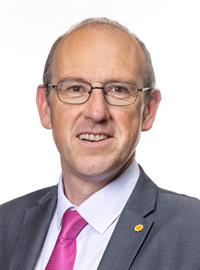
Llyr Gruffydd
Tenures
- Fourth Assembly Clwyd Plaid Cymru
- Fifth Senedd Clwyd Plaid Cymru
- Sixth Senedd Clwyd Plaid Cymru
- Seventh Senedd Clwyd Plaid Cymru
Ministerial roles
- Cabinet Minister for Rural Resilience and Sustainability Y Gweinidog Cabinet dros Wydnwch Gwledig a Chynaliadwyedd
Contributions, by sitting day
165 contributions on record, newest first. Official verbatim record.
7
Open this sitting on the stage
-
Diolch yn fawr iawn. Natural Resources Wales has confirmed that the fuel discharge has now stopped, with mitigation measures preventing residual fuel from reaching the River Taff. Clean-up and assessment of potential environmental impacts on the river habitat and wildlife continue, and NRW will of course continue to monitor developments closely.
-
Diolch yn fawr for your question—or for your questions, I should say; there are a number of questions there, but rightly need responding to. The first thing I would say is that I have spoken directly with Natural Resources Wales about this significant incident and the ongoing response. I fully recognise the concern that it has caused for local communities and for those with an interest in or an involvement with or living nearby the River Taff. NRW have confirmed to me, as I said in my initial answer, that fuel discharge has now stopped and that current mitigation measures are preventing residual fuel in the tributary from reaching the River Taff, and clean-up and environmental assessments are continuing. You asked about the volume particularly, but also the source and maybe a little bit about the precise circumstances of the release. Those remain matters for NRW's ongoing investigation, but you're right: early reporting made claims that a considerable amount, estimated at up to 25,000 litres, may have been lost into the site's surface water drainage system. But I wouldn't want to present that estimate as some sort of final confirmed figure, because, as I say, investigations continue. For example, my understanding is that the tank could potentially contain that much; it's not clear yet how much was in it. And, of course, not all of it would have found its way into the river—some of it would have been contained or collected on site before reaching there. So, we need to be mindful of that, but, obviously, this will become clearer over time. The pollutant has, though, been identified as kerosene. I've discussed the ongoing response with NRW, and I'll continue to keep closely sighted on developments there. The site operator's specialist contractor, who they brought in very early on, continue recovery and clean-up activity, including maintaining and replacing containment booms, whilst NRW continues to assess the environmental impact. NRW officers have observed impacts on aquatic invertebrates, which may be linked to this incident. The information currently available doesn't provide a firm timescale for completion of the clean-up—which is another question you asked—or any subsequent habitat restoration that might follow as a consequence. Again, I wouldn't want to speculate on that today, but that work is ongoing. NRW will continue to work with the site operator to establish the cause, and they will ensure that all possible steps are taken to prevent further spills. The circumstances of the incident and its environmental impacts remain under investigation, and it would therefore not be appropriate for me to speculate on who is responsible, or anticipate any regulatory or enforcement action that might follow. But, again, I would reiterate—I'm sure, on behalf of everyone here—our thanks to all of those who have been involved in the response effort, which, I have to say, happened promptly and in a very effective manner.
-
Thank you for the question. Frankly, everything you've asked for is in train. It will be the responsibility of NRW to provide all of that information. On cost recovery, clearly, they will need to establish liability, if there is liability, and then they will proceed in the appropriate manner, either through the courts or whichever way they believe is most appropriate. I have to question, if you dismantle NRW, as you describe it, the question remains, who would actually be dealing with these situations when they arise? Maybe that's something that you may wish to ponder.
-
Thank you for those questions. NRW are leading the effort in that environmental context, that is their role, but they are also liaising very closely with Public Health Wales and fire and rescue services as well. In terms of public health, you're right, there have been messages put out there by Public Health Wales; some will see them, others, unfortunately, will not. That's a constant challenge in these situations, and any learning that can be taken from any event is taken on board, I hope, and reflected upon. The advice has been clear. Obviously, if you can smell kerosene, then the advice is to keep windows and doors closed and avoid contact with any affected water—that goes for pets and children particularly. Anyone who does consequently feel unwell or concerned needs to contact NHS Wales 111, and the system will respond to that in the best way it can. I think public bodies have been providing that information as best they can, but there will always be room for improvement in that sphere.
-
Look, until the investigations have been completed, I am loath to point the finger as much as Members would like me to. Clearly, where liability is identified—let's put it that way—then NRW will take appropriate action. That is their role and that is what we all expect of them. In terms of seeking the source of the incident, my understanding is that whilst maybe it had been identified early on, once it was in the drainage system, which can be very complex, it's very difficult then to know exactly where that goes. So, maybe there's a bit of confusion around the source as opposed to the numbers of ways that that water could actually escape the site. But again, all of this will come out in the wash once the initial response and recovery has taken place. There will be a process then to make sure that we look at the results of all of that. In terms of the environmental impact, of course—and that is clearly an important factor here—NRW are waiting for results of samples for biological and ecological investigations. Drone surveys have been conducted so that they can visually assess the impact as well. I am told that 10 dead fish have been recovered from the river as a consequence of this. Ten dead fish. But, of course, impacts on invertebrates will mean greater ecological impacts as well, and I'm not downplaying that for a second.
-
Yes. And? [Laughter.]
-
Yes and yes. And you will note, of course, that the Deputy Minister with responsibility for public health is here to make sure that all of Members' concerns are fully taken on board. This is an ongoing issue, not just particularly in relation to this incident. These are the challenges that we will continually have to face. A changing climate makes that battle more difficult as well, as we experience more extreme weather events, which no doubt will test infrastructure and these kinds of facilities to a greater extent in years to come. It does remind us that we always need to be vigilant, always need to be diligent, and I would encourage, by the way, members of the public to make full use of NRW's hotline. There is a hotline there. People can go to their MSs, they can go and put stuff on social media, but ultimately, if you want a swift response, you need to let NRW know first. That would be another plea of mine today. Diolch.
7
Open this sitting on the stage
8. Short Debate: Green across the aisle: Making environmental stewardship a common cause cy
Diolch yn fawr iawn, Lywydd. A gaf i ddechrau drwy ddiolch i'r Aelod am gyflwyno'r ddadl yma a rhoi'r cyfle inni wyntyllu'r pwnc yma unwaith eto, a hefyd i'r Aelodau eraill am eu cyfraniadau y prynhawn yma? Dŷn ni ddim bob amser yn cytuno yn y Siambr yma, ond dwi yn cytuno â'r cynnig canolog sy'n sail i'r ddadl yma heddiw, sef, wrth gwrs, nad cyfrifoldeb un blaid yw hyn, yw stiwardiaeth amgylcheddol. Dyw e ddim yn gyfrifoldeb un sector, nag ychwaith yn gyfrifoldeb un genhedlaeth. Mae e'n gyfrifoldeb sy'n cael ei rannu am fod y manteision posib a ddaw o hynny yn cyrraedd pob cymuned yng Nghymru, boed hynny'n afonydd glân, yn briddoedd iach, yn ffermydd cynhyrchiol, adfer natur, ynni glân, economïau lleol cryfach. Nid blaenoriaethau sy'n cystadlu â'i gilydd yw'r rhain. Maen nhw i gyd yn gysylltiedig, yn fy marn i, ac mae'r ddealltwriaeth honno, wrth gwrs, wrth wraidd rhaglen llywodraethu y Llywodraeth yma. Mae'n siapio ein dull ni o ymdrin â ffermio, o ymdrin â dŵr, ynni glân, gwydnwch gwledig. Mae e hefyd yn siapio'r ffordd rŷn ni'n creu amodau ar gyfer twf cynaliadwy, ac, wrth gwrs, rŷn ni'n canolbwyntio ar gyflawni ymarferol—nid stiwardiaeth ddamcaniaethol, ond stiwardiaeth ar waith ar lawr gwlad.
Official English translation
Thank you very much, Llywydd. Could I start by thanking the Member for tabling this debate and giving us the opportunity to discuss this topic once again, and also to the other Members for their contributions this afternoon? We don't always agree in this Chamber, but I do agree with the central proposal behind today's debate, which is, of course, that environmental stewardship is not the responsibility of just one party. It is not the responsibility of one sector or even one generation. It's a shared responsibility, and the potential benefits of that reach every community in Wales, whether that is clean rivers, healthy soils, productive farms, nature recovery, clean energy, stronger local economies. These aren't competing priorities. They are all connected, in my view, and that understanding, of course, is at the heart of this Government's programme for government. It shapes our approach to farming, water, clean energy, rural resilience. It also shapes the way that we create the conditions for sustainable growth, and, of course, we focus on practical delivery—not stewardship as a theory, but stewardship in practice, on the ground.
8. Short Debate: Green across the aisle: Making environmental stewardship a common cause en
We're developing, as Members know, Wales's first climate and nature action plan. It'll bring together actions across government and across society to restore nature, to strengthen climate resilience, to support sustainable development, setting out a pathway towards our ambition in relation to net zero, but also substantive nature recovery as well. And a just transition will be baked into our approach, so that we avoid some of the mistakes that have happened in the past where some communities have been damaged and left behind by much of this. And I would refer to an example that I've used previously when it comes to this. Retrofitting homes is one policy that's being put forward as a means of reducing carbon emissions. But, of course, it isn't a binary policy, because retrofitting homes provides people with support for the cost-of-living crisis because it will lower bills. More energy-efficient homes will mean lower energy bills. Retrofitting homes means jobs. People will need to be employed to retrofit those homes, bringing further economic benefits. It'll give people warmer homes to live in. And that, in itself, I think is something that we should aspire to. But there are health benefits from that as well, because we will see, as a consequence of people not living in cold and damp homes, fewer children being raised in those homes and consequently suffering from respiratory challenges. We will see fewer winter excess deaths amongst our older population. So, net zero isn't binary. It's an opportunity to bring a number of additional benefits with it. And environmental stewardship as well can't sit within one portfolio. Decisions on housing, on transport, on food production, on skills, on economic development, public investment, they all matter. Every part of Government has a role here. And that ambition, of course, has to be backed up then by strong governance and accountability. And the Environment (Principles, Governance and Biodiversity Targets) (Wales) Act 2026 creates, doesn't it, the independent Office of Environmental Governance Wales to monitor environmental law, and hold public authorities to account. Statutory biodiversity targets will provide the long-term focus and transparency needed to halt and reverse biodiversity loss. And we'll develop those, by the way, using science and evidence. Taken together, the legislation, the independent oversight and targets give us a strong foundation for long-term nature recovery. Now, farmers are at the heart of much of this approach, but not just only farmers. There's a wider societal piece that's playing out here as well. But farmers do manage, of course, most of the land in Wales and they play a vital role as stewards of our countryside. Many of the habitats and landscapes we value depend on that active management. They produce our food, they sustain rural businesses and communities, and help shape the landscape that defines Wales very often. Too often, these debates present a choice, don't they, between food production and nature recovery. Well, the sustainable farming scheme is built on a simple principle: resilient ecosystems and sustainable food production can and should go hand in hand. And this year, as we know, more than 8,000 farm businesses, around half of all eligible farms in Wales, have joined the universal layer of the SFS. Now, that is a strong foundation on which to refine the scheme and develop future optional and collaborative actions. And the reason I didn't directly answer the points raised is because we haven't made those decisions yet. Those discussions are still ongoing, because I want to hear the voices of those around the table in stakeholder groups, and I want to understand what the options are. But when we have made the decision, you will be amongst the first to know. So, as I've said, this whole process is evolution, isn't it? It's evolution, not revolution. Farmers need certainty because they plan over many years—we know that—and that's why I've committed to over £1 billion over three years, to a multi-year funding cycle for the SFS, giving the sector that long-term certainty it needs to be able to help it to plan and invest with confidence. But support must also be practical. Good stewardship should not come with unnecessary bureaucracy, and, as you know, I have commissioned an independent review of the bureaucratic burden on family farms to identify where there is unnecessary complexity and to recommend practical improvements, because by reducing duplication and simplifying processes, we can then help farmers focus on what really matters most, which is the point I think that you're making: running successful businesses, producing food and caring for the landscapes that they manage. But individual action, of course, is only part of the answer. Flooding, water quality, wildfires and nature recovery don't stop at field boundaries, and that's why collaboration matters here as well. Through the collaborative layer of the sustainable farming scheme, we are looking to create those opportunities for farmers, land managers and communities to work together across landscapes and across catchments. The integrated natural resources scheme is demonstrating the value of collaboration as well across those larger landscapes and catchments, to improve water quality, to restore habitats, to reduce flood risk, of course, which is important here as well, and to strengthen that climate resilience that we need to build. We're now looking at how we can build on that approach and strengthen the support for that collaborative action in the future. Ffermio Bro supports co-ordinated action within our designated landscapes, helping farmers and land managers deliver local priorities for nature recovery, for ecosystem resilience and climate action. Its funding has increased from £1.9 million in 2025-26 to £7.5 million from 2026-28. Together, these schemes hopefully will shape future collaborative delivery through the sustainable farming scheme and other means, enabling action at a scale that no individual holding can achieve alone. We're also looking to restore Wales's natural assets as well. Peatlands are among our most important carbon stores, and wildlife habitats too. The national peatland action programme has restored over 4,000 hectares and has improved the habitat across a further 9,000 hectares here in Wales. That work supports biodiversity, yes, it does store carbon, whether we like it or not, but it also improves water management and it strengthens resilience to drought, flooding and wildfires—again, the multilayered benefits of some of these actions that we're taking. It's practical delivery for climate and nature together. But restoration can't be limited to individual habitats or protected sites. Nature recovery is needed across productive farmland, yes, but in our towns and communities as well. And, of course, Government can't deliver all of this alone. Through Nature Networks, we've announced more than £10 million for the next funding round. The fund has already supported more than 125 projects, improving protected sites and ecological connections across Wales.
8. Short Debate: Green across the aisle: Making environmental stewardship a common cause en
I will very briefly because I have a very long speech.
8. Short Debate: Green across the aisle: Making environmental stewardship a common cause en
Yes, you're right. I will be coming on to wildfires specifically in a minute, but that has to be a collective effort. You will know that a summit is being held, and I'll say a little bit about that in a minute and then we can maybe develop that a little bit. I've lost my train of thought now, which is always the risk when you take interventions. Woodland and tree planting—that's it. That also does have an important role to play. Through the national forest programme, of course, we're expanding and connecting woodland across Wales, restoring habitats, improving access to nature as well, and strengthening climate resilience while supporting communities and the Welsh timber sector as well, which is critical in this context also. We're also supporting landowners and communities through various woodland creation and restoration grants, helping deliver the right tree in the right place so that it benefits biodiversity, water quality, carbon storage and landscape resilience. Community groups, local authorities and volunteers are also restoring nature in our towns and villages, which is an important area that I wish to see more work done with. We want everyone to experience and benefit from nature close to home and that matters, again, for health and well-being, for children and families and for communities that maybe have not always enjoyed equal access to good-quality green space.
8. Short Debate: Green across the aisle: Making environmental stewardship a common cause cy
Lywydd, mae yna fwy o frys yn dod i gyflawni'r gwaith yma, wrth gwrs, wrth i Gymru brofi effeithiau hinsawdd sy'n newid. Eleni, rŷn ni wedi gweld y sychder, y gwres a'r tanau gwyllt dinistriol yna y cyfeiriwyd atyn nhw'n gynharach, wrth i lawer o gymunedau barhau i wynebu perygl llifogydd nawr wrth fod y gaeaf yn cau i mewn amdanom ni. Nid her ar gyfer y dyfodol yw newid hinsawdd; mae e'n realiti sy'n ein hwynebu ni'r eiliad hon ac mae'n rhaid inni feithrin gwydnwch lle y gallwn ni cyn i'r argyfyngau yma ddigwydd. Mae hynny'n golygu rheoli llifogydd yn naturiol, mae'n golygu adfer mawndiroedd, priddoedd a chynefinoedd iachach; gwell cynlluniau i reoli dalgylchoedd, y catchments; a chymunedau, wrth gwrs, sy'n fwy parod ar gyfer risgiau yn y dyfodol. Mi fydd y Prif Weinidog yn cynnull uwchgynhadledd ar 22 Hydref, uwchgynhadledd newid hinsawdd a gwydnwch Cymru. Mi fydd honno'n dod â phartneriaid at ei gilydd i ddysgu o ddigwyddiadau diweddar ac i gryfhau prosesau sydd yn helpu atal, sydd yn helpu bod yn barod ar gyfer digwyddiadau fel hyn yn y dyfodol, ac yn helpu'r ymateb pan fyddwn ni'n wynebu'r heriau yma wrth symud ymlaen. Dwi'n gweld y digwyddiad yna fel sbardun ar gyfer dechrau rhoi'r darnau at ei gilydd o safbwynt mynd i'r afael â chanlyniadau'r hyn sydd wedi digwydd, ond hefyd ein bod ni'n fwy parod wrth symud ymlaen ar gyfer digwyddiadau eraill a fydd yn digwydd—gwnaf i ddweud hynny yn hytrach nag 'a all ddigwydd', oherwydd rŷn ni'n gwybod beth yw'r trajectory.
Official English translation
Llywydd, there is increasing urgency to carry out this work, of course, as Wales experiences the effects of a changing climate. This year, we have seen the drought, the heatwaves and the devastating wildfires that were referred to earlier, as many communities continue to face flood risks now as the winter closes in. Climate change isn't a challenge for the future; it is the reality that faces us right now and we must foster resilience where we can before these crises emerge. And that means natural flood management measures, it means peatland restoration, healthier soils and habitats; improved catchment management schemes; and creating communities, of course, that are more ready to face future risks. The First Minister will convene a climate change and resilience summit for Wales on 22 October. That will bring together partners to learn from recent events and to strengthen preventative processes, which will assist with readiness for events such as these in future, and help with the response when we face these challenges moving forward. I see that event as the trigger for starting to put those pieces together from the point of view of addressing the consequences of what's already happened, but also to make us more ready as we move forward for future events that will happen—I'll say that they will happen rather than 'could happen', because we know what the trajectory is.
8. Short Debate: Green across the aisle: Making environmental stewardship a common cause en
So, we continue to invest heavily in flood risk management with over £85 million made available to risk management authorities in Wales this year, and that's not simply about delivering individual interventions, is it? It's about strengthening collaboration, improving our understanding of what works, sharing lessons to support future natural flood management and resilience activity as well, across Wales. And flood risk cannot be managed by any one organisation acting alone—I would reiterate that point again—and that's why, of course, we're refreshing the membership of our flood and coastal erosion committee, so that it can use its expertise and support Government in advising on policy strategy and long-term resilience. And that means, of course, working closely with risk management authorities, obviously, but Natural Resources Wales, Dŵr Cymru, Hafren Dyfrdwy, landowners, businesses and local communities as well. And community engagement is central to this approach, ensuring that local knowledge and lived experience help shape decision making and that resilience planning for the future. And the same principle of course applies to water quality. People rightly expect cleaner rivers and healthier water environments, and Government, regulators, water companies, land managers and communities all very much have a role there as well. We're progressing water reform, as Members will know, including proposals for a Welsh economic water regulator, with stronger powers to drive investment, reduce pollution and secure long-term improvements. Stewardship succeeds when responsibility is shared and when action is co-ordinated. And it's not only a rural agenda, by the way; as I said earlier, access to nature supports health and well-being, green spaces strengthen communities, and environmental investment can support jobs and local economies. That's why our programme for government includes action on skills, ensuring that Wales has the workforce to deliver on our ambitions, while supporting, of course, good jobs and growth.
8. Short Debate: Green across the aisle: Making environmental stewardship a common cause cy
Felly, Lywydd, mae'r ddadl heddiw wedi dangos, dwi'n meddwl, y gall Aelodau anghytuno ynglŷn â pholisïau unigol, ac mae'n berffaith deg ein bod ni'n gwneud hynny, ond bod yna dir cyffredin rhyngom ni fan hyn. Rŷn ni i gyd eisiau afonydd iach. Rŷn ni eisiau adfer natur, ffermydd cynhyrchiol, cymunedau gwydn, Cymru sy'n fwy parod ar gyfer llifogydd, sychder a thanau gwyllt, a gweithredu amgylcheddol sy'n cefnogi swyddi a ffyniant. Ond yr her, wrth gwrs, yw troi'r tir cyffredin hwnnw yn gamau gweithredu ymarferol. Mae hynny'n gofyn am fwy na phrosiectau unigol neu fentrau tymor byr. Mae'n gofyn am ymrwymiad hirdymor, am atebolrwydd clir a pholisïau sy'n gweithio gyda'i gilydd. Mae hefyd yn gofyn inni gydnabod yr wybodaeth a'r profiad sydd gan ffermwyr a rheolwyr tir, sydd gan gymunedau a sefydliadau amgylcheddol ledled Cymru. Mae'n rhaid i stiwardiaeth dda siapio'r ffordd rŷn ni'n cefnogi'r diwydiant amaeth, y ffordd rŷn ni'n rheoli dŵr, yn adfer natur, yn datblygu ynni glân ac yn cryfhau cymunedau. Mae hyn i gyd, wrth gwrs, yn golygu cefnogi'r rhai sy'n rheoli'n tir ni a'n adnoddau naturiol ni, gwrando ar y bobl sy'n adnabod eu hardaloedd orau a gweithio gyda'n gilydd i sicrhau gwydnwch hirdymor. Mae'n golygu cydnabod nad yw stiwardiaeth yn cyfyngu ar ffyniant, ond yn rhan sylfaenol ohono fe. Mae ecosystemau iach yn cefnogi ffermydd cynhyrchiol, cadwyni cyflenwi gwydn, cymunedau mwy diogel ac economi gryfach yng Nghymru. Dyna'r daith sydd o'n blaenau ni: stiwardiaeth rŷn ni'n ei rhannu; cyflawni ymarferol; a Chymru fwy gwydn, iachach a ffyniannus. Felly, dwi'n gobeithio y bydd yr Aelodau ym mhob rhan o'r Siambr yma yn gallu gweithio gyda'n gilydd er mwyn helpu'r Llywodraeth yma i gyflawni hynny. Diolch.
Official English translation
So, Llywydd, today's debate has shown, I think, that Members may disagree on individual policies, and it's quite fair for that to happen, but that there is also common ground here. We all want healthy rivers. We want nature restoration, productive farms, resilient communities, a Wales that is more prepared for floods, drought and wildfires, and environmental action that supports jobs and prosperity. But the challenge, of course, is turning that common ground into practical action. That calls for more than just individual projects or short-term initiatives. It demands a long-term commitment, clear accountability and policies that work together. It also requires us to acknowledge the knowledge and the experience of farmers and land managers, communities and environmental organisations across Wales. Good stewardship must shape the way that we support the agriculture industry, the way that we manage water, restore nature, develop clean energy and strengthen communities. But this all, of course, means supporting those who manage our land and our natural resources, listening to those people who know their areas best and working together to ensure long-term resilience. It means acknowledging that stewardship does not fetter prosperity, but that it is a fundamental component of it. Healthy ecosystems support productive farms, resilient supply chains, safer communities and a stronger economy in Wales. That is the journey that's ahead of us: shared stewardship; practical delivery; and a Wales that is more resilient, healthier and prosperous. Therefore, I hope that Members in all parts of this Chamber will be able to work together to help the Government to achieve this vision. Thanks.
13
Open this sitting on the stage
-
Diolch yn fawr iawn, Ddirprwy Lywydd. Haf 2026, fel rŷn ni'n ei wybod, oedd y cynhesaf erioed yng Nghymru, ac fe effeithiodd y sychder ar rannau helaeth o'r wlad. Ond nawr mae'r gaeaf yn agosáu, ac mi fydd newid hinsawdd yn arwain at aeafau gwlypach a glaw trymach, ac rŷn ni'n gweithio mewn amgylchedd sy'n mynd yn fwy ac yn fwy cymhleth. Ac felly rŷn ni'n gweithio'n agos â phartneriaid i baratoi ar gyfer y misoedd sydd i ddod. Mae newid hinsawdd yn cynyddu tebygolrwydd ac yn cynyddu difrifoldeb argyfyngau. Mae hyn yn rhoi pwysau cynyddol ar ein hymatebwyr brys a'n hawdurdodau rheoli risg. Mi hoffwn i ddiolch i'r gwasanaethau brys, Cyfoeth Naturiol Cymru, yr awdurdodau lleol ac eraill am eu hymdrechion ymroddedig i helpu i gadw ein cymunedau ni'n ddiogel drwy gydol y flwyddyn.
Official English translation
Thank you very much, Dirprwy Lywydd. The summer of 2026, as we all know, was the warmest on record in Wales, and the drought conditions affected large parts of the country. But now we are entering the winter period, and climate change will bring wetter winters and heavier rainfall, and we are operating in an increasingly complex environment. And so we are working closely with partners to prepare for the months ahead. Climate change is increasing both the likelihood and the severity of emergencies. This places growing pressure on our emergency responders and our risk management authorities. I'd like to thank those emergency services, Natural Resources Wales, the local authorities and others for their dedicated efforts to help keep our communities safe throughout the year.
-
Er enghraifft, eleni fe ddiweddarodd Cyfoeth Naturiol Cymru fapiau perygl llifogydd mewn wyth lleoliad afonydd ledled y wlad. Fe wnaethon nhw hefyd gyflwyno gwelliannau i'w gwasanaeth rhybuddio byw am lifogydd. Mae rhybuddion llifogydd Cyfoeth Naturiol Cymru a rhybuddion tywydd garw bellach ar gael ar fwy o lwyfannau digidol trydydd parti. Mi fydd hyn felly, wrth gwrs, yn cynyddu gwelededd rhybuddion llifogydd Cyfoeth Naturiol Cymru, gan gefnogi ymwybyddiaeth y cyhoedd. Fel Llywodraeth, rŷn ni wedi sicrhau bod £5 miliwn o gyllid refeniw ar gael i awdurdodau lleol ar gyfer gweithgareddau perygl llifogydd. Ledled Cymru, maen nhw'n paratoi ar gyfer misoedd y gaeaf. Mae hyn yn cynnwys asesu asedau allweddol, jetio draeniau a rheoli llystyfiant i leihau'r risg bod draeniau'n cael eu blocio. Maen nhw hefyd yn adolygu trefniadau ymateb brys i sicrhau eu bod nhw'n parhau i fod yn effeithiol. Mae ein tîm diogelwch a gwydnwch cenedlaethol yn parhau i fonitro ac asesu'r holl risgiau dros y gaeaf, gan gynnwys tywydd y gaeaf. Mae'n gweithio gyda phartneriaid gwydnwch i sicrhau bod dealltwriaeth gyffredin i gefnogi cynllunio gwybodus i wella gwydnwch ledled Cymru. Eleni, fel bob amser, mae ein paratoadau ni wedi'u seilio ar y gwersi a ddysgwyd o stormydd blaenorol. Fis Tachwedd diwethaf, daeth storm Claudia â glawiad sylweddol ledled Cymru. Fe wnaeth y storm effeithio ar ryw 400 eiddo yn sir Fynwy yn unig. Gwelodd rai lleoliadau ddyfnderoedd llifogydd o fwy na 1.5m. Bu tarfu ar gymunedau, seilwaith a gwasanaethau hanfodol. Dwi'n deall pa mor ddinistriol y gall llifogydd fod i aelwydydd a busnesau. Ym mis Awst eleni, fe ymwelais i ag Aberdaugleddau, lle clywais yn uniongyrchol gan drigolion yr oedd y llifogydd wedi effeithio arnyn hwy nhw a thrafod cynlluniau ar gyfer cynllun llifogydd newydd i ddiogelu eu heiddo nhw yn well. Roedd yn atgofiad pwerus o pam mae'r gwaith yma yn bwysig. Felly, gadewch i fi dynnu sylw at rai o'r ffyrdd y byddwn ni fel Llywodraeth yn cefnogi ein cymunedau a'n partneriaid. Rŷn ni'n helpu cymunedau sydd wedi dioddef llifogydd i gael llais cryfach drwy fforwm llifogydd annibynnol newydd yma yng Nghymru. Mi fydd y fforwm newydd yn cefnogi cymunedau sy'n gwella o lifogydd ac yn cryfhau parodrwydd a gwydnwch ar gyfer digwyddiadau yn y dyfodol. Mi fydd yn seiliedig ar y model llwyddiannus a weithredwyd yn yr Alban, ac mi allaf gadarnhau bod y grŵp llywio ar gyfer y fforwm wedi cyfarfod am y tro cyntaf yr wythnos diwethaf. Mi ddaeth â phobl sydd â phrofiad bywyd o lifogydd a sefydliadau partner ynghyd. Gyda'i gilydd, mi fyddan nhw'n helpu i lunio rhwydwaith cymorth cenedlaethol newydd ar gyfer cymunedau y mae llifogydd wedi effeithio arnyn nhw. Mi fyddwn ni hefyd yn penodi aelodau ychwanegol i'r pwyllgor llifogydd ac erydu arfordirol cyn bo hir, gan sicrhau y gall barhau i roi cyngor annibynnol i Weinidogion Cymru a, thrwy wneud hynny, ein helpu ni i lunio polisi yn y dyfodol. Mae'r Llywodraeth hon yn deall pwysigrwydd buddsoddiad parhaus yn ein seilwaith rheoli perygl llifogydd, gan sicrhau bod dros £85 miliwn ar gael eleni yn unig. Bydd y cynllun yn cefnogi cymunedau drwy gyflwyno ymyriadau sy'n amrywio o amddiffynfeydd rhag llifogydd i weithgareddau ymgysylltu â'r gymuned. Mi fydd yn darparu amddiffyniad rhag llifogydd hirdymor ac, wrth gwrs, yn gwella ein gallu i wrthsefyll newid hinsawdd. Mae enghreifftiau'n cynnwys cynlluniau yn Edward Street yn Ystrad Mynach; Maesyffynnon Lane yn Rhondda Cynon Taf; Llandysul a Phont Tyweli yn sir Gaerfyrddin; School Bank Road yn Llanrwst; a'r Bontnewydd yng Ngwynedd. Lle bynnag y bo'n bosibl, rŷn ni'n annog awdurdodau rheoli risg i ystyried buddsoddi mewn ymyriadau rheoli llifogydd naturiol. Mae'r ymyriadau hyn yn ategu'r amgylchedd naturiol ac yn helpu i arafu symudiad dŵr trwy ddalgylchoedd, neu catchments, gan wella ansawdd dŵr ar yr un pryd a chryfhau bioamrywiaeth hefyd. Mae modd targedu ymyriadau lle maen nhw'n fwyaf effeithiol, nid yn unig i'r gymuned ond hefyd i'r amgylchedd. Ond dim ond trwy weithio mewn partneriaeth gref gyda ffermwyr a thirfeddianwyr y gall dulliau naturiol o reoli llifogydd fel hyn lwyddo ar eu gorau. Mi fydd y cynllun ffermio cynaliadwy yn rhan bwysig o hyn. Mi fydd yn helpu rheolwyr tir i fabwysiadu atebion sy'n seiliedig ar natur, sy'n lleihau'r perygl o lifogydd ac yn cefnogi canlyniadau ehangach o wydnwch amgylcheddol a hinsawdd. Fodd bynnag, er gwaethaf y buddsoddiad parhaus yma i gyd, mae'n hanfodol bod cymunedau'n parhau i fod yn wyliadwrus i'r risg o lifogydd ac, wrth gwrs, i fod yn barod ar gyfer pob posibilrwydd. Mae un o bob saith eiddo yng Nghymru mewn perygl o lifogydd, a dim ond 27 y cant o'r deiliaid tai hynny sydd wedi'u cofrestru i dderbyn rhybuddion llifogydd gan Cyfoeth Naturiol Cymru. Yr wythnos hon, mae Cyfoeth Naturiol Cymru yn cynnal ei ymgyrch flynyddol Barod am Lifogydd. Mae'n bosib bod nifer ohonoch chi wedi gweld hynny ar y cyfryngau yn y dyddiau diwethaf. Mae'r ymgyrch yn tynnu sylw at dri cham syml y gall pawb eu cymryd i baratoi'n well ar gyfer llifogydd. Yn gyntaf, mi ddylech chi wirio risg llifogydd eich eiddo, ac fe allwch chi wneud hynny ar-lein. Mae gwefan Cyfoeth Naturiol Cymru yn caniatáu i bobl wirio gwybodaeth am risg llifogydd gan ddefnyddio eu cod post a map rhyngweithiol. Yn ail wedyn, cofrestrwch i gael rhybuddion am ddim o lifogydd o afonydd a'r môr. Mae modd cael rhybuddion trwy neges destun, trwy e-bost neu neges llais, ac mi all pobl gofrestru drwy wefan Cyfoeth Naturiol Cymru neu drwy gysylltu â Floodline, ac mi wnaf ddweud y rhif: 0345 988 1188. Ac yn olaf wedyn, byddwch yn barod pan fo rhagolygon o lifogydd. Mae Cyfoeth Naturiol Cymru yn darparu cymorth ymarferol ar-lein i helpu pobl i baratoi ar gyfer llifogydd, ond hefyd i ymateb iddyn nhw, ac wedyn, wrth gwrs, i adfer ar eu hôl nhw. Dwi'n annog pawb i ddefnyddio'r adnoddau yma sy'n rhad ac am ddim i bob un. Gwiriwch a ydych chi neu'ch teulu mewn perygl o lifogydd, ac, os ydych chi, sicrhewch eich bod chi'n cael mynediad at yr holl gymorth sydd ar gael. Dwi hefyd yn annog pawb i adolygu eu trefniadau yswiriant. Dyw yswiriant llifogydd ddim bob amser wedi'i gynnwys mewn polisïau yswiriant cartref safonol. Felly, mae'n bwysig gwirio manylion eich yswiriant. Efallai na fydd rhai polisïau newydd yn dod i rym ar unwaith, felly gall gweithredu'n gynnar fod yn hanfodol yn hynny o beth hefyd. Ac i'r rhai sy'n ei chael hi'n anodd cael yswiriant, wel, mi hoffwn i dynnu sylw at ddau gynllun penodol. Y cyntaf yw Flood Re. Mae'r cynllun hwn, sy'n gweithredu ledled y Deyrnas Unedig, yn helpu aelwydydd i gael mynediad at yswiriant llifogydd fforddiadwy, ac mi all hyn fod yn arbennig o berthnasol, wrth gwrs, i bobl sydd wedi profi llifogydd o'r blaen neu wedi cael trafferth cael yswiriant. Mae gwefan Flood Re yn darparu manylion yswirwyr sy'n cymryd rhan yn y cynllun, ond dwi'n annog pobl i ystyried eu dewisiadau yn ofalus. A'r ail wedyn yw'r cynllun ailgodi'n gryfach. Nawr, mae hyn yn caniatáu i ddeiliaid tai sy'n adfer ar ôl llifogydd i osod mesurau gwydnwch llifogydd yn eu heiddo yn ystod y broses o atgyweirio, ac efallai y bydd hyd at £10,000 ar gael gan yswirwyr i gefnogi'r gwelliannau hyn. Ond wrth edrych ymlaen, Ddirprwy Lywydd, paratoi yw'r ffordd orau o amddiffyn ein hunain rhag llifogydd a thywydd eithafol. Mi fydd Llywodraeth Cymru'n parhau i weithio'n agos â phartneriaid i'n gwneud ni'n fwy gwydn, i ddysgu, wrth gwrs, o ddigwyddiadau blaenorol a hefyd i gefnogi ein cymunedau, ac mi hoffwn i ddiolch i bawb sy'n rhan o'r gwaith hwnnw. Drwy gydweithio, fe allwn ni helpu i sicrhau bod Cymru'n barod ar gyfer yr heriau y gallem ni eu hwynebu'r gaeaf hwn. Diolch yn fawr.
Official English translation
For example, this year Natural Resources Wales updated flood risk mapping at eight river locations across Wales. They also delivered improvements to their live flood warning service. NRW flood warnings and severe weather warnings are now available on a greater number of third-party digital platforms. This will therefore, of course, increase the visibility of NRW flood warnings, supporting public awareness. As a Government, we have made almost £5 million of revenue funding available to local authorities for flood risk activities. Across Wales, they are preparing for the winter months. This includes assessing key assets, jetting drains and managing vegetation to reduce blockage risks. They are also reviewing emergency response arrangements to ensure that they remain effective. Our national security and resilience team continues to monitor and assess all risks over the winter, including winter weather. It works with resilience partners to ensure that there's a shared understanding to support informed resilience planning across Wales. This year, as always, our preparations are grounded in the lessons learned from previous storms. Last November, storm Claudia brought significant rainfall across Wales. The storm impacted almost 400 properties in Monmouthshire alone. Some locations saw flood depths of more than 1.5m. Communities, infrastructure and essential services were disrupted. I understand how devastating flooding can be for households and businesses. In August of this year, I visited Milford Haven, where I heard first-hand from residents affected by flooding and discussed plans for a new flood scheme to better protect their properties. It was a powerful reminder of why this work matters. So, let me highlight some of the ways in which we will, as a Government, support our communities and partners. We are giving flood-affected communities a stronger voice through a new independent Welsh flood forum. The new forum will support communities recovering from flooding and will strengthen preparedness and resilience for future events. It will be based on the successful model implemented in Scotland, and I can confirm that the forum’s steering group met for the first time last week. It brought together people with lived experience of flooding and partner organisations. Collectively, they will help shape a new national support network for flood-affected communities. We will also shortly appoint additional members to the flood and coastal erosion committee, ensuring it can continue to provide independent advice to Welsh Ministers and, in so doing, help us to shape future policy. This Government understands the importance of continued investment in our flood risk management infrastructure, making over £85 million available in this year alone. This funding will support communities by delivering interventions ranging from flood defences to community engagement activities. It will also provide long-term flood protection and support increased resilience to climate change. Examples include schemes at Edward Street in Ystrad Mynach; Maesyffynnon Lane in Rhondda Cynon Taf; Llandysul and Pont Tyweli in Carmarthenshire; School Bank Road in Llanrwst; and Bontnewydd in Gwynedd. Wherever possible, we encourage risk management authorities to consider investment in natural flood management interventions. These interventions complement the natural environment and help slow the movement of water through catchments, whilst improving water quality and strengthening biodiversity. Interventions can then be targeted where they are most effective, not only for communities but also for the environment. But natural flood management can only succeed through strong partnership working with farmers and landowners. The sustainable farming scheme will be an important part of this. It will help land managers to adopt nature-based solutions, which reduce flood risk and support wider environmental and climate resilience outcomes. However, despite this continued investment, it is essential that communities remain vigilant to the risk of flooding and are prepared for all eventualities. One in seven properties in Wales is at risk of flooding, but only 27 per cent of those householders are registered to receive NRW's flood warnings. This week, NRW is running its annual Be Flood Ready campaign. Many of you will perhaps have seen that on social media in recent days. The campaign highlights three simple steps that everyone can take to be better prepared for flooding. Firstly, you should check your property's flood risk, and you can do that online. NRW's website allows people to check flood-risk information using their postcode and an interactive map. Secondly, then sign up for free flood warnings, from both rivers and the sea. Warnings can be received via text messages, e-mail or voicemail messages, and people can register through NRW's website or by contacting Floodline, and I will share the number: it's 0345 988 1188. And finally, be prepared when flooding is forecast. NRW provides practical online advice to help people prepare for, to respond to, and then, of course, to recover from flooding. And I encourage everyone to make use of these free resources. Please do check if you or your family are at risk of flooding, and, if you are, please then access all the support available to you. I also encourage everyone to review their insurance arrangements. Flood cover is not always included in standard household insurance policies. It is therefore important to check the details of your cover. Some new policies may not take effect immediately, so acting early can be crucial in that regard. And for those who find it difficult to obtain cover, I would like to highlight two specific schemes. The first is Flood Re. This UK-wide scheme helps households access affordable flood insurance, and it may be particularly relevant, of course, to people who have previously experienced flooding or who have struggled to obtain insurance cover. The Flood Re website provides details of participating insurers, but I encourage people to consider their options carefully. And the second is the build back better scheme. This allows householders recovering from flooding to install flood resilience measures in their property during the repair process, and up to £10,000 may be available from insurers to support these improvements. But in looking ahead, Dirprwy Lywydd, preparation remains our strongest defence against flooding and severe weather. The Welsh Government will continue to work closely with partners to strengthen resilience, to learn, of course, from past events, and to support our communities, and I want to thank everyone involved in that work. By working together, we can help ensure that Wales is ready for the challenges this winter may bring. Thank you.
-
Well, I was minded to thank the spokesperson for her response, but I do rather feel that it doesn't appreciate what is already happening. You know, £85 million is a significant chunk of Welsh Government funding towards flood schemes. We know that there are 273,000 properties at risk of flooding, and we know as well that 270 separate locations will benefit from capital investment through the schemes that are being proposed. There's a current window open for those local authorities to bring forward schemes that they wish to pursue in the next financial year—that window closes at the end of this year—whilst, at the same time, there are schemes there to support communities in the interim, whilst those schemes are being developed. So, the lead flood authorities will know this, and we are working closely with many of them. You referenced Monmouthshire. I have met with the leader of the council and officials at Monmouthshire, and we know that £445,000 is being provided for the Woodside scheme in Usk, a further £178,000 for works on four local flood management interventions, alongside £389,000 for further projects as well. But we know that there's more to do, and we are pursuing options, working with other partners, Natural Resources Wales, and others as well. Schemes such as the sustainable farming scheme will play their part. You will be familiar with the fact that there is over £100 million allocated for the optional and collaborative tiers of that scheme. The collaboration at that landscape scale, catchment scale, is exactly the kind of intervention that we want to encourage and that we will hope to invest in, through this scheme. And you mentioned wildfires—I'm glad you did, because it is a consequence of climate change, something that you don't recognise—and there is a summit, as you well know, happening on 27 October, to consider, discuss, reflect and pursue these exact schemes moving forward to the future.
-
Diolch yn fawr. There's a lot there. Certainly, in terms of informing people about the risks and actions they can take, I hope that this statement today will contribute to that. Clearly, Natural Resources Wales were across the media earlier this week promoting the support that they can provide that I referred to in my statement. You mentioned specifically around vulnerable people as well. We do have JIGSO, which is a secure mapping capability within DataMapWales, and that brings together information to help emergency responders build situational awareness and identify where vulnerable people are during incidents, and I think that's important. It combines Dŵr Cymru priority services register data with information such as flood alerts, weather warnings and power outage data et cetera. So, we will need to continue to build on that. You are right; we are building on investments and commitments made by the previous Government. And the challenge back to you is that, with your support, we might be able to continue with that very good work. Clearly, that's something that we need to discuss, but I'm sure that everyone who gets up in the Chamber today and encourages this Government to consider giving this budget the rightful quantum of funding will consider that when they cast their vote, when it's time to decide whether we have a budget or not. I would agree with the points you were making about embedding flood action across Government, actually. Transport, certainly, has a big role to play, because we know that water run-off very often is a big contributor to some of the challenges that we face. I referenced the sustainable farming scheme, but there are wider considerations around the wider economy and enterprise portfolio as well. And similarly, on your reference to the fire and rescue authorities, I did reference the emergency services, which, of course, goes beyond just those. But the relevant Minister as well has a role to play in that. Much of this—again, I would reiterate—will come together in the summit that's being held next week, but that is only very much a moment in this ongoing discussion and one that we appreciate needs to continue, intensify and accelerate.
-
Thank you very much, again, a long list of questions there. I think it was right that you acknowledged the impact on businesses as well, because we do focus, of course, on domestic properties and homes, but businesses, absolutely. And I would reiterate again that there are particular sources of support and the need for different kinds of insurances, et cetera, for businesses as well, and there is information out there to support those, similarly. You asked about the overall picture and what it would cost to fix it all. I don't have that figure. What I do know is that 273,000 properties are at risk in Wales, and not one Government can meet the cost of addressing all of that. But that is, of course, why we are pursuing—building on work from previous Governments as well—nature finance and those opportunities that, hopefully, will allow us to invest in those catchment-scale, nature-based solutions that will go part of the way in defending and mitigating some of those risks. The resilience of services is absolutely critical here. In fact, the wider Cabinet yesterday spent some time considering wider resilience questions here in Wales. The First Minister himself, of course, has an overarching responsibility for national resilience, but you're right, it's about working with other Ministers and we do that and we will continue to do that. And, of course, that will come into greater focus again on the back of the summit, where I hope there will be some clear outcomes, some clear actions for us all to pursue collectively. Only 27 per cent are registered for the NRW alerts. When I chaired the climate change committee in the last Senedd, we published a report on flooding and the response to flooding; this was one of the concerns that we highlighted. I'm glad to see a concerted effort now from NRW to increase and to try and promote that, but of course, that isn't just on NRW, it's for every single one of us here as well to make sure that we use our social media channels, that we use our contacts and connections in communities, particularly in those communities that people have referred to that we know are facing potential risks this winter. So, I would not just throw it back to you, but I would say that we all have a part to play in that endeavour. But also, of course, we are, I will remind Members, in the process of setting up the Welsh flood forum, which is going to be all about making sure that communities are prepared, and then when something happens, that there is a response and a resilience from within, not just from the emergency authorities, but also the support there to recover as well. We're taking inspiration from what they've done in Scotland and we're engaging with the National Flood Forum to start that work in earnest. As I said, I was part of a meeting last week where we brought those stakeholders together with those people from communities with lived experience of flooding to start the work of bringing all of this together.
-
Thank you for your question, and you're right, there's a longer term picture here, and there's a shorter term, more initial response that's required, and we try and accommodate that in the way that we utilise the funding that's available. So, as I said, this year we are making £85 million available to risk management authorities across Wales. That includes nearly £30 million in revenue funding for things like asset maintenance, warning systems, which are absolutely relevant this year, operational planning and flood response, which all could be part of the services provided within the coming months. Right now, I know that risk management authorities across Wales are proactively clearing trash screens, checking pumps, clearing vegetation and inspecting assets as well. They can apply for funding from Welsh Government for property flood resilience measures, things such as flood gates, and we'll fund those authorities to provide that sort of property flood resilience as an interim measure, whilst more formal schemes are being developed and built up. This year, we've made over £3 million available in capital funding for risk management authorities in Afan Ogwr Rhondda. I think there are 19 different schemes being delivered by NRW, by Neath Port Talbot Council, Bridgend council and Rhondda Cynon Taf as well within the constituency area. Once those schemes are completed, then the estimate is that that funding will benefit over 7,000 properties.
-
I don't have a particular precise figure in mind. I think these are the kinds of schemes that we can build up through, particularly, the collaborative layer of the scheme, because bringing farmers and landowners together at that catchment scale requires that level of collaboration that we're not seeing happening as often as we would like. There are very good examples out there of groups coming together and realising very positive benefits. So, it's certainly something that we're looking at, something that we're considering and something that could well be a bespoke funding stream within the sustainable farming scheme, particularly at those maybe optional, but maybe even more so the collaborative layer.
-
Thank you for the question. I think there are a number of interventions along those lines that would absolutely contribute to the bigger picture. It needs to be co-ordinated, managed and designed in the appropriate way. I visited a site recently in Denbighshire, Llysfasi college, where they've created leaky dams, which means that once the water level rises to a certain point, it flows into a leat and into lakes in a nearby field to store that water. That one single intervention isn't going to be the silver bullet for the River Clwyd, but you replicate that a dozen, 20 or 30 times at catchment scale and it does make a difference. There's a wide range of interventions. But we can—and I've said this very recently in the Chamber and elsewhere—mix concrete to our heart's content. Yes, there will be traditional interventions that we need for some specific locations, but we have to work with nature. We have to work with the grain of nature. Because if we don't, nature always wins, and I think we need to be mindful of that in designing the right approach in the right place.
-
Thank you. I appreciate that sometimes these processes take longer than anyone would wish, but there is a process in place, there is a window for funding for some of these schemes. Risk management authorities need to bring forward their proposals, they need to develop their business case and make the case. Sometimes they succeed, sometimes they don't, because as you can imagine, all parts of Wales are submitting for those kinds of schemes. It's clearly something that we need to work with local authorities particularly, but other bodies as well, to deliver. In terms of the coherence of approach, yes, we do have local resilience groups that bring some of these parties together, and that needs to happen as effectively as possible. There's always room for improvements, there are always lessons to be learnt, and that's one important message that I would convey. The summit again is going to be another opportunity to do that at a national level, but certainly there's a regional and more localised element to that as well. There's no silver bullet, there's no magic wand; I think very often it's about getting the right people in the right place together around the table.
-
Thank you for that. I think that's an important point that we haven't covered so far this afternoon. I've mentioned the flood forum, of course, which has a very specific focus on working with people and communities, particularly those who are at risk and who maybe have experienced historic incidents of flooding, and that will be supported by this Government. It is a programme for government commitment, a manifesto commitment of ours, and we will deliver it, and work has already started on making that happen. I took a great deal of inspiration from the visit I mentioned in my statement to Milford Haven, where we saw that flooding isn't just about damage to your property or losing possessions. As horrible as that is and how harrowing the physical damage is, the mental health impacts can last for much longer. And I was struck, as I'm sure many Members here who've seen that kind of experience close up are, by how the community can rally around very often and continue to support each other long after the flooding has receded. But we are committed to establishing that independent flood forum, which will be there to try and stimulate and support some of those less formal networks, if you like, that are so critical when communities are in their hour of need.
-
Thank you for the question. That isn't something that I've thought about, and I will go away and reflect on that. What I would say is that they're not Welsh Government reports. They are reports by those flood authorities. I'm not passing the buck. If there is a genuine element of support that the Government could provide in stimulating that to happen a bit more quickly, then we're more than open to considering that. But what I would caution is that those section 19 reports have a job to do in terms of understanding a lot of technical stuff around hydrology and the impact of how things happen, how they can be mitigated, and you don't arrive at some of those decisions within weeks. Assessments and studies have to happen. But I will take that away and reflect to see whether there's something that we can do about that.
-
Thank you for raising that specific issue. I think it underlines as well how responding to some of these situations is a cross-Government responsibility, because of the impact on infrastructure such as transport as well. I will ask Natural Resources Wales to update the Member as regards where they are with that, and we'll probably have to go from there.
-
Diolch. Ar lefel eiddo, fel rôn i'n sôn yn gynharach, mae yna gyfle i gael buddsoddiad penodol ar gyfer gwydnwch eiddo yn wyneb llifogydd, a byddwn i'n annog awdurdodau rheoli risg ar draws Cymru i ddod ymlaen gyda gofynion penodol ar gyfer buddsoddiadau yn hynny o beth. Mi wnes i gyfeirio hefyd at rôl sydd gan y cwmnïau yswiriant i chwarae. Build back better yw'r term maen nhw'n ei ddefnyddio. Os ŷch chi wedi cael eich effeithio, fel rhan o'r gwaith yswiriant, mae yna rai cwmnïau yswiriant yn barod i fuddsoddi mwy na gwerth y difrod er mwyn helpu i atal difrod pellach yn y dyfodol. Felly, byddwn i'n annog pobl i siarad â'u cwmnïau yswiriant pan fyddant yn wynebu sefyllfa fel yna. Byddwn i hefyd yn dweud, gyda'r mesurau sy'n edrych ar eiddo penodol, ei bod hi'n bwysig bod y gwaith yna'n cael ei wneud gan gwmnïau cymwys—cwmnïau sy'n gwybod beth maen nhw'n ei wneud. Dyna pam rŷn ni'n dweud mai'r awdurdodau rheoli risg sydd yn y lle gorau i gomisiynu'r gwaith yma, a bod y ceisiadau'n dod trwyddyn nhw, oherwydd wedyn maen nhw'n gallu sicrhau bod y safonau angenrheidiol yn cael eu cwrdd. Maen nhw hefyd, ar sail gymunedol, yn gallu sicrhau economies of scale lle mae yna sawl eiddo'n cael eu delio â nhw ar yr un pryd. Byddwn i'n dod yn ôl at rywle dechreuais i'n gynharach: dwi'n gweld y fforwm llifogydd cenedlaethol i Gymru fel cyfrwng allweddol i fod yn lladmerydd dros y bobl yna sydd yn byw yn y cymunedau, sydd yn byw o dan y cysgod yma, yn dal eu llaw nhw, yn gweithio gyda nhw i baratoi fel eu bod nhw â mwy o hyder—os oes rhywbeth yn digwydd, eu bod nhw'n gwybod beth maen nhw angen ei wneud, a'u bod nhw'n gwybod hefyd bod rhai o'r mesurau sydd ganddyn nhw wrth law yn mynd i wneud gwahaniaeth, a phetai'r gwaethaf yn digwydd, bod rhywun gyda nhw ar y daith echrydus, hir yna yn ôl i adfer. Dwi'n meddwl bod hynny hefyd yn neges bwysig iawn.
Official English translation
Thank you. At a property level, as I mentioned earlier, there is an opportunity to have specific investment for property resilience as a result of flooding, and I would encourage risk management authorities across Wales to bring forward their specific requirements for investments in that regard. I did make reference to the role that insurance companies have to play. Build back better is the name of the scheme. If you've been affected, as part of the insurance work, there are some insurance companies that are willing to invest more than the value of the damage to help prevent further future damage. I would encourage people to speak to their insurers when they face those situations. I would also say, with the measures looking at specific properties, that it is important that that work is done by appropriate, qualified companies who know what they're doing. That's why we say that risk management authorities are best placed to commission this work, and that the applications should come through them, and then they can ensure that the necessary standards are met. But also, at a community level, they can ensure economies of scale where there are a number of properties being dealt with simultaneously. I would return to where I started earlier: I see the national flood forum for Wales as a key means of being an advocate for those people who live in those communities that are living under this cloud, holding their hand, working with them to prepare so that they can have greater confidence—if something does happen, that they know what they need to do, and that they will know that some of the measures available to them will make a difference, and if the worst were to happen, that there is someone with them on that appallingly long journey back to recovery. I think that's another important message.
35
Open this sitting on the stage
2. Questions to the Cabinet Minister for Rural Resilience and Sustainability en
Obviously, our community green spaces matter for people, for nature and the places where people live. We are investing in programmes that protect and improve them, including in Newport and Islwyn. I want to build on that work, particularly in communities where access to good-quality green space is most limited.
2. Questions to the Cabinet Minister for Rural Resilience and Sustainability en
Thank you for raising this issue. I am aware, actually, of the concerns that residents have raised on this particular issue. You will also know that this is a matter for Newport City Council; it wouldn't be appropriate for me to intervene in what is and should be a local decision. But I think the wider principle here is important. Communities need both accessible green spaces and opportunities to grow food. But it is important, of course, that those local decisions have to reflect the value that people place on these spaces, and access to nature shouldn't depend, really, on where you live. I want more people to have good-quality green spaces close to home, particularly, as I said in my initial answer, where access is currently poorest.
2. Questions to the Cabinet Minister for Rural Resilience and Sustainability en
Thank you for the question. Obviously it's about striking the right balance, isn't it? We know that there is a demand for energy, we know that there is a demand for food, and consequently there will be, sometimes, conflicting demand for land. The planning system is there to try and protect the integrity of those demands in a way that strikes the right balance. Sometimes, planning authorities get it right, other times, maybe, people will disagree, and that's the nature of the situation that we're facing. You will know—and I am straying into the territory of other Ministers here—that work is ongoing to look at planning policy, particularly in relation to energy infrastructure. There is also work happening on a new national energy strategy for us here in Wales. I will entrust that work to my Cabinet colleagues, and I am confident that they will get it right and also confident, of course, that all Members here in the Senedd will have an opportunity to scrutinise that when the time is right.
2. Questions to the Cabinet Minister for Rural Resilience and Sustainability en
Well, thank you for the question. As you say, it's similar to the question that has been asked, and I feel that the answer may well be similar as well. But it is about striking that balance, I think, and, as I say, the planning system should, when it functions properly, take all of those considerations in the round and, hopefully, bring forward the right balance. But we are looking at planning policy in this energy space and we are working as well on the new energy strategy for Wales, much of which will not only deal with solar, but with the additional infrastructure that goes with some of these projects.
2. Questions to the Cabinet Minister for Rural Resilience and Sustainability en
Thank you for drawing attention to that particular scheme. I always believe that this kind of work is most effective when you empower local communities to take action like that, and, of course, we have backed that commitment with practical investment through Local Places for Nature, for example, because that scheme alone has created or improved thousands of green spaces and pollinator sites across Wales. In Newport and Caerphilly particularly, 28 community garden packages were delivered in the last year, creating nature gardens, orchards, food-growing areas, but wildlife habitats as well. Another 70 nature gardens are planned by the end of this year. So, there's a lot happening, backed up by the £16 million that the Government has allocated to Local Places for Nature this year. It's very commendable, the work that's happening, and what we really want to see is how we can replicate that as widely as possible across the whole of Wales.
2. Questions to the Cabinet Minister for Rural Resilience and Sustainability en
I have regular discussions with my Cabinet colleague. In the coming weeks, I know that the Cabinet Minister for Enterprise, Connectivity and Energy will set out our plans to turn our manifesto commitment for the undergrounding of new electricity circuits in Wales into a new planning policy.
2. Questions to the Cabinet Minister for Rural Resilience and Sustainability en
Thank you for drawing our attention to that. I'm always concerned when there are any circumstances that require police attendance and police involvement. There's a certain way of doing things, and I think decent courtesy means that that should always be adhered to. I won't be drawn on commenting on any specifics, because I'm sure you can understand that I'd be straying into difficult territory. But we do expect all developments planned in Wales to have regard to all relevant planning policy, to be sensitively designed and implemented to avoid and to definitely minimise impacts, at least on communities and the environment, but also to maximise the benefits, because I think there are two sides to this coin. When you get it right, it releases a lot of opportunities economically, et cetera, but when you get it wrong, then those are the risks that sometimes appear.
2. Questions to the Cabinet Minister for Rural Resilience and Sustainability en
Well, that isn't really a role of mine within my portfolio. Clearly, it has a relevance to the energy Minister and it will have a relevance to the planning Minister as well. So, maybe you'd like to direct your question to them when the opportunity arises.
2. Questions to the Cabinet Minister for Rural Resilience and Sustainability en
I'm under no illusion about the difficult transition that we're on at the minute, from the legacy BPS programme through to the new sustainable farming scheme. It's a journey that we will continue to travel on. You said that the SFS is wholly inflexible. Well, I'd like to think that some of the decisions and announcements that I've made of late shows that we can make it flexible and more workable for more farmers, so we will continue to do that. I will not entertain dropping the transition by just 1 per cent, but I am of course considering making the SFS truly more accessible to as many farmers as possible.
2. Questions to the Cabinet Minister for Rural Resilience and Sustainability en
'Just transition' is exactly what we are trying to achieve here. You say that we've done nothing; we've committed £1 billion over the coming three years to farming to make sure that those farmers who aren't sure about coming on board with the SFS can see that there actually is a quantum of funding there that they can access, that they can utilise, to make their businesses and their farms more resilient. Now, some will choose not to do that and I appreciate that. My job is to make sure that as many people as possible who wish to come on that journey can do so. I'm focused on doing that because that is the just transition that we need to see. But it isn't only about money as well, of course. We have introduced the review into red tape, which will be, hopefully, a great benefit to farmers who are grappling with the amount of paperwork that they're dealing with. You mentioned the control of agricultural pollution changes. We have been pragmatic, we have been practical, and, where we can do that, we will do that. But, ultimately, we are on this journey transitioning into the sustainable farming scheme and we need to keep our focus on getting there.
2. Questions to the Cabinet Minister for Rural Resilience and Sustainability en
Thank you. I won't get drawn on particular court cases, et cetera—you'll understand that I can't comment on those—but you make a very valid point about biosecurity measures, and I will write to the company and others to make sure that they are reminded of their responsibility particularly to respect those.
2. Questions to the Cabinet Minister for Rural Resilience and Sustainability en
Well, not only within my portfolio, as I think there's a huge responsibility across Government on all of us to lean more heavily on nature-based solutions, because we can mix concrete to our heart's content, but, unless we work with the grain of nature, we will always ultimately lose that battle. So, we do have to recalibrate our approach, and we absolutely are committed to those nature-based solutions. The wildfire summit in a few weeks' time will offer, hopefully, the starting gun for some particular work streams around that. I have some particular thoughts around how the sustainable farming scheme and land management can actually support that as well, particularly given the way that farmers stepped up to help fight some of the wildfires that we saw over the summer. Flooding as well, of course—we know there's talk of improving catchment or retaining water through various means in the uplands, et cetera. But key to all of this as well, of course, is it still needs funding, it still needs finance, because the interventions will cost. So, yes, Government has a role to play. Other authorities clearly have a role to play. But nature finance as well, I think, is a key area where we need to be focusing on. I very much intend to build on the work of the previous Government to really focus on that area over the coming months.
2. Questions to the Cabinet Minister for Rural Resilience and Sustainability en
Thank you for that. I'm not 100 per cent sure where we are on that. I am aware, if I'm correct, and I don't wish to mislead the Senedd, that a review is happening of the evidence at the minute. I'm awaiting advice from officials. Maybe, if you'd allow me, I will write to you to give you an update of where we are, because it is an area that clearly needs to be addressed.
2. Questions to the Cabinet Minister for Rural Resilience and Sustainability en
Yes, she's very good. She never does it to me. [Laughter.]
2. Questions to the Cabinet Minister for Rural Resilience and Sustainability en
Thank you. There were a couple of questions in there. I haven't got the list in front of me of the membership of that group, but we are, you're right, looking at a whole food system, from gate to plate and beyond—well, no, where does it go after that? I'm not sure. [Laughter.] But, certainly, there is a need to make sure that all voices are heard around that table. And I know, of course, that the group itself will be utilising work streams that will draw on experience of others also through other fora and networks. And I know that the chair has engaged widely, to say the least, already, beyond what has been brought together around that particular stakeholder group. It will have a number of work streams. We want to look at areas around the red meat supply chain in Wales. We want to look at horticulture and growing horticulture, and we want to look at food in schools initially. Those are some of the areas that will be prioritised in the first place. So, clearly, if we're looking at the red meat supply chain, then processors and others will be a big, big part of that conversation.
2. Questions to the Cabinet Minister for Rural Resilience and Sustainability en
Well, after the session we had in committee, I made sure that I did write to the UK Government to make these representations, to make sure that any implications for Welsh agriculture are properly considered and any negative consequences are avoided. My understanding is, of course, that most of the fertiliser coming to the UK is from the EU—so they wouldn't be affected by the carbon border adjustment mechanism—mainly from the Netherlands, Norway, Germany, and Belgium. But there is some coming from beyond, and we need to guard against any negative consequences stemming from that. To come back to your previous question as well, if we need to legislate on certain areas, we will. I think we need to wait and see what they recommend. I would prefer action that doesn't require legislation in order to get on with it more quickly, but where we do need to legislate, we won't shy away from that. And on strengthening procurement policy as well, I know that there will be the publication of a new statement on public procurement policy from this Welsh Government soon, and I'm sure the relevant Minister will publish that when it's ready.
2. Questions to the Cabinet Minister for Rural Resilience and Sustainability en
Protecting groundwater is essential for safeguarding drinking water supplies, the environment and Wales's long-term water resilience. Planning and environmental permitting processes require risks to groundwater to be assessed and managed. Where risks are identified, Natural Resources Wales can then require mitigation measures, monitoring and ongoing controls to protect water resources.
2. Questions to the Cabinet Minister for Rural Resilience and Sustainability en
Thank you for that question. I know that this is a challenge that could occur in a number of different contexts. I hope you'll be reassured that the Welsh Government is working with Natural Resources Wales and local planning authorities through the planning and environmental permitting systems to make sure that groundwater risks are identified and that they are properly assessed and managed before major developments proceed. We set the national planning policy framework that local planning authorities apply when determining applications, and Natural Resources Wales provide specialist technical advice on groundwater risks as a statutory consultee. Planning authorities can draw on their hydrogeological expertise when they consider whether further investigation or any mitigation or monitoring is needed before a decision is taken. Where evidence identifies a specific local risk, local planning authorities and NRW can use their respective planning and permitting functions to make sure that proportionate monitoring and controls are in place during construction and operation. But, ultimately, we will work closely with those bodies to support the consistent and effective application of groundwater protections as a number of different development pressures—and environmental risks, no doubt—evolve.
2. Questions to the Cabinet Minister for Rural Resilience and Sustainability en
Thank you for drawing attention to a very important area here. I won't get drawn on particular local issues, but, more generally, we do know that the nutrient impact on housing delivery is concerning. The Cabinet Minister for Local Government, Housing and Planning and I both recognise the importance of this issue. To strengthen leadership and strategic co-ordination to try and address those nutrient-related challenges, the Welsh Government is establishing a new nutrient efficiency and resilience group. That group will bring together key partners and stakeholders, including regulators, water companies, the agricultural sector, environmental organisations and local authority representatives, to provide strategic oversight of nutrient management across Wales. Its work will focus on both the immediate operational challenges, which are pressing, but also the longer term actions needed to restore and improve the health of our rivers and catchments, helping to deliver a more co-ordinated and whole-system approach to river recovery and environmental improvement, but also, hopefully, unlocking potential developments such as the one that you've referred to.
2. Questions to the Cabinet Minister for Rural Resilience and Sustainability en
The Welsh Government is supporting family farms in Brycheiniog Tawe Nedd through its £340 million annual budget commitment. To help farmers facing significant pressures this year particularly, we've increased advance payments from 70 per cent to 80 per cent. The sustainable farming scheme is an accessible whole-farm scheme, designed to support the long-term resilience of farms.
2. Questions to the Cabinet Minister for Rural Resilience and Sustainability en
Yes I will, because family farms, as you say, are the backbone of our rural communities in Brycheiniog Tawe Nedd and the rest of Wales as well, and we recognise the significant pressures that those businesses are facing. That's why we have been flexible, for example around the control of agricultural pollution regulations, in allowing a longer period to clear some of the slurry stores that farms have, but to do so in a responsible way, in a managed way, in a controlled way. Natural Resources Wales support that approach, because they recognise that there would be additional environmental risks from those stores overspilling or failing, which would be even more catastrophic. So, I'd like to think that we are being pragmatic and practical where we can be. I spent the summer visiting a number of agricultural shows, and there were three things, basically, that farmers were asking for. One is certainty in a hugely uncertain world, and we are trying to deliver that with our commitment to long-term funding for farming. But they also ask for flexibility. When circumstances change, such as the drought we saw over the summer, then maybe we need to look at the way we ask farms to do things. We've introduced derogations within the SFS in terms of some of the things that they have to achieve directly as a consequence of some of those extreme weather events. The third element was general support. If you look at the red tape review, one of the steps that we've taken, then hopefully we're demonstrating that as well. So yes, we do need to make sure that farming is resilient and is sustainable for the future, and I will do everything I can to achieve that.
2. Questions to the Cabinet Minister for Rural Resilience and Sustainability en
Thank you very much for the question. I think it's very appropriate that the enterprise Minister is sat next to me, because I fully hope that this will be a joint endeavour. But we are looking to increase that particular focus on some of the communities that feel maybe that they have been marginalised in some of these discussions in the past. But certainly, we want to consider that statutory duty to make sure that, when it comes to creating policy or making funding decisions, for example, that balance and that consideration in the round is taken. It isn't about setting one part of Wales against another. It's making sure that every part of Wales has a fair hearing, and that's certainly, when it comes to the rural-proofing duty, something that we want to achieve. You will be aware that we are consulting at the minute, that there is an opportunity for people to feed in around those proposals, and I very much look forward to receiving those.
2. Questions to the Cabinet Minister for Rural Resilience and Sustainability en
We are making good progress in developing ambitious, legally binding biodiversity targets, which we must have in place by April 2028. The targets will be informed by expert and stakeholder advice, underpinned by robust evidence and impact assessment, and supported by delivery of our climate and nature action plan.
2. Questions to the Cabinet Minister for Rural Resilience and Sustainability en
Thank you for the question. I am committed, as I said, to setting those targets across all the priority areas, and that work has to be done, in law, by April 2028. So, we will do that. As I said, we will work with stakeholders to get that in place. An independent advisory panel is providing expert scrutiny and evidence-based advice to us, while the biodiversity targets task and finish group brings together stakeholders from key sectors to help make sure that those targets are ambitious but also practical and realistically deliverable. They are being developed within a complex social, economic and environmental system. I could bore you with the theory of change and cost-benefit analysis and all of the work that's happening, but they are critical tools to understand that pathway to delivery, to assess the likely impacts and benefits of different interventions and then to build that robust evidence base that we need to support targeted development, implementation and evaluation. I hear what the Member is saying about transparency. I would expect that we would be looking to do that. I will maybe ask my colleague the Cabinet Minister for Government Effectiveness and the Constitution to write to you with an outline. But, certainly, we intend to do that with other metrics across Government, and I can't imagine that it would not be the case here as well.
2. Questions to the Cabinet Minister for Rural Resilience and Sustainability en
Thank you. I meet regularly with Natural Resources Wales. This is something that I will raise with them. Clearly, I have confidence in their ability to do their job, but I also recognise that they are being stretched and there is great demand on the expertise that they have. But I will pursue that with them and ask for an explanation.
2. Questions to the Cabinet Minister for Rural Resilience and Sustainability en
I will happily take that away and consider it. I think you make a fair point. I think the role of citizens—. And I said earlier, in relation to green spaces, when you empower citizens to take action and to respond to some of these circumstances, then you are really creating a more sustainable approach, moving forward. Citizen science, as well, I think, has a role to play. So, we'll consider all of that in the mix, and it's certainly something I can take on board. It's a point very well made.
2. Questions to the Cabinet Minister for Rural Resilience and Sustainability en
Well, the Government monitors livestock numbers alongside evidence on farm viability, on emissions, on biodiversity and on animal health, including through the UK Agriculture Market Monitoring Group. Our aim, of course, is to support sustainable, productive farming, and the sustainable farming scheme, for example, will help farmers improve resilience, strengthen food production and, of course, environmental outcomes at the same time.
2. Questions to the Cabinet Minister for Rural Resilience and Sustainability en
I think this is where Reform gets it wrong. You see it as one side against another. I would much rather find a way where we can mutually support both farming, by making it more resilient, but, in doing so, support the recovery of nature and tackling climate change as well. It isn't an either/or. I believe that we can—. And look, farming needs to become resilient. Nobody knows more than farmers the impact of climate change. They are the ones who are in the face of drought over the summer. They are the ones whose land sits under floodwaters for weeks on end. That has a direct impact on the economic bottom line. Many of the farmers I work with are the first ones to say, ‘We need to stop this flooding happening. We need support from Government and others to develop some of these interventions. Not only will it help nature and the environment, but, by damn, it will make our business more sustainable moving forward.' So, that is my approach, not this 'let's go and look for a fight' approach that we get from Reform.
2. Questions to the Cabinet Minister for Rural Resilience and Sustainability en
Well, we are, I can assure the Member. We are strengthening rural resilience, Dirprwy Lywydd, across all rural Wales through investment in sustainable farming, in support for rural communities and businesses, actions to improve climate resilience, and new proposals for our rural-proofing duty, to make sure that the needs of rural areas are considered, of course, when developing policy programmes and spending plans as well.
2. Questions to the Cabinet Minister for Rural Resilience and Sustainability en
Well, thank you for raising this issue again, in fairness. I share your concern about the problem with water pressure in Redwick and, as I say, it's something that you've raised previously. It is vitally important, first of all, of course, that people have a reliable water supply, but it's also important that farms and other businesses have the water that they need, and animal health and welfare considerations as well are essential, aren't they? So, my understanding is that Dŵr Cymru is investigating the situation and plans to update Redwick residents in October, but it is important that they assess the situation thoroughly and that the problem is addressed. This may, of course, need stages of action. There may well be short-term initial steps that they can take, but then there may be longer term requirements to plan and then implement schemes, and that will depend, of course, on what exactly the problem is and what exactly the best solution might be. But I will commit to raising this with Dŵr Cymru. I meet with them quite regularly, as it happens, and this is something that I will ask them about when we next meet.
2. Questions to the Cabinet Minister for Rural Resilience and Sustainability en
Well, the Welsh Government is tackling social isolation in farming communities through its national connected communities strategy. We also support farming communities through the Wales farm support group, which brings charities together to share expertise to provide practical and well-being support.
2. Questions to the Cabinet Minister for Rural Resilience and Sustainability en
Yes, improving mental health and well-being is an absolute priority for Welsh Government. We know that farmers face many challenges. I myself have seen it in terms of friends and family in the industry. That uncertainty that comes, of course, with so many aspects of farming, but the isolation and the loneliness particularly that you point to, can have a detrimental impact on mental well-being. So, officials are working with local authority information and advice assistance services to identify people experiencing loneliness or isolation earlier, or as soon as we can, to try and connect them then to the support that will help them. The sustainable social services grant from the Government funds third sector projects that help people stay connected and active locally, including befriending, social activities and outreach for those at risk of loneliness in rural and farming communities. And the Welsh Government supports Farmwell Wales as well, an online hub offering farmers and their families accessible advice on personal as well as business resilience, including on isolation and loneliness, and we know, of course, that a lot of good work is being done by farming charities out there, and I, and I'm sure other Members of this Senedd, would want to pay testament to the work that they do. It is essential that we do everything we can to raise awareness of the importance of maintaining mental and physical health, and, if somebody is struggling, and I can speak from personal experience here: talk to someone. Share the load; talk to someone. That's how you start getting better. Diolch.
5. Member Debate under Standing Order 11.21(iv): Contaminated land cy
Diolch yn fawr iawn, Ddirprwy Lywydd. A gaf i ddiolch, yn y lle cyntaf, i Niamh Salkeld am ddod â'r ddadl yma i'r Senedd, gyda chefnogaeth Elwyn Vaughan, ac am y gwaith rŷch chi wedi'i wneud, ond hefyd i bawb sydd wedi cyfrannu i'r ddadl a'r drafodaeth yma heddiw? Dwi'n gwybod bod yna lawer iawn o gymunedau ledled Cymru yn pryderu'n fawr iawn yn dilyn y rhaglen Buried ar y BBC ac yn edrych atom ni am atebion. Ac nid PCBs yw'r unig bryder, fel rŷn ni'n gwybod, wrth gwrs. Dwi'n ymwybodol bod yna gymunedau sy'n poeni am gemegau eraill, er enghraifft y PFOAs ac yn y blaen, a rhai eraill eto sydd yn destun gofid i nifer. Felly, dwi eisiau dechrau drwy roi sicrwydd i Aelodau bod y Llywodraeth yma wedi ymrwymo i sicrhau tegwch gwirioneddol i'r rhai sydd yn cael eu heffeithio arnyn nhw fwyaf gan ein gorffennol diwydiannol ni. Achos, ledled Cymru, mae llawer gormod o gymunedau yn parhau i fyw gyda'r etifeddiaeth honno—un sydd yn difetha ac yn difrodi yr amgylchedd y maen nhw'n byw ynddo fe. O hen fwyngloddiau brig a thomenni glo anniogel i safleoedd gwastraff hanesyddol, mae'r safleoedd hyn nid yn unig yn peri risg posib i bobl a'r amgylchedd, ond hefyd, wrth gwrs, yn atal adfywio a thwf economaidd ar yr un pryd. Nawr, er mae lleihau unrhyw niwed posib yw fy mhrif flaenoriaeth i, wrth gwrs, dwi yn gweld cyfleoedd hefyd. Gall delio â'r safleoedd hyn fod angen technegau adfer newydd ac arloesol. Gall hyn alw am ymchwil newydd, gweithgynhyrchu, cyfleoedd creu swyddi sydd â sgiliau penodol hefyd. Ddylen ni ddim gweld hyn i gyd fel rhyw rwystr disymud; dwi'n awyddus i archwilio pob opsiwn i symud ymlaen ar y mater cymhleth yma, a hynny ar fwy nag un lefel.
Official English translation
Thank you very much, Dirprwy Lywydd. May I start by thanking Niamh Salkeld for bringing this debate to the Senedd, with the support of Elwyn Vaughan, and for the work that you've done, but also everyone who has contributed to this debate this afternoon? I know that there are many communities across Wales who are gravely concerned following the Buried programme on the BBC and are looking to us for answers. PCBs aren't the only concern, as we know. I am aware that there are communities who are concerned about other chemicals, such as PFOAs and so on, and there are others too that are a cause of concern to many. So, I would like to start by reassuring Members that this Government is committed to ensuring real fairness for those most affected by our industrial past. Because, across Wales, far too many communities continue to live with that legacy of environmental degradation and damage. From old opencast mines and unsafe coal tips to historical waste sites, these sites not only pose potential risks to people and the environment, but also, of course, prevent economic regeneration and growth. Now, although minimising any potential harm is my main priority, I also see opportunities. Dealing with these sites may require new and innovative remedial techniques. This could require new research, manufacturing and job creation opportunities with specific skills. We shouldn't see all of this as some implacable barrier; I'm keen to explore all options to move forward on this complex issue, and to do that on more than one level.
5. Member Debate under Standing Order 11.21(iv): Contaminated land en
However, I also agree with the motion that at the heart of this issue is a simple, simple principle: those responsible for pollution should cover the costs of putting that harm right. Now, the polluter-pays principle is an important safeguard for communities and for taxpayers, and I believe it's an essential part of delivering environmental justice. I recognise that determining contaminated land liability can be challenging for regulators. Some of these sites we're dealing with, as we've heard today, relate to activities from decades ago, even hundreds of years ago, and that can mean that there's often little evidence left behind to link the contamination to the polluter. Indeed, the polluter may no longer even still exist. Yet, despite these challenges, I'm keen to strengthen this core principle, and we will work closely with regulators and the UK Government and, indeed, others on an international level, over the coming months, to identify the options that we have to get to grips with this properly. On the point of working with others, I welcome the numerous calls for the UK Government to play their role in addressing these issues as well. I'm under no illusion that, in the absence of any polluter being able to pay, then dealing with the legacy of contaminated land will require sustained investment. However, communities that have lived with these issues for many years rightly expect us to work together to deliver those lasting solutions. So, we've already seen what we can achieve through the joint commitment of the Welsh and UK Governments on coal tip safety that a number of Members have referred to, and I believe that that gives us a strong case for a similar approach here. This partnership hasn't only helped to address coal tip safety, but also has removed the economic burden on coalfield communities as well, and I am keen that this model is something that, hopefully, we can adopt in this context as well.
5. Member Debate under Standing Order 11.21(iv): Contaminated land en
That's why, of course, we are continuing to press the UK Treasury on the importance of providing funding to support our joint efforts to address this legacy, through both the restoration of coal tips, yes, but also the remediation of contaminated land, as highlighted in the debate today. And I know that the First Minister has written to the Prime Minister, encouraging him to engage to develop this joint endeavour. I'm also aware that the finance Minister raised this with the previous Chief Secretary to the Treasury, as well, of course, more recently on more than one occasion with the current incumbent as well. I can also confirm that we will be making the case to HM Treasury to secure funding for this work at next year’s UK spending review. Turning now to the request for a national framework, I recognise concerns have been raised about how sites are assessed and the need for more testing. Part 2A of the Environmental Protection Act 1990 is the statutory regime for contaminated land in Wales. Local authorities are the lead regulators and have a statutory responsibility to identify and, as well, to prioritise sites in their areas. This will be based on local knowledge and different assessments that they undertake. Whilst I want to avoid duplication or, indeed, undermining the importance of that local expertise, I am supportive of exploring a possible all-Wales approach to site prioritisation. For example, I understand that individual local authorities may actually use different parameters and different tools to risk-assess a site. Well, really, could there not be merit in adopting a standardised approach for all, so that we all know where we stand, and that it's done on a consistent basis? So, that is certainly something that I will be exploring further with my officials. It's also important to note, of course, that, for a site to be designated contaminated land, it needs to be causing, or having the potential to cause, significant harm to human health or the environment. Now, the legislation adopts a risk-based approach. So, in simple terms, land contamination only becomes a Part 2A problem when there is something harmful, and then a way for it to move, and something that can be harmed by it. Remove any one of these, and the risk linkage is broken. However, I recognise that, whilst this approach is intended to ensure those sites causing direct risks are prioritised, it can create uncertainty when a site is not legally defined as contaminated land. I am keen to see how these sites are considered to explore how we consider that, and whether a wider, again, national framework could capture such sites if a legitimate burden is being placed on a community or a local authority. I also understand, of course, that people living near polluted sites want answers. Why wouldn't they? Of course they do. And they want reassurance as well when it comes to their health particularly, and I'm aware that Public Health Wales is working with its partners, including health boards, local authorities and Natural Resources Wales, to review the concerns raised in the BBC Buried programme. I also understand Public Health Wales have urged caution in relation to calls for widespread blood testing for PCBs, noting the limitations and the barriers to adopting this type of approach. They've noted that managing current and future risks to the population should involve a focus on identifying and containing potential routes of exposure to PCBs from sites of concern. Finally, on the call to support local authorities with their statutory responsibilities, I've already asked my officials to provide options as to how best to achieve this. I recognise that individual local authorities will have different levels of resource and different levels of experience available to them. I want to make sure that any support we may provide is reflective of these differing needs so that everyone is able to benefit, regardless of the capacity of their local authority. Once again, I welcome this opportunity today to engage with Members on this issue, and to listen the concerns that have been raised. I've certainly been making notes and I'll be looking to see how some these issues can be directly addressed. As previously noted, this is, of course, a complex area, with many years of evidence gathering and research undertaken to help regulators. Consequently, some changes may take longer than others to make. However, despite these potential challenges, we as a Government are absolutely committed to developing a Wales-wide strategy to progressively restore post-industrial land and to protect communities from those potential risks that come with that legacy. I hear the calls for action and I will ensure that former industrial land is made safe. I'll protect public health and deliver long-overdue environmental justice for the communities that have been most affected by this. I look forward to all Members, hopefully, supporting this motion today and to help continue this journey to protect both people's health and the environment for future generations. Diolch.
10
Open this sitting on the stage
-
Diolch o galon, Ddirprwy Lywydd. Dwi'n falch iawn heddiw o fedru diweddaru Aelodau am y cynllun dychwelyd ernes yma yng Nghymru. Ar 20 Awst, fe gyhoeddais i benodiad Exchange for Change fel y sefydliad rheoli ernes inni yma yng Nghymru. Gyda’r penodiad hwn, wrth gwrs, rŷn ni'n symud gam yn nes at system a fydd yn lleihau sbwriel, yn cynyddu'r gwaith o gasglu deunyddiau gwerthfawr, yn cefnogi ailddefnyddio a hefyd, wrth gwrs, yn helpu i sicrhau Cymru lanach a mwy cylchol.
Official English translation
Thank you very much, Dirprwy Lywydd. Today, I am very pleased to be able to update Members on Wales's deposit-return scheme. On 20 August, I announced the appointment of Exchange for Change as the deposit management organisation for us here in Wales. With this appointment, of course, we move one step closer to a system that will reduce litter, increase the collection of valuable materials, support reuse and also, of course, will help to deliver a cleaner and more circular Wales.
-
Now, the appointment of Exchange for Change followed a robust process to identify an organisation capable of delivering the scheme here in Wales. As the deposit management organisation, Exchange for Change will now work with producers, retailers, local authorities and other stakeholders to establish the return network, collection and processing infrastructure, producer registration arrangements and operational arrangements and systems needed before launch. As a producer-led scheme, of course, they will now play a crucial role in delivering a DRS that works for Wales. As Exchange for Change, of course, has previously been appointed to deliver the schemes in the other UK nations, it means now that we will have a common administrator across the UK. This provides the strongest possible foundation for interoperability between the UK schemes and for businesses operating across borders. As Wales continues to lead the UK on recycling and resource efficiency, it remains vital that the introduction of the scheme delivers clear benefits in Wales whilst ensuring the scheme is interoperable, as I say, with other schemes across the UK.
-
Nawr, mae Cymru eisoes yn cael ei chydnabod am gyflawni un o’r cyfraddau ailgylchu uchaf yn y byd, ac er mwyn cyfiawnhau’r buddsoddiad a’r newidiadau sydd eu hangen gan fusnesau a defnyddwyr, mae'n rhaid iddo fe ddarparu manteision ychwanegol y tu hwnt i’r cyfraddau ailgylchu uchel y mae pobl Cymru eisoes yn eu cyflawni gartref.
Official English translation
Now, Wales is already recognised for achieving one of the highest recycling rates in the world, and to justify the investment and the changes that are required from businesses and consumers, the scheme must deliver additional benefits beyond the high levels of recycling that the people of Wales already achieve at home.
-
The scheme will include metal and plastic drinks containers from day 1. Glass containers will also be in scope from day 1, but reflecting our manifesto commitment, we will work closely with Exchange for Change, and the wider drinks industry, on a pragmatic approach to glass. This includes the four-year transition period, during which no deposit will apply and in which no DRS-specific labelling will be required, as well as the phased introduction of reuse. Working with Exchange for Change, our focus is now on the scheme’s implementation by October next year, and on supporting businesses, delivery partners and consumers to be ready for launch. In doing so, we will work to ensure Wales secures the benefits of the scheme, including reduced litter, the capture of high-quality materials for recycling back into the economy, and a clear pathway towards the roll-out of reuse. The coverage of all materials ensures that the scheme can tackle the litter seen on our streets and in our communities, of all drinks container types, from the outset. It also means that we can not only retain more valuable materials within the economy, but it also puts in place a pathway to the roll-out of reusable drinks containers, and the benefits the best schemes in the world are already delivering internationally. Litter is not only a blight on our communities, it also imposes costs on local authorities, on taxpayers and on land managers as well. As DRS has been proven to do in other countries, by preventing litter and capturing drinks containers of all material types, it'll not only keep the materials from polluting the environment, or posing a hazard to people and wildlife, but it'll also reduce the burden of litter management and clean-up activities. With Wales having experienced significant wildfire incidents this summer, as climate change increases, it is important as well to avoid preventable sources of ignition. With the Scottish Fire and Rescue Service having identified discarded glass bottles as one potential cause of wildfires—as sunlight passing through glass can, of course, focus heat onto dry vegetation and ignite fires—it is a reminder of the risks that littered glass in particular can present. A successful deposit-return scheme will therefore help deliver cleaner communities and public spaces in our town centres, parks, beaches and countryside. As a Government, supporting businesses, particularly our small and medium-sized enterprises, to successfully transition and benefit from the scheme is a priority. We will therefore work with Exchange for Change to ensure that small and medium-sized businesses are fully engaged as we progress to implementation. The success of the scheme depends on the participation of businesses of all sizes, and the regulations therefore include low-volume producer exemptions, exemptions as well for smaller retailers where that's appropriate, and flexible return arrangements. Together, these measures provide certainty and reduce compliance costs, and the four-year transition period, of course, for the deposit on glass also gives businesses more time to adapt. Following on from the passing of the legislation by the Senedd earlier this year, the appointment of the deposit management organisation is a significant step forward to the delivery of DRS here in Wales.
-
Nid cynnal y perfformiad ailgylchu presennol yw unig ddiben y cynllun, ond dal deunyddiau gwerthfawr a fyddai fel arall yn cael eu taflu fel sbwriel, eu colli o’r system ailgylchu, neu eu casglu ar ansawdd is, gan hefyd osod y sylfeini ar gyfer symud ymhellach i fyny’r hierarchaeth wastraff tuag at ailddefnyddio. Dwi’n hyderus drwy weithio gydag, ac mewn partneriaeth gydag Exchange for Change, y bydd y cynllun dychwelyd ernes yn llwyddiannus yn lleihau sbwriel, fel dwi'n dweud, ond hefyd yn cefnogi’r newid tuag at ailddefnyddio ac yn atgyfnerthu safle Cymru fel arweinydd byd eang ym maes effeithlonrwydd adnoddau. Mae hwn, Ddirprwy Lywydd, yn fuddsoddiad mewn cymunedau glanach, mewn economi gylchol gryfach ac mewn Cymru fwy cydnerth i genedlaethau’r dyfodol. Diolch.
Official English translation
Maintaining current recycling performance is not the only aim of the scheme. It is also to capture valuable materials that would otherwise be littered, lost from the recycling system, or collected at a lower quality, whilst also laying the foundations for moving further up the waste hierarchy towards reuse. I am confident, therefore, that by working collaboratively with, and in partnership with Exchange for Change, the deposit-return scheme will be successful in reducing litter, as I've said, but also in supporting the transition to reuse and reinforcing Wales's position as a global leader in resource efficiency. This, Dirprwy Lywydd, is an investment in cleaner communities, in a stronger circular economy, and in a more resilient Wales for future generations. Thank you.
-
Well, what I would say initially is if we pause, if we wait, then I have no doubt that you would be on your feet then complaining about the risk of fraud. Because the rest of the UK is moving in this direction, okay? And everybody who was up in arms saying, 'Oh, if Wales isn’t moving in this direction then there will be fraud, there will be all sorts of problems and all sorts of concerns'—[Interruption.] The other parts of the UK would be the first to complain. So, we are all on a journey here, but what we have to recognise is that Wales is starting from a very different place. We are asking producers, local authorities, consumers as well, to do something different. But if we are asking them to do something different, then we have to see a benefit from that, and including glass in the scheme is one benefit that we want to realise, because we need to keep that glass in the system. The one element that you have neglected, I think, in your analysis, is that this takes us closer to reuse. It's not about recycling. We need to move further up the waste hierarchy. Reuse would allow the same bottle to stay in use a number of times, reducing costs in terms of businesses that have to source those materials regularly. So, there are other benefits. Littering, I mentioned in my statement. We have good records for recycling in the domestic space. We have regulations around improved recycling in business and in the workplace. On-the-go littering is a big problem, but this can be a big part of the answer, as we've seen from some of the international examples, where we can really bear down on on-the-go littering. A Keep Wales Tidy survey showed that drinks-related litter is on 43.6 per cent of our streets—nearly half of our streets are littered just by drinks-related litter. This can take us a step along that journey, reducing costs then, of course, for local authorities, for the work in terms of collecting some of that. And I mentioned the dangers from broken glass as well—well rehearsed. We know that there's more that we can and we need to do. It's a deposit. It's a deposit; it's not an additional cost. Yes, those return points need to be accessible, of course they do, but there is no deposit payable in the first four years. This is a process of education, a process of working now with Exchange for Change to make those points as accessible and as easy to reach as possible. They won't only be in retail. I can imagine there'll be public spaces where those return points will be available as well. Where people tend to go or gather, we can provide them. And that as well is something that I think we need to keep in mind. And council revenues, there are new waste streams coming online. Plastic film is one that's being trialled and developed now. There will be an additional stream of revenue coming for that. So, it's about striking that right balance. The key thing for me coming from this statement today is that we now have a DMO here in Wales that brings us that partnership. That UK-wide partnership is embedded, really, because it's the same DMO that's delivering these services in all parts of the UK. And of course it's business led, it’s industry led; Exchange for Change is industry led. So, they can work with businesses, and we and others can make sure that we speak up for the communities as well in that process, as we work to delivering the operational model. Some people want to scaremonger. There are legitimate issues that will need to be addressed over the next 12 months, but that's the point: we work up to October and the start date. I can't wait for us to get a point where, in five years' time, potentially, when the deposits kick in in terms of people paying, we will see a real material difference on the ground.
-
Thank you very much for welcoming this. Clearly, we're building on work that was done previously by our predecessor Government. It's something we inherited, but it's something we're embracing, and we're working hard to make sure that it works for everyone. The biggest milestone is October next year, of course. That is when the scheme goes live across the UK. I know people have been concerned that we have been a little bit behind the curve in terms of appointing the DMO, so work is now happening on an official level to identify exactly how that is going to be achieved. I'm happy for a briefing to be held for Members—it's something I think we should do more of—just to sit down with Members, to respond to some of those concerns that some people are still raising, but also maybe to talk through the process in finer detail. With the exemptions, you will be aware that some of the exemptions were outlined in regulations—from export shops to drinks supplied before the relevant commencement of the scheme. Small product lines are defined in the regulations, but also 'drink now' sales and hospitality. You will have situations where something is bought on premises, drunk on premises, so there are clear exemptions there. Again, I'm happy to write to you with that list in totality. On the final point you made, the benefits of reuse are clear to us all. I touched earlier on the fact that it reduces costs in terms of having to source bottle after bottle and raw materials to produce those containers. But also there's a benefit in environmental terms in not having to keep creating those materials. But the quality of recycled material as well, when it is recycled, is much better, which, of course, is more valuable in terms of revenue streams. But keeping valuable resources like that in circulation for as long as possible is what we're trying to achieve here. There are also additional economic benefits embedded in the whole process, because if we are reusing bottles, then we need reuse hubs, we need washeries, and those create jobs. I've seen a figure that a properly implemented DRS scheme would generate potentially up to 3,000 jobs across the UK. So, there are multiple benefits that we could realise here, but it is a transition. It's not going to happen overnight and neither should it, because things have to be introduced in a pragmatic and practical way. But that is the journey that we're on and one I'm determined to pursue.
-
Thank you. There's quite a lot there. In terms of why include glass, given the costs involved and the implications for business, for local authorities and the changes in consumer behaviour that will be required, any scheme that we run in relation to DRS has to deliver meaningful additional benefits for Wales, rather than simply delivering what we already achieve. We need those tangible additional benefits, and without including glass, we don't see that, because we're recycling as we are—much of that is already happening—but we are going further because we do need to move in the direction of reuse, because that's what brings us greater prizes further down the line. You asked about the 10-week delay. There was a robust appointment process first of all—we needed to be confident that, in appointing Exchange for Change, it was the right decision. I am confident that that is the right decision. One benefit that that brings is that given that they are delivering similar schemes across other parts of the UK, they could hit the ground running. They're embedded in this sector; they understand what's needed. That, I think, will allow us to make sure that we can meet the October 2027 target in terms of going live. On extended producer responsibility, including glass in DRS doesn't create an entirely new cost burden, because drinks producers using glass already meet producer responsibility obligations under the EPR scheme for packaging, meaning that many costs will transfer from EPR to the deposit-return scheme, rather than being an additional cost. Nation-specific reporting requirements are already in place under EPR, so it's not a new innovation when it comes to DRS as well. You ask about UKIMA. I am confident that we are compliant with UKIMA. If you want to write to me with what you are suggesting, then I'll look at that, but I'm confident that we're not stepping outside the scope of that in what we intend to do. And there is a transition period. I won't repeat the point I made about the risk of fraud. The biggest risk of fraud is if there's no scheme here in Wales, and there will be. As regards pubs and bars in the hospitality sector, I think I mentioned earlier that there are exemptions for 'drink on' sales in specified settings. Where deposit items are supplied for immediate consumption at mixed retail premises or on-sale premises such as hospitality, then there are flexibilities and exemptions there. So, again, it's something that we're mindful of, and as we develop the scheme, these are exactly the points that we need to be making sure that people understand.
-
Thank you. I can assure you that we will continue to work across the UK nations on this. Certainly, I know that a lot of work was done by my predecessor and the corresponding Ministers across the UK—that is continuing. Officials from all four nations are working closely, as are regulators. With the scheme administrator now, the DMO, we have that alignment, in that we have the same DMO delivering. I'm confident that we can work closely together on implementation and that that level of collaboration will continue as we move towards October next year and beyond. It's important that we progress along the waste hierarchy. We do need to deliver significant improvements in the collection of high-quality materials for recycling and invest early. There are huge advantages to being an early mover in this space. Okay, internationally, there are examples of other countries that have already done this, but, within the UK, we in Wales could be reaping much of the economic benefits, particularly around glass, because I have no doubt that, ultimately, other parts of the UK will catch up with us, but we will have the infrastructure in place. We will have the washeries, the hubs in place to deal with much of this, and the infrastructure and the expertise as well in that space. So, I really see this not only as an environmental policy but also as a policy that will deliver multiple economic benefits as well, and that goes for good governance, I think, in that we're realising a number of benefits from one particular policy.
-
Well, I'll refer the Member to our manifesto. We are committed to this scheme. No. 1, of course, it's the law. We have to do it. The law says that we have to deliver this scheme. But we have said in our manifesto that we will deliver the deposit-return scheme, but we will be pragmatic and practical in the way that we do it to make sure that not only does it work for businesses, for local authorities, for retailers, for consumers, for the environment, but for the economy as well. Now, we're all on a journey here in terms of achieving our ambitions around recycling and moving up the waste hierarchy. This is a significant step in the right direction. Our work is to make sure that it's done in a way that delivers and realises the benefits that the DRS has delivered and realised in other countries in the world—from Germany to Denmark, to Lithuania, to Finland, to Latvia. It's there; the proof of the pudding is in its delivery in other parts of the world. We want a part of that.
13
Open this sitting on the stage
7. Reform UK Debate: Bovine TB cy
Diolch yn fawr iawn, Lywydd, a diolch i bawb sydd wedi cyfrannu at y ddadl. Dwi hefyd eisiau dechrau drwy gydnabod yr effaith sylweddol y mae TB mewn gwartheg yn parhau i'w gael ar deuluoedd sy'n ffermio ledled Cymru. Mae TB, wrth gwrs, fel rŷn ni'n gwybod, yn effeithio ar fywoliaethau, yn effeithio ar les anifeiliaid, yn effeithio hefyd ar les ffermwyr a'u teuluoedd. Felly, dwi'n cytuno'n llwyr pan fod y cynnig yn dweud bod yn rhaid inni gydnabod y baich ariannol ac emosiynol parhaus y mae'r clefyd yma yn ei roi ar gymunedau gwledig. Dwi wedi gweld yr effeithiau dinistriol yma drosof fi fy hun, a dyna pam mae mynd i'r afael â TB mewn gwartheg yn parhau i fod yn flaenoriaeth allweddol i fi, ond yn flaenoriaeth allweddol i'r Llywodraeth yma hefyd.
Official English translation
Thank you very much, Llywydd, and thank you to everyone who has contributed to the debate. I also want to start by acknowledging the significant impact that bovine TB continues to have on families farming across Wales. TB, of course, as we know, impacts the livelihoods of farmers, it impacts on animal health, and on farmers and their families' well-being, too. So, I agree entirely when the motion says that we have to acknowledge the financial and emotional burden that this disease places on rural communities. I have seen those devastating effects with my own eyes, and that's why tackling bovine TB remains a key priority for me, but also a key priority for this Government.
7. Reform UK Debate: Bovine TB en
There's no doubt that bovine TB is a highly complex, challenging and persistent disease. There is no single route of transmission and no simple solution. Cattle-to-cattle transmission remains a significant issue, but it is recognised that wildlife can also act as a source of infection, and that is why our response must be comprehensive and based on the evidence. As Members know, I recently announced my intention to refresh the TB eradication programme. The foundations of the current programme are strong, but we all now need to build on that progress and all step up our efforts if we're to achieve our ambition of a TB-free Wales by 2041. I've met with the farming unions, with the British Veterinary Association, the TB programme board and the chair of the technical advisory group. Along with the wider technical advisory group membership, their combined expertise and advice will help shape the next phase of our approach. I agree that robust biosecurity standards and practices must remain a cornerstone of on-farm disease control. Effective biosecurity is a shared responsibility, with farmers and veterinarians working in partnership to prevent, detect and respond to disease threats, protecting animal health, livelihoods, public health and the resilience of our farms. But we must also be honest with ourselves. While biosecurity and cattle controls are essential, they're not the whole answer. If we are serious about achieving a TB-free Wales, we have to consider all sources of infection and all scientifically validated control measures available to us. This is why I agree that any future approach must recognise wildlife as one of several sources of infection that can contribute to the spread of bovine TB. While I recognise that wildlife can play a role in the transmission of bovine TB, it is important that we don't pretend that wildlife is responsible in every case, nor should we prejudge the conclusions of our expert advisors. The technical advisory group is there to provide independent scientific expertise and advice, while the programme board brings together a wealth of practical lived experience and expertise from across the sector. I'm currently awaiting further advice from both groups on the role of wildlife and wildlife interventions, amongst other topics, and I look forward to considering the evidence base and their advice carefully. I also intend, by the way, to publish that advice to inform the wider debate. I understand the frustrations of those who believe that progress has not been fast enough, and yes, I share those frustrations as much as anyone else. However, it is important that we get this right and that our decisions are grounded in robust evidence, alongside consideration of effectiveness, practicality, deliverability, animal welfare and value for money for the taxpayer. We must also recognise that some progress has been made in Wales. Let's not forget that more than 95 per cent of Welsh herds are officially TB free. That, I have to say, reflects the substantial efforts and hard work of farmers themselves, the vets that they work with and officials across Wales. I think we should always recognise that those efforts are ongoing. But the challenge we face now is to build on that progress and push forward towards TB eradication in Wales. Innovative projects in Pembrokeshire and north Wales, for example, demonstrate the value of collaboration, stronger engagement between farmers and their vets, and local tailored action. I know that just as no two farms are the same, no two herd TB breakdowns are the same, and the measures to keep TB out of individual herds will also be different again. I commend the work of both of these projects and recognise the positive feedback that they're generating. The knowledge and experience from both of those projects will help inform future policy development. Picking up on some comments made about us knowing what we need to do and that the evidence is there, as Anna Nicholl told us, the science isn't static. That's why we have brought scientists, vets and world-renowned experts together in the form of the technical advisory group. They've travelled halfway around the world to come to Wales to help us deal with this situation, and it's constantly evolving. We're constantly learning from those local projects, from experiences in other parts of the UK and beyond. It's only right that we let the experts advise us and not think that politicians know best. With regard to the proposed amendment, I welcome the constructive approach taken by the Member in recognising that progress has been made over recent years. However, you can't deny that the programme board's position paper, which was published in March, was clear that a step change is needed if we are to meet our TB eradication target here in Wales. Without that, more animals, more farmers, more farming families will experience the distress caused by TB breakdowns for longer.
7. Reform UK Debate: Bovine TB cy
Lywydd, y gelyn cyffredin fan hyn yw TB mewn gwartheg, ac mae ein hymrwymiad yn glir. Byddwn yn diweddaru'r rhaglen dileu TB ac yn datblygu dull newydd sy'n cael ei arwain gan wyddoniaeth, sy'n seiliedig ar dystiolaeth, sy'n holistaidd ac sydd yn dod â phobl at ei gilydd. Hynny yw, rŷn ni'n ei ddatblygu mewn modd cydweithredol. Does dim atebion cyflym, dwi'n ofni, i TB mewn gwartheg, ond drwy weithio gyda'n gilydd a chanolbwyntio ar wartheg, ar bobl ac ar fywyd gwyllt, dwi'n credu y gallwn ni gyflymu'r cynnydd a symud Cymru'n agosach at yr uchelgais dwi'n gwybod rŷn ni i gyd yn ei rhannu yn fan hyn yn y Siambr, sef i gael gwared ar TB erbyn 2041. Diolch yn fawr.
Official English translation
Llywydd, the common enemy here is bovine TB, and our commitment is clear. We will update the TB eradication programme and develop a new science-led, evidence-based and holistic approach, which is collaborative too. We are developing it in a collaborative way. There are no quick fixes, I fear, for TB in cattle, but by working together and focusing on cattle, people and wildlife, I believe that we can accelerate progress and move Wales closer to our shared ambition, an ambition that I know we all share in the Chamber, of eliminating TB by 2041. Thank you.
8. Welsh Conservatives Debate: Deposit-return scheme cy
Cynnig yn ffurfiol, Ddirprwy Lywydd.
Official English translation
Formally move, Dirprwy Lywydd.
8. Welsh Conservatives Debate: Deposit-return scheme en
We haven't rejected it. That's factually incorrect. That decision was made before we were in power.
8. Welsh Conservatives Debate: Deposit-return scheme en
And I'll explain it.
8. Welsh Conservatives Debate: Deposit-return scheme cy
Diolch yn fawr, Ddirprwy Lywydd. Yn gyntaf, fel mae nifer wedi ei wneud, dwi eisiau cychwyn drwy longyfarch pobl Cymru ar gyflawni un o'r cyfraddau ailgylchu uchaf yn y byd. Mae hynny yn dystiolaeth glir o ymrwymiad pobl Cymru, dwi'n meddwl, i ddiogelu'r amgylchedd a'r pwys mawr sy'n cael ei roi ar ofalu am yr amgylchedd gyda strydoedd, traethau a mannau cyhoeddus glân yn cael eu hystyried nid yn unig yn flaenoriaeth amgylcheddol, ond hefyd, wrth gwrs, yn adlewyrchiad o falchder cymunedol ac o hunaniaeth Cymru fel cenedl gynaliadwy. Dwi eisiau diolch i'r Ceidwadwyr hefyd am gyflwyno'r ddadl yma, fel bod yna gyfle i fi esbonio ymrwymiad y Llywodraeth yma i gyflwyno cynllun sy'n gweithio i Gymru yn unol, wrth gwrs, â Rheoliadau Cynllun Ernes ar gyfer Cynwysyddion Diodydd (Cymru) 2026.
Official English translation
Thank you very much, Dirprwy Lywydd. Firstly, as many have already done, I'd like to congratulate the people of Wales on achieving one of the highest recycling rates in the world. That is clear evidence of the people of Wales's commitment to protecting the environment and the great importance placed on looking after the environment, with clean streets, beaches and public spaces being considered not only an environmental priority, but also a reflection of community pride and of Wales's identity as a sustainable nation. I also want to thank the Conservatives for tabling this debate so that it gives me an opportunity to reaffirm this Government's commitment to delivering a scheme that works for Wales in accordance, of course, with the Deposit Scheme for Drinks Containers (Wales) Regulations 2026.
8. Welsh Conservatives Debate: Deposit-return scheme en
Now, deposit-return schemes are an internationally proven way to increase recycling, to collect high-quality materials, to support reuse, and that is important, and, of course, to reduce the environmental impact of single-use drinks containers. And for Wales, this offers us an opportunity to build on our recycling success by helping to commence the transition to reuse, drawing from the proven success, as I said, of some of the world's best schemes that are out there. So, getting this scheme right is about ensuring the scheme will work for Wales so that it delivers clear return on investment and brings real benefits to producers, retailers and consumers. Now, while there may be different views on aspects of the scheme design, I think we can all agree on the shared ambition to introduce a successful deposit-return scheme that works for Wales, whilst being interoperable with the other schemes in the UK. The position on the scope of the scheme has been established, of course, with the Senedd having passed the regulations that are now in law, including the inclusion of glass and the phasing in of reuse. Reopening these fundamental elements would only create further uncertainty and certainly delay the October 2027 launch date being called for by industry, and the benefits that DRS can bring to Wales as well would subsequently be delayed. Now, I would like to directly address some factually inaccurate claims that I've seen circulating about the costs of this scheme. Let me be clear: figures cited of a DRS in Wales costing £200 million or adding 50p to the price of drinks in glass bottles are not accurate. They relate to industry's upper estimate of the potential cost of fraud in the absence of a scheme in Wales. They don't reflect the scenario that we are working to, and we are clear on the need to bring in a scheme in Wales in parallel with those elsewhere across the UK. In line with the well-being of future generations Act requirements, it's important that we're also taking a long-term view, with DRS playing an important role as an investment in a more sustainable circular economy for Wales longer term. Businesses have been clear that they need certainty and for the scheme to be delivered in parallel, as I say, with the schemes in the rest of the UK, and the regulations provide a clear framework for industry to prepare, to invest and plan with confidence, and we are committed to working in partnership with industry to deliver the scheme by October 2027. And as has been quoted—as a Government, our manifesto commitment is clear—whilst glass is in scope from the outset, the full requirements in relation to glass need to be implemented pragmatically and when feasible, particularly for SMEs. So, we're therefore committed, as I say, to working with industry to ensure the practical implementation of the regulations, and we're fully committed to interoperability with schemes across the UK. And with international examples having already demonstrated that variations in scope within a shared single market are entirely deliverable, so interoperability shouldn't be confused with uniformity, and the need to ensure that Wales has a scheme that works for us, as well as the rest of the UK, is perfectly achievable. There are examples; somebody mentioned Finland earlier, and there was reference to a long border in Wales. The Finnish border is about 20 or 30 times longer than the situation we have in Wales. We have US states, of course, that have interoperability that work to very different systems.
8. Welsh Conservatives Debate: Deposit-return scheme en
Okay. Where Finland is.
8. Welsh Conservatives Debate: Deposit-return scheme en
Okay, if you think—[Inaudible.]
8. Welsh Conservatives Debate: Deposit-return scheme en
Sorry, this is more than an intervention; this is a bit of a speech. Well, no, come on. I mean, I am limited in time as well.
8. Welsh Conservatives Debate: Deposit-return scheme en
Diolch yn fawr, Ddirprwy Lywydd. I mentioned the US states as well. You know, they are in a similar position. Those aren't the same hard borders that you believe exist everywhere. These schemes can be and will be interoperable. Large tracts of the regulations in Wales actually mirror word for word the regulations in England. It's a journey that we're on. I know exactly where we want to get to, and there's a trajectory that we need to see happening. Wales was given the ability to include glass. We do have the United Kingdom Internal Market Act 2020 because it was seen as an opportunity to see how that could be developed and how that could work, and I'm keen to achieve that, but as I say, working with the industry and working with the people of Wales who have already showed an ambition to go further. I want to make a point about the appointment of the deposit management organisation; that's where I was. Look, our aim is to take a balanced and pragmatic approach. I was saying that, combining long-term ambition with deliverability, and we currently are working at pace to complete the formal process of appointing a deposit management organisation. There was an assertion made earlier that we had rejected—we hadn't. That had happened under the former Government. We are now picking up from there, and I'm optimistic that we will bring this to a positive conclusion in short order. My focus, and that of my officials, is firmly on making sure that the organisation appointed will be able to deliver a scheme that works in Wales, and it would be inappropriate for me to prejudge the outcome or to comment on any individual applications, because, obviously, the appointment has to be made through a fair, transparent and robust process in line with the regulations. But, as I say, I hope to bring a positive conclusion to that in short order. As we have learned from international schemes, the appointment of an effective management organisation is a critical milestone in implementation, as once they're appointed, they play a pivotal role, of course, in working with producers, retailers and wider stakeholders to oversee delivery, to provide certainty to the industry and to help ensure that the scheme is launched successfully, as is planned in October 2027. And as has already been mentioned, the scheme in Wales is necessarily different because, of course, our starting point on recycling is very different. We are focused on putting in place a scheme that delivers clear benefits to Wales. One of my colleagues, Carrie Harper, said in a discussion last week on fair funding that today's underinvestment becomes tomorrow's disadvantage, and the same applies here to the economic opportunities associated with a DRS scheme and the wider circular economy. If Wales is required to wait for others to catch up, then we risk missing out on potential investment, on potential jobs, and the benefits that we're already seeing in our wider economy from our status as one of the best recycling nations in the world. Too often, decisions affecting Wales are made elsewhere by organisations whose priorities might conflict with Welsh interests. Wales should be able, of course, to shape our own future, but we also should be able to capture the value of our own resources and realise the economic benefits of the transition to a circular economy here in Wales, rather than seeing those opportunities accrue elsewhere. These decisions aren't always the easiest, I accept that, but they are the right ones, and I believe the people of Wales expect us to show that leadership. Ultimately, our goal, necessitated as I say by our current cycling rates, isn't simply to deliver a DRS for recycling, which everybody has been talking about, but it's one that supports Wales to move up the waste hierarchy, so that drink containers are used and reused again and again, so that valuable resources remain in circulation, so that producers can then benefit from a reduction in the materials needed to package their drinks, and so that the people of Wales can also benefit from the environmental improvements and economic opportunities that this is already bringing to other countries and regions around the world.
8. Welsh Conservatives Debate: Deposit-return scheme cy
Nawr, mae Cymru yn arweinydd yn y maes yma, Ddirprwy Lywydd, a rŷn ni eisoes wedi dangos bod gweithredu penderfynol yn gallu sicrhau buddion go iawn i'r amgylchedd ac i'r economi. A thrwy gyflwyno cynllun dychwelyd ernes sy'n adlewyrchu anghenion ac amgylchiadau unigryw Cymru, fe allwn ni adeiladu ar y record ragorol yna ym maes ailgylchu, gallwn ni leihau sbwriel, gallwn ni hyd yn oed gynyddu cyfraddau ailgylchu ymhellach, ond mi allwn ni hefyd gefnogi busnesau a chymunedau ledled Cymru a chyflymu'r trawsnewid yna i economi fwy cylchol a charbon isel. Fel dwi wedi dweud, dwi'n gwbl glir ar le rŷn ni eisiau cyrraedd, ond fe wnawn ni weithio'n bragmataidd ac ar y cyd gydag eraill er mwyn sicrhau ein bod ni yn symud yn nes at y nod honno. Mae gennym ni gyfle gwirioneddol i adeiladu ar ein llwyddiannau ni a gosod sylfaen ar gyfer system sy'n fwy cynaliadwy yn y dyfodol. A dwi yn edrych ymlaen at weithio gyda phartneriaid ledled Cymru er mwyn trio gwireddu'r uchelgais honno.
Official English translation
Now, Wales is a leader in this area, Dirprwy Lywydd, and we've already shown that decisive action can deliver real benefits for the environment and for the economy. And by introducing a deposit-return scheme that reflects the unique needs and circumstances of Wales, we can build on our excellent record in recycling, we can reduce litter, we can even increase recycling rates further, but we can also support businesses and communities across Wales and accelerate that transformation into a more circular and low-carbon economy. As I've said, I'm completely clear about where we want to get to, but we will work pragmatically and collaboratively with others to ensure that we move closer to that aim. We have a real opportunity here to build on our successes and to lay the foundations for a more sustainable system in the future. And I am looking forward to working with partners across Wales to try and realise that ambition.
29
Open this sitting on the stage
2. Questions to the Cabinet Minister for Rural Resilience and Sustainability cy
Diolch yn fawr am y cwestiwn. Rŷn ni wedi ymrwymo, wrth gwrs, i gefnogi cymunedau ar draws Cymru i addasu i'r newid yn yr hinsawdd ac i leihau effeithiau tywydd garw. Rŷn ni eisoes wedi dechrau ar y gwaith o ddatblygu cynllun gweithredu hinsawdd a natur newydd ac uchelgeisiol a fydd, wrth gwrs, yn canolbwyntio ar gyflawni ac yn adlewyrchu'r realiti mae pobl yn ei wynebu ledled Cymru.
Official English translation
Thank you very much for the question. We are committed, of course, to supporting communities across Wales to adapt to climate change and to minimise the impacts of severe weather. We have already started on the work of developing an ambitious new climate and nature action plan, which, of course, will be focused on delivery and reflect the reality that people are facing across Wales.
2. Questions to the Cabinet Minister for Rural Resilience and Sustainability en
I thank him again for that question. Oddly enough, it's something we've been discussing recently. I'm a big fan of increasing urban canopy cover through trees for many of the reasons that you've outlined in terms of providing that shelter and that shade, biodiversity benefits, drainage and flooding mitigation as well. So, there's a lot to be said for that. We're woefully underachieving in that space. When we look at the broader issue of tree planting levels, yes, farmers and land managers can do more, public and Government-owned land can do more, but we can do so much more when it comes to urban cover as well. So, I'd be happy to pick up with yourself and to learn more about what's happening in Cardiff, because we need to be replicating any good examples across the whole of Wales. It isn't just trees as well, of course—pocket parks and other green areas have a big role to play as well.
2. Questions to the Cabinet Minister for Rural Resilience and Sustainability en
The short answer is that we need to move in that direction because, clearly, the UK Climate Change Committee in its recent report outlined that one of the biggest challenges now isn't keeping people warm, it's keeping people cool when the weather, as we have seen of late and today as well, is what it is. So, we do need to look at investing in futureproofing the infrastructure that we have, particularly in public buildings—people's homes as well. We need to address this in elderly people's homes, schools, hospitals et cetera. So, it's very much on our radar and it's very much something that we need to be thinking more about, because these are the challenges of the future. We can't bury our heads in the sand—it's coming, and we need to be ready for it.
2. Questions to the Cabinet Minister for Rural Resilience and Sustainability en
Diolch yn fawr. I couldn't agree more. Local ownership, local involvement in this work breeds empowerment, it ensures that people cherish and value the work that's happening, they're invested in it, they will look after it, and it will be achieved in a way that you cannot artificially try and make happen from the top down. So, that bottom-up approach is absolutely the approach we want to see. I am aware that the Welsh Government has certain schemes to support that ground-level activity. We're always looking for opportunities to increase and provide further support, albeit, mindful of who sat next to me, it's challenging at times. But we are serious about making sure that that's where the heavy lifting happens, because that is the more sustainable answer as well, because long after organisations, companies, sponsors have gone, the community themselves, if they take ownership of something, will continue to do that. So, in principle, we support it. In practice, we do what we can, and there's always more that we can and wish to do.
2. Questions to the Cabinet Minister for Rural Resilience and Sustainability en
Well, as we know, current policy sets out a presumption in favour of the undergrounding of grid infrastructure. I have regular discussions with Cabinet colleagues, as you can imagine, on many of these issues, and the Cabinet Minister for Enterprise, Connectivity and Energy will be setting out further details on our policy, building on the evidence, of course, collected about the costs and impacts of new networks, including, of course, on the environment.
2. Questions to the Cabinet Minister for Rural Resilience and Sustainability en
Thank you for that. You're absolutely right, there is a responsibility on all of us to consider the multifaceted impacts that this kind of large infrastructure has. The environmental one is one in particular. You may be aware, of course, that planning policy reform, hopefully, is on its way, where the Government will be reviewing and updating national planning policy so that we can better enable some of these decisions to be done in a way that aligns all of these considerations that need to be taken on board when it comes to energy policy, the planning system, clearer spatial guidance, the environmental impact as well. So, it's work in progress. It's something we're very mindful of and something we're serious about addressing.
2. Questions to the Cabinet Minister for Rural Resilience and Sustainability en
Well, there's no agenda from this Government when it comes to driving down livestock numbers. I can give you that assurance. Agriculture is central to the strength of our rural economy, and it's absolutely critical to the resilience of our rural communities. This Government is clear that Wales needs a strong, sustainable and productive livestock sector. We want to see Welsh farmers producing high-quality food in a way that's both economically and, yes, environmentally sustainable. The sustainable farming scheme is a part of achieving that, including through the sustainable production optional action, which will help farmers improve productivity and long-term resilience whilst continuing to produce Welsh meat to the high standards that we all expect. When we look at agriculture's climate impact, we have to look at the whole picture. The agriculture inventory records emissions doesn't fully reflect the wider contribution the sector makes—through carbon sequestration, for example. There's a huge contribution that is being made, and more that can be made, in that space, and we need to be looking at maximising those opportunities, to take pressure off other elements within the sector. So, there's no agenda to drive down livestock numbers from myself or this Government because the kind of food system that we want to see, the kind of food economy that we want to see in Wales, will be based on local production, local processing and local procurement. We therefore need to maintain and strengthen each element of that. So, processing and livestock numbers, the throughput numbers, is part of that, so that we can deliver a strong, sustainable and productive livestock sector, because that is a big, big priority for me.
2. Questions to the Cabinet Minister for Rural Resilience and Sustainability en
Well, there are about four questions there; I'll try and answer as many as I can. First of all, on that quip about left-wing ideology, your colleague two questions ago was asking me about heat in schools and the consequences of climate change and the need for air conditioning and improved infrastructure. Maybe you should talk to each other about where you stand on this, because I'm hearing very different messages coming from these sides, these benches over here. On bovine TB, you know my view. My view has been clear, and it's aligned with the view of the TB programme board, which has explicitly said in its policy position that we need to tackle TB in the human population, in livestock, and in wildlife. I am awaiting advice from the technical advisory group that's been considering that approach, and, as soon as they report, I will then be in a position to consider options. Until we see their evidence, until we see the science that they've been perusing, then I'm not in a position to make a definitive statement on that. But as soon as I am, I will, because, for me, it's a priority, amongst a number, but it's certainly up there, high up on the list. On suckler cow premium payments, I'm aware of an approach that's been adopted in Scotland, where there are direct headage payments. I'm aware of a policy document published by National Farmers Union Cymru a few months ago, because I attended the launch. There's much to be looked at in that space. I'm also aware that numbers are dwindling, and, actually, it isn't sensible in an environmental sense if you don't get that level of controlled grazing happening in certain parts of Wales. So, there's a lot to consider. It's on my radar, and if we can use the sustainable farming scheme to try and meet that challenge in some way, then we will do so.
2. Questions to the Cabinet Minister for Rural Resilience and Sustainability en
I also met the NSA last week, and I'm very aware of concerns that they've expressed more widely on disposal of sheep dip and all sorts of challenges. It does come down to animal welfare at the end of the day. It is something that we are looking at. Hopefully, there will be new and further developments in that space as well that we can utilise, because I think there's a practical reality in terms of the way that you treat animals in this space. At the minute, whilst there are certain safeguards environmentally in place, and rightly so, I think there are different ways of achieving what we all want to achieve.
2. Questions to the Cabinet Minister for Rural Resilience and Sustainability en
I will be honest with the Member, I'm not fully versed on the work of those, so I'm grateful that she has flagged them. I can see from the passion in her question that she appreciates the contribution they make. I will take that away, I will look at it, and I will write to the Member with my reflections as well. But I will say that we do have an aspiration within our climate and nature action plan, which we're working at and working on, that will hopefully meet and support some of the aspirations that those groups and herself, I'm sure, will share.
2. Questions to the Cabinet Minister for Rural Resilience and Sustainability en
Thank you for the question. It gives me an opportunity, I think, to reiterate an important point here, which is, I think, the thrust of your question: whilst we are keen to reduce bureaucracy and red tape, that in no way takes us away from the importance of many of the regulations and protections that we have, because they're there for a purpose, and we need to make sure that they are respected and carried through and delivered upon. What I'm not happy with is the bureaucratic burden that comes with some of those processes. So, I've said from the start, if we can take duplication out of the system—and there is duplication, we're already seeing that a few weeks into this red tape review, that there is duplication. If the Government is asking for data and information, then, are we confident that we're using it? Because, if not, frankly, why are we asking for it? These are the questions that we need to ask. Not, fundamentally, 'Do we want to row back on some of the standards, the high standards, that we insist on across the piece in Wales?' And those high standards are important, because they're a big part of what Welsh food and Welsh produce is about: it's high quality, high environmental standards, high animal welfare standards. We need to retain those. Where I'm persuaded that we need regulatory change, it'll be on the basis of making life easier and more practical, but I won't be sacrificing some of those fundamental principles that we have around the environment and animal health and welfare, et cetera—that's not the driver here; that's what I'm trying to say. The driver here is to make life easier for farmers whilst fulfilling the regulations and the aspirations that we have for the outcomes that we want to see.
2. Questions to the Cabinet Minister for Rural Resilience and Sustainability en
Thanks for the question. I have met with the chief exec and the chair of Hybu Cig Cymru recently, and they know what my view is and what my aspiration is. I want a fully functioning, firing-on-all-cylinders Hybu Cig Cymru. I feel that under the new chief exec and the Vision 2030 strategy that's been published recently, that they are now on a positive trajectory. I will be a critical friend of theirs, but I will support the work that they do, because I honestly think that they are the organisation to move us forward in this space. Levy payers' voices are critical, of course they are, but we need to strike the right balance in terms of making sure that we have an organisation that is functioning, delivering. If we rip it up and start again, I fear we'll do nothing but look at internal structures for time to come. I think we're beyond the point now where we're looking back. For me, it's about looking forward and building Hybu Cig Cymru into what it could and should be.
2. Questions to the Cabinet Minister for Rural Resilience and Sustainability en
Well, let's not forget that the Welsh Government brings a lot to the table here as well. So, the Welsh Government has to be represented in the organisation. And I believe that they are on the right trajectory now. So, I don't believe in changing the current structure. I will, of course, keep a watching brief on things as they develop. And I've spoken with NSA Cymru and others on a myriad of issues around this. But I've also spoken to the people running HCC, leading HCC, and they are giving me confidence that they are on the right track and I will support them.
2. Questions to the Cabinet Minister for Rural Resilience and Sustainability cy
Diolch yn fawr am y cwestiwn. Rŷn ni wrth gwrs wedi ymrwymo i fynd i'r afael â chanlyniadau ein gorffennol diwydiannol ac i sicrhau cyfiawnder i'r cymunedau meysydd glo yma yng Nghymru. Mae'r Ysgrifennydd Cabinet dros Gyllid wedi codi hyn gyda Phrif Ysgrifennydd y Trysorlys mis diwethaf, dwi'n meddwl oedd y sgwrs a gafwyd. Ddylai Cymru ddim bod yn cario'r baich yma ar ein pennau ein hunain ac rŷn ni wrth gwrs wedi ymrwymo i sicrhau y bydd buddsoddiad yn dod er mwyn cadw ein cymunedau ni'n ddiogel.
Official English translation
Thank you very much for the question. We are of course committed to addressing the consequences of our industrial past and delivering justice for our coalfield communities here in Wales. The Cabinet Minister for Finance has raised this with the Chief Secretary to the Treasury last month—I think that's when the conversation took place. Wales should not carry this burden alone, and of course we remain committed to securing investment to keep our communities safe.
2. Questions to the Cabinet Minister for Rural Resilience and Sustainability cy
Ydw, a dwi eisiau diolch i’r Aelod am y gwaith y mae hi’n ei wneud i geisio cyfiawnder i’r cymunedau o dan sylw. Mae yna lawer iawn o waith i'w wneud. Mae hon yn her hirdymor. Mae’r heriau cyllidol, wrth gwrs, yn sylweddol, ac rŷn ni yn mynd i fod yn pwyso, fel roeddwn i’n dweud, ar Lywodraeth y Deyrnas Unedig i chwarae eu rhan nhw. Ni ddylai Cymru fod yn cario’r baich yma ar ein pen ein hunain, fel roeddwn i’n dweud, ac mae yna waith i’w wneud i sicrhau, y tu hwnt i’r ymrwymiadau rŷn ni wedi’u derbyn hyd yn hyn, y bydd yna gyllid yn dod. Oherwydd, er cymaint rŷn ni wedi’i dderbyn—ac, wrth gwrs, rŷn ni’n ddiolchgar am yr arian yna ac, wrth gwrs, yn cydnabod y cyfraniad y mae Llywodraeth Cymru ei hunan yn ei roi i’r gwaith yma—mae yna lawer iawn mwy i’w wneud, ac mi gymeriff hi ddegawdau, dwi’n meddwl, i ni gyflawni’r gwaith yn llwyr. A dwi’n siŵr, tra byddwn ni’n gwneud y gwaith, y bydd yr Aelod yn parhau i fod yn codi’r cwestiynau yma.
Official English translation
Yes, and I want to thank the Member for the work that she's done in seeking justice for these communities. There's a lot of work still to be done. This is a long-term challenge. The funding challenges are significant, and we will be urging, as I said, the UK Government to play its part. Wales shouldn't carry this burden alone, as I've already said, and there is work to be done to ensure that, over and above the commitments that we've received to date, that there will be additional funding made available. Because, despite what we've received—and, of course, we are grateful for the funds that we have received, and acknowledge the contribution that the Welsh Government itself is making to this work—there is a lot more to be done, and it will take decades, I think, to complete this work. And I'm sure that, whilst we do that work, the Member will continue to raise these important questions.
2. Questions to the Cabinet Minister for Rural Resilience and Sustainability en
Yes, thank you very much. So, as I said, the Cabinet Minister for Finance raised this issue with the Chief Secretary to the Treasury on 16 June. Now, joint Welsh Government and UK Government investment means more than £230 million has been committed to coal tip safety since 2020. That's supported the development of a three-year multi-year grant programme, which, of course, has supported local authorities and other partners to plan, to develop and to deliver larger and more complex schemes. And that includes, by the way, Merthyr's grant award of nearly £10 million in capital funding and £1.8 million in revenue funding. But I can assure the Member that making our coalfields safe is a long-term programme. As I said, it will take the best part of decades—10, 15 years, and beyond. But we will strongly be making the case for the UK Government's funding contribution to be extended into future years at the next UK spending review, particularly, of course, so that funding extends beyond 2029-30, when the current funding settlement comes to an end.
2. Questions to the Cabinet Minister for Rural Resilience and Sustainability en
Thank you for that. It is a concern that's been highlighted. In my time as Chair of the climate change committee in the last Senedd, there were concerns. Whilst rightly, the need for clearing these tips is important, there are concerns about the extraction of any residual coal in the tips and what happens to that. I will happily make representations to the UK Government and maybe I could have a moment of the Member's time as well to lean on his experience or the information that he has that maybe could support us to make that case.
2. Questions to the Cabinet Minister for Rural Resilience and Sustainability en
We will deliver a dedicated flood forum for Wales to assist risk management authorities, emergency responders and communities across Wales to strengthen resilience, to improve preparedness and to support co-ordinated local action. Our flood programme will take a whole-catchment approach, prioritising, of course, nature-based solutions wherever possible, to deliver robust and futureproof investment.
2. Questions to the Cabinet Minister for Rural Resilience and Sustainability en
I can give you that assurance. We are serious about meeting the challenge that communities are facing head on. Of course, it isn't just about mixing concrete. As I was saying, and as I know you appreciate, there are nature-based solutions that we can utilise and implement on a catchment-level basis as well. And, of course, it isn't just then direct flood funding that can help mitigate some of these issues; there are other sources of funding that can contribute in their unique ways. If the Member would like to write to me about the particular investment programme that she was referring to, then I would certainly have a look at that for her as well.
2. Questions to the Cabinet Minister for Rural Resilience and Sustainability en
Yes, thank you for that. Clearly, I agree, as you will have gathered from my previous answer, that it is a big part of the answer for us when it comes to meeting the challenge of flooding. We've invested more than £5 million, actually, in 2026-27 to support natural flood management, much of which, obviously, takes that catchment approach. We need to look strategically at how we can slow down water flows, how we can store water, intersect surface water as well, especially when it comes to those steeper surfaces within catchments, before it reaches communities and before it hits critical infrastructure that we have. Those approaches, of course, can also deliver, at the same time, I hope, wider benefits when it comes to biodiversity, water quality, and, as well, some of the economic opportunities around doing some of this work.
2. Questions to the Cabinet Minister for Rural Resilience and Sustainability en
Thank you. Obviously, this was before my time, but I am aware that that had been identified as a critical issue. My understanding is that there are now agreements in place. The other issue as well, of course, which was highlighted to us in committee in a previous life by the leader of Rhondda Cynon Taf County Borough Council at the time, was that council workers actually needed to remove and fell trees to allow debris and water to run away from flooded properties, but, of course, some of those trees needed applications for licences to remove them. So, my understanding, again, is that the bodies involved are now in agreement about a pragmatic way forward. You may gather—Members may gather—that I am a big fan of practical and pragmatic approaches to these kinds of things, and I would be very disappointed if, with this having been highlighted a long time ago now, it has not been addressed, but I will double-check and I will report back.
2. Questions to the Cabinet Minister for Rural Resilience and Sustainability en
Thanks for the question. Our policy, of course, is to phase out landfill by moving waste up the hierarchy through prevention, reuse and recycling, while ensuring that operational landfill sites are independently regulated to the highest environmental standards by Natural Resources Wales.
2. Questions to the Cabinet Minister for Rural Resilience and Sustainability en
Can I thank the Member for raising this because I know that she has been a strong advocate of action around the Hafod landfill site for a long, long time? I recognise the work that she's done over many years, actually, and I also recognise the strength of feeling locally around this issue. Now, you will be aware that the Senedd Petitions Committee published a report recently and the Government, of course, has responded to the recommendations of that, and we are working closely with Natural Resources Wales to strengthen monitoring and to improve transparency. We've allocated funding this financial year to support further work on enhanced odour monitoring at landfill sites in Wales, including, of course, importantly, Hafod, so that we can assess how monitoring data can be collected, interpreted and used effectively within the regulatory framework. But I will say something else as well because, as part now of our wider move away from landfill, I've asked officials to explore options for restricting biodegradable waste to landfill. This could help reduce the generation of landfill gas and, therefore, associated odour issues, whilst also, of course, reducing movement, potentially, of some waste from outside of Wales into these sites. In relation to closure, clearly, decisions on the operation of Hafod landfill, including any permit review or restrictions or revocations, are matters for Natural Resources Wales and, as Ministers, we can't prejudge or direct those decisions. But, looking at the bigger picture, particularly at the piece around biodegradable waste, I think we can do something there.
2. Questions to the Cabinet Minister for Rural Resilience and Sustainability cy
Diolch yn fawr iawn i chi am y cwestiwn. Dwi wedi dechrau ar y gwaith o sicrhau bod yna ryw fath o joined-up approach gyda ni pan fo hi'n dod i ddatblygu strategaeth fwyd genedlaethol ar gyfer y dyfodol. Mae fy swyddogion yn edrych ar sgôp ac approach strategol y gwaith yma. Dwi'n ymgysylltu, wrth gwrs, â rhanddeiliaid allweddol, yn cynnwys yr undebau amaeth a busnesau. Dwi wedi cael cyfarfod hefyd efo comisiynydd cenedlaethau'r dyfodol er mwyn dechrau siapio’r gwaith yma a'i ddatblygu ymhellach. Mi fydd yna grŵp gweithredu gweinidogol yn cael ei greu, a gobeithio y byddwn ni’n cyhoeddi pwy fydd yn arwain y gwaith ac yn cadeirio'r gwaith yma cyn bo hir.
Official English translation
Thank you very much for the question. I have commenced the work of ensuring that there is a kind of joined-up approach to developing a future national food strategy. My officials are establishing its scope and strategic approach. I am engaging key stakeholders, including farming unions and businesses. I've also had a meeting with the future generations commissioner to start to shape this work and to develop it further. There will be a ministerial working group set up, and we hope to be able to announce who will lead and chair that work shortly.
2. Questions to the Cabinet Minister for Rural Resilience and Sustainability en
Growing those kinds of enterprises is a cornerstone of much of the business activity and growth we want to see. As a Government, we'll be supporting food and drink businesses of various sizes, of various stages in maturity, so that they can grow and thrive, through different schemes that we are providing. Our support programmes provide tailored expert advice and guidance through their business journey, because every business faces different challenges. That agility and ability to adapt to those particular needs is important as well. It's a big part of the kind of rural economy I want to see being grown here and strengthened in Wales. I made the analogy previously, I think, in this Chamber that the local economy too often is like a leaking bucket. There are too many holes in the bucket, and a lot of the wealth is flowing out of our communities. We need to be plugging those holes so that we can keep the pound circulating in our local communities. It brings me right back to where I started this session, when I was talking about the aspiration to max out on local production and local processing, supported by local procurement as well. If we crack that nut, then I think we'll have plugged a few of those holes in the bucket.
2. Questions to the Cabinet Minister for Rural Resilience and Sustainability en
The Welsh Government develops policies through a combination of scientific evidence, stakeholder engagement and practical land management experience. Programmes such as the sustainable farming scheme have been shaped through consultation with farmers, land managers, scientists and environmental organisations, ensuring policies are evidence based, locally informed and support the resilient ecosystems and rural communities that we all want to see.
2. Questions to the Cabinet Minister for Rural Resilience and Sustainability en
On a personal level, I've done a lot with BASC over many years and appreciate the contribution that they make. In fact, this Government recognises the contribution shooting makes to the conservation ecosystem in Wales, and it's something I don't foresee changing.
2. Questions to the Cabinet Minister for Rural Resilience and Sustainability en
The Welsh Government supports surplus food redistribution by providing funding to FareShare Cymru and other organisations to work with food producers and businesses so that we can redistribute that surplus food to charities, community groups, foodbanks and more.
2. Questions to the Cabinet Minister for Rural Resilience and Sustainability en
Thank you for your question. I can confirm that we will absolutely work with these groups and organisations to make sure that they're sustainable and that their programmes support those who have particular needs when it comes to accessing food. Officials across the food division—and tackling poverty, actually—are working closely with stakeholders to develop a common set of objectives and performance indicators for local food partnerships around this. This work will bring together the cross-portfolio priorities of the combined funding from food, from social justice as well, because it traverses a number of portfolio responsibilities here, from health to social justice, poverty, food, farming, et cetera. It's another example of where, when we get it right, we can achieve a multitude of benefits through one single investment.
1
3
Open this sitting on the stage
7. Reform UK Debate: A Welsh Rivers Act cy
Cynnig.
Official English translation
Move.
7. Reform UK Debate: A Welsh Rivers Act cy
Diolch yn fawr, Ddirprwy Lywydd. Gaf i ddiolch i bawb sydd wedi cyfrannu i'r ddadl yma? Dwi'n meddwl ei bod hi'n wir i ddweud ein bod ni i gyd yn siarad o'r galon pan ydyn ni'n trafod y mater yma. Er efallai bod y geiriau yn gwahaniaethu'r pwyslais, dwi'n meddwl ein bod ni i gyd eisiau gweld yr un canlyniad ar ddiwedd y dydd.
Official English translation
Thank you very much, Dirprwy Lywydd. May I thank everyone who's contributed to this debate? I think it's true to say that we are all speaking from our hearts when we discuss this issue. Although the words might differ in emphasis, I think we all want to see the same outcome at the end of the day.
7. Reform UK Debate: A Welsh Rivers Act en
The Welsh Government will protect our rivers, but we will do that by taking control of water in Wales so that we can strengthen regulatory oversight, improve accountability of water companies and drive better environmental performance across our rivers, lakes and seas. As I said, there's no disagreement about the scale of the challenge that we face; water quality in Wales is not where we want it to be. While progress has been made, only around, as we heard, 40 per cent of water bodies in Wales currently meet good ecological status. That underlines how far we have come, but certainly how much further we need to go. Public concern is high and people rightly expect urgent and visible action. I agree with the public strength of feeling. We want clean water, we want a healthy environment and we want a system that delivers for communities, not one that tolerates failure. That is why the Welsh Government is taking forward a comprehensive programme of water reform, which is focused on three things: taking control of our water, strengthening regulatory oversight and company accountability, and improving environmental performance. At the heart of our approach is a simple principle, and that is that decisions affecting Wales should be made in Wales. The First Minister has already made that case to the Prime Minister, because this is about ensuring that Wales has the capability to act decisively in the interests of our people and our environment. A central part of this reform is ensuring that regulation reflects the reality of devolution and isn't stuck in the past. The current system, of course, is based on an outdated 'wholly or mainly' model, which no longer aligns with the way Wales is governed. We're working with the UK Government to align water regulation with Wales's geographic border, and good progress has been made. I hope to confirm more about that shortly. This is about clear accountability, it's about coherent regulation, and, of course, for all of us here, it's about stronger democratic oversight for customers as well, on both sides of the border. This Government will reset how Wales manages water. We will create a clearer, more coherent system for Wales that supports long-term strategic decision making, that directs investment to Welsh priorities, and strengthens regulatory oversight in Wales. This isn't just about structural change; we want to see better outcomes for Wales. Under a Welsh-focused regulatory framework, companies will be subject to clearer expectations, stronger performance oversight and more direct consequences when they fail to meet standards. This includes the ability to set price controls for Wales, it includes delivering value for money for Welsh customers, and direct investment to priorities determined here in Wales. We will honour our manifesto commitment that water company bosses should not receive bonuses where companies fail to meet the standards the public rightly expect. Let me be clear: where companies fall short, they must face consequences, and customers must not bear the cost of putting things right. But in improving water quality, we have to be honest about the nature of the problem. Sewage discharges are a major concern, but they are not the only issue. We know, as many have acknowledged in the debate, that agriculture and rural land use is part of the problem, so it needs to be part of the answer. But the point I'm making is that there is no single cause of it, so there is no single solution here, and that's where our approach will need to be a whole-system approach. We're working with water companies to reduce sewage spills and improve infrastructure, but we're also working in partnership with Natural Resources Wales, farmers in Wales and the agricultural sector to deliver those sustainable solutions that reduce pollution at source whilst also supporting a resilient rural economy. This includes moving towards a more science-led, outcomes-based and risk-proportionate approach, moving away from the blunt farming-by-calendar approach, which is clearly not working. We will replace rigid one-size-fits-all rules with a system that better targets high-risk activity—yes, that needs to be targeted—but also better supports good practice. We're also strengthening catchment-based approaches through nutrient management boards and wider partnerships to bring together regulators, farmers, water companies and local authorities to deliver co-ordinated action on the ground, including, of course, through nature-based solutions. Because the reality is this: lasting improvements in water quality will only be achieved if everybody plays their part. Dirprwy Lywydd, this is a longer term programme of reform, and it's essential that we deliver it in a way that maintains stability for customers, but also confidence for investors. The Welsh Government is working closely with the UK Government on the forthcoming clean water Bill, which is expected later this year, which will devolve powers to the Senedd to enable us to establish a new regulator. But we're also working with the UK Government to bring forward the necessary legislative consent motions in a timely way, making sure that decisions affecting Wales are subject to Senedd scrutiny here in this Chamber. Now, alongside this, we're co-developing a transition plan with the UK Government to make sure that there are no gaps in regulation or any disruption to services as we move towards the new system in Wales, and that transition plan will provide stability through this period of change while sending clear signals to regulators and companies about all our expectations. So, once we have the powers, we can bring forward legislation within this Senedd term and that is exactly what I intend to do. And I look forward to all Members here playing their part in scrutinising that legislation, and making it the strongest legislation it can possibly be. Subject to these processes, we expect a new regulatory system to be established in the early 2030s, aligned with future price review cycles, and designed to deliver long-term environmental and economic outcomes for Wales. But while reform progresses, we won't wait to act. We will continue to strengthen monitoring of pollution incidents, and I will seek assurances from Dŵr Cymru, from Hafren Dyfrdwy, from Natural Resources Wales, Ofwat and others that robust action is taken where failures occur. Dirprwy Lywydd, this Government's position is clear: we will take full control of water in Wales, we will strengthen accountability and we will deliver a water system that protects our environment, that supports our communities and meets the expectations of the people of Wales now and for generations to come. I therefore ask Members to please support our amendment to this motion. Diolch.
15
Open this sitting on the stage
-
Diolch yn fawr iawn, Ddirprwy Lywydd. Dwi'n falch iawn o gael y cyfle i wneud y datganiad yma heddiw i esbonio fy mlaenoriaethau i ar gyfer fy mhortffolio. Mewn wythnos, wrth gwrs, lle'r ydym yn gweld rhybudd tywydd coch am wres am y tro cyntaf yma yng Nghymru, fe hoffwn i ddechrau gyda'n hymrwymiad ni i weithredu ar yr hinsawdd a natur, nid yn unig oherwydd ei bwysigrwydd amgylcheddol, sy'n amlwg i bawb, ond hefyd oherwydd ei bwysigrwydd canolog i ffyniant, iechyd a gwydnwch Cymru yn y dyfodol. Nid pethau ychwanegol, dewisol yw aer glân, dŵr glân, priddoedd iach ac ecosystemau ffyniannus. Maen nhw'n cynnal iechyd y cyhoedd, maen nhw'n diogelu cymunedau ac yn creu'r amodau i Gymru ddatblygu'n gynaliadwy. Mae'r agenda hon yn ymwneud â sicrhau'r cyfleoedd economaidd cadarnhaol a gynigir gan adnoddau naturiol Cymru a'n statws byd-eang fel cenedl ailgylchu. Mae'n ymwneud ag achub ar gyfleoedd economi di-garbon i gefnogi swyddi diogel, ynni cymunedol, cartrefi cynhesach, trafnidiaeth lanach, cynhyrchu bwyd cynaliadwy, a seilwaith gwydn. Dyna pam, yn ystod ein 100 diwrnod cyntaf, rŷn ni eisoes wedi dechrau gweithio ar gynllun gweithredu hinsawdd a natur uchelgeisiol, sy'n canolbwyntio ar lwybr ymarferol at sero net erbyn 2040 ac adferiad sylweddol i natur erbyn 2050, wedi'i siapio gan y realiti y mae pobl a chymunedau yn eu hwynebu ledled Cymru. Mae'r realiti hwnnw'n amlwg. Mae ffermwyr, er enghraifft, angen tir sy'n gynhyrchiol ac yn wydn, nid tir sydd o dan ddŵr llifogydd o hyd neu o dan bwysau oherwydd sychder dro ar ôl tro. Dylai plant a theuluoedd hefyd allu mwynhau traethau a moroedd glân. Mae angen mynediad at gadwyni cyflenwi gwydn ar fusnesau. Dylai cenedlaethau'r dyfodol etifeddu Cymru lle mae natur yn ymadfer, nid Cymru lle mae rhywogaethau'n diflannu yn ystod ein hoes ni. Mi fydd y cynllun yn gosod gweithredu ar yr hinsawdd a natur yn gyfrifoldeb ar holl Aelodau'r Cabinet ac ar draws pob portffolio, fel ei fod yn cael ei ymgorffori yn ein penderfyniadau ni ar dai, ar drafnidiaeth, ar ynni, ar iechyd, yr economi, a gwasanaethau cyhoeddus.
Official English translation
Thank you very much, Deputy Llywydd. I'm very pleased to make this statement today to explain my priorities for my portfolio. In a week, of course, where we are experiencing a red weather warning for heat for the first time here in Wales, I'd like to start with our commitment to take action on climate and nature, not only because of its environmental importance, which is clear to all, but also because of its central importance to the future prosperity, health and resilience of Wales in the future. Clean air, clean water, healthy soils and thriving ecosystems are not optional extras. They support public health, they protect communities and create the conditions for Wales to develop sustainably. This agenda is about delivering on the positive economic opportunities from Wales’s natural resources and our global status as a recycling nation. It's about taking the opportunities of a zero-carbon economy to support secure jobs, community energy, warmer homes, cleaner transport, sustainable food production, and resilient infrastructure. This is why, during our first 100 days, we have already started work on an ambitious climate and nature action plan, focused on a practical pathway to net zero by 2040 and substantive nature recovery by 2050, shaped by the realities people and communities are facing across Wales. Those realities are clear. Farmers, for example, need land that is productive and resilient, not land that is repeatedly under floodwater or under pressure because of drought time and time again. Children and families also should be able to enjoy clean beaches and seas. Businesses need access to resilient supply chains. Future generations should inherit a Wales where nature is recovering, not one where species are disappearing in our lifetimes. The plan will embed action on climate and nature as Cabinet-level responsibilities across all portfolios, so that it is built into decisions on housing, transport, energy, health, the economy, and public services.
-
The plan is about delivery. We'll improve resilience to climate impacts while supporting opportunities for skilled well-paid jobs, community energy, warmer homes, better infrastructure and a fair transition for all. The plan will bring together the practical steps needed to reduce emissions, restore nature and strengthen resilience. This will include also action on tree planting and peatland restoration, recognising their vital role in restoring habitats, improving water quality, reducing flood risk, as well, of course, as tackling climate change. We will therefore deliver the national peatland action programme and prioritise native woodland creation, restoration and mixed woodlands, while protecting productive agricultural land and avoiding corporate plantations created solely for carbon offsetting. We'll support small-scale planting, whilst recognising the importance of commercial timber production. Using public procurement and working in partnership with industry, we will help develop Welsh supply chains and work together to deliver the timber industrial strategy. Our natural environment doesn't stop at the shoreline. Our seas support rich marine life, sustainable fisheries and aquaculture, tourism, coastal communities and the responsible expansion of offshore wind and marine renewable energy. A healthy marine environment is central to climate resilience and nature recovery. By embedding action on climate and nature across Government, we will ensure that the need to decarbonise, improve resilience and restore nature is reflected consistently in policy, funding and in delivery. The Environment (Principles, Governance and Biodiversity Targets) (Wales) Act 2026 gives us important tools to do this. Our focus is now on embedding environmental principles into policy making, setting clear outcomes for nature recovery and establishing the Office of Environmental Governance Wales to provide independent oversight. By moving to a circular economy that keeps resources in use and avoids waste, that will not only reduce emissions and protect nature by reducing pressure on global resources, it will also capitalise on the economic opportunities that flow from our world-class recycling. This, in turn, will strengthen our supply chains, and it'll also reduce exposure to volatile global markets, whilst attracting investment to support skilled jobs. We're also committed to driving forward water reform, including plans for a new Welsh economic water regulator with the powers needed to drive investment, to reduce pollution and to deliver long-term improvements. Taking a science-led approach to managing nitrate vulnerability, we will move beyond the outdated calendar-based rules and support farmers to adopt new technologies and practices that improve water quality. To deliver on our agenda, we will work collaboratively across sectors in partnership with local government and public bodies and drawing on the skills and experience of people working across Wales, including in not-for-profit organisations. Now, as part of our commitment to restoring biodiversity whilst creating jobs and strengthening the connections between communities and their natural environment, I’m pleased to announce that the Nature Networks fund will open on 9 July. That will see £10 million of investment delivered in partnership with the National Lottery Heritage Fund. However, public funding alone can't achieve our climate and nature objectives. We will, therefore, consult later this year on our approach to nature finance, to unlock responsible private funding to restore land and seascapes, to support the Welsh economy and to create employment opportunities. Within our first 100 days, we will also outline the terms of reference for a new flood resilience and preparedness forum for Wales, bringing together key stakeholders to coordinate a national approach to flooding. Flooding is already, as we know, affecting homes, businesses and communities as part of a wider pattern of climate pressures, from more intense rainfall and storms to drought, heat and pressures on water, land and infrastructure. We need a joined-up approach to preparedness and improved long-term resilience. This includes catchment-scale and nature-based solutions that reduce risk, that protect communities, support nature recovery and help Wales adapt to the climate impacts that we're already experiencing. We'll also continue to press the UK Government on environmental justice for coalfield communities, including the funding needed to restore coal tips and contaminated land. Communities living with the legacy of Wales’s industrial past should not be left to carry that risk alone. We will take a long-term, co-ordinated approach to secure these sites, safeguard communities and, of course, unlock their future potential. I now want to turn to rural resilience. Dirprwy Lywydd, for me, this is about listening to rural— and coastal, by the way—communities, and recognising people, place and opportunity: the homes people live in, the services they rely on, the businesses they build, the food they produce, and the landscapes and seascapes that shape their lives. Within our first 100 days, we will, therefore, bring forward proposals for a new statutory duty on rural-proofing, ensuring Government programmes, funding models and services properly reflect the needs of rural communities. And this will sit alongside the development of a rural development strategy to start tackling poverty and to create new opportunities in rural Wales. I firmly believe that the agriculture sector is the beating heart of our rural communities and the backbone of the rural economy. Family farms sustain local businesses and services; they underpin our food system, as well as our culture and our language. Through the sustainable farming scheme, we're asking farmers to join us on a journey to a more resilient and sustainable agricultural sector. Now, this year, as Members know, 50 per cent of farmers—that's over 8,000 businesses—have joined the universal layer of the scheme. Now, that's quite a positive start, in my view, but I will continue to listen and to work with the farming community to refine the scheme, so that more join next year and beyond. As I've said before, this is about evolution, not revolution. Farmers, of course, need certainty, and that's particularly the case when it comes to financial support, and that's why I'm currently in discussions about securing a multi-annual budget for the sustainable farming scheme. Bovine TB, as we all know, remains one of the most significant and persistent challenges facing agriculture in Wales. We will refresh the TB eradication programme, building on strong foundations, but recognising that a step change is needed to meet our ambition of a TB-free Wales by 2041. Building on Wales’s already strong record on animal welfare, we will also bring forward a new animal health and welfare plan, including new regulations for animal welfare establishments.
-
Dwi hefyd, Ddirprwy Lywydd, eisiau lleihau'r baich biwrocrataidd sydd ar ffermydd teuluol, gan wneud gwahaniaeth go iawn i'r amser sy'n cael ei dreulio ar brosesau cymhleth a dyblyg—amser y gellid, wrth gwrs, ei dreulio, fel arall, yn rheoli stoc, yn gwella cynhyrchiant neu, wrth gwrs, yn cynllunio ar gyfer y dyfodol. Dwi wedi gofyn i John Davies arwain adolygiad annibynnol i nodi meysydd o gymhlethdod diangen a chamau gweithredu i'w leihau. Dyw cefnogi ffermwyr yn unig, wrth gwrs, ddim yn ddigon. Mi fyddwn ni hefyd yn hyrwyddo pysgodfeydd Cymru, gan gefnogi'r diwydiant fel rhan hanfodol o system fwyd ac economi arfordirol Cymru. Rhaid i ni hefyd gryfhau'r system sy'n darparu bwyd i bobl ledled Cymru. Mi fyddwn ni'n gwneud hyn drwy strategaeth fwyd genedlaethol newydd i Gymru, gan ddiogelu cyflenwadau bwyd, gwella llythrennedd bwyd, cryfhau cadwyni cyflenwi a chefnogi ein diwydiant bwyd a diod i dyfu, gan adeiladu ar ein henw da am fwyd o ansawdd uchel sy'n cael ei gynhyrchu yn gynaliadwy. Mae gennym ni weledigaeth glir: Cymru lle mae gweithredu ar yr hinsawdd a natur yn cryfhau ein heconomi ni, yn gwella iechyd ein pobl ni ac yn diogelu ein cymunedau ni, lle mae gwneud ardaloedd gwledig ac arfordirol yn fwy gwydn yn greiddiol i bopeth y mae'r Llywodraeth yma yn ei wneud, lle mae ein ffermwyr a'n pysgotwyr ni yn cael eu gwerthfawrogi am y gwaith caled y maen nhw'n ei wneud i roi bwyd ar ein byrddau ni, lle mae ein system fwyd yn gweithio er lles pobl Cymru. Mae angen i ni i gyd weithio gyda'n gilydd er mwyn gweithredu a gwireddu'r weledigaeth hon. Mi fyddaf i, wrth gwrs, yn agored am yr heriau y byddwn ni'n siŵr o'u hwynebu ar y ffordd, ond mi fyddaf i hefyd yn canolbwyntio ar y cyfleoedd i ddatblygu Cymru fwy gwydn, mwy iach a mwy llewyrchus, gan weithio gyda chymunedau, gyda ffermwyr, busnesau a gwasanaethau cyhoeddus i gyflawni newid ymarferol sydd wedi'i siapio, wrth gwrs, gan bobl sy'n adnabod eu cymunedau orau. Dyma'r daith sydd o'n blaenau ni: gwrando, cyfrifoldeb ar y cyd, cyflawni ymarferol a gwydnwch hirdymor i Gymru. Dwi'n gobeithio'n fawr y bydd yr Aelodau yn y Siambr yma yn ymuno â ni ar y daith honno. Diolch.
Official English translation
I also, Dirprwy Lywydd, want to decrease the bureaucratic burden on family farms, making a real difference to the time that is spent on complicated and duplicated processes—time that could otherwise be spent managing stock, improving productivity or, of course, planning for the future. I have asked John Davies to lead an independent review to identify areas of unnecessary complexity and actions to reduce that. Supporting farmers alone, of course, is not enough. We will also be championing Welsh fisheries, supporting the industry as a vital part of Wales’s food system and coastal economy. We must also strengthen the system that brings food to people across Wales. We will be doing this through a new national food strategy for Wales, safeguarding food supply chains, improving food literacy, strengthening supply chains and supporting our food and drink industry to grow, building on our reputation for high-quality, sustainably produced food. We have a clear vision: a Wales where action on climate and nature strengthens our economy, improves the health of our people and protects our communities, where strengthening rural and coastal areas and making them more resilient is at the heart of everything this Government does, where our farmers and our fishers are valued for the hard work that they do to put food on our tables, where our food system works for the benefit of the people of Wales. We all need to work together to realise and implement this vision. I, of course, will be open about the challenges we will of course face along the way, but I will also focus on the opportunities to build a more resilient, healthier and more prosperous Wales, working with communities, farmers, businesses and public services to deliver practical change that is shaped, of course, by the people who know their communities best. This is the journey that is ahead of us: listening, shared responsibility, practical delivery and long-term resilience for Wales. I very much hope that Members in this Chamber will join us on that journey. Thank you.
-
Diolch yn fawr iawn am y rhestr hirfaith yna o bynciau imi ymateb iddyn nhw.
Official English translation
Thank you very much for that lengthy list of issues for me to respond to.
-
I'll take them in—. No, I might not take them in order, but I'll take them in order of preference, maybe. [Laughter.] On the red tape review, look, I'm serious about quick wins. We've set nine months as a limit, if you like. It's going to be an iterative process. I've made it clear to John Davies, who's going to chair this process, that if he finds things in the meantime that we can deal with now, then we will do that. But I'm not coming to this job as a politician thinking I know best. I think it's only fair that the people out there with that lived experience—people like John and others that we all know, I'm sure—have the opportunity to bring forward their suggestions and their recommendations. Some of those may well be easily deliverable within weeks, or maybe months, I don't know—it depends what they are. Others may require regulatory changes, maybe even changes to legislation. We can't just do that at whim. So, please be assured that, whilst we've set that nine months as some sort of deadline, I'm hoping that there will be things happening in the meantime and we're not just all looking at each other waiting for nine months from now. Resilient supply chains—absolutely, we need resilient supply chains, and climate change is one of the biggest disruptors of resilient supply chains. And, of course, you mentioned in your question the importance of promoting Welsh food. I couldn't agree more. You mentioned the importance of promoting Welsh foods abroad. Well, do you know what? Scrapping the Welsh Government's presence abroad wouldn't help in that respect, would it? But there we are; I go off on a tangent. [Interruption.] No, it's true. It's true. You can't have it both ways. Either you have people out there working hard to promote and market Welsh produce, or you don't. It's an easy choice to make. On the sustainable farming scheme, you said that it's shocking that take-up is so low. More people joined the sustainable farming scheme than chose to stay within the basic payment scheme. Eight thousand businesses chose to go into the sustainable farming scheme. For a scheme that has absolutely no track record, that is brand spanking new, that doesn't currently have long-term funding assurance for farmers, actually, I don't think that's bad. I'm not saying it's perfect, far from it, but the way you want to frame it is the way that you frame most of life in Wales, isn't it? It's all doom and gloom. It's glass half empty all the time. And, of course, you started off with the usual line about 'crazy' net zero. Well, let's give you an example of how crazy net zero is: one of the projects or one of the schemes that this Government is hoping to pursue with vigour is to retrofit homes. Now, that will reduce carbon emissions. Crazy, isn't it? That will give people warmer homes to live in. That's crazy, isn't it, according to Reform. It'll give people lower bills to pay. Well, that's even more crazy, if you ask me. It'll give us better health outcomes in Wales. Well, how crazy is that? Fewer children with respiratory issues and fewer winter excess deaths—how crazy could that be? The only thing that's crazy about net zero is Reform's policy.
-
Diolch yn fawr. Thank you for those questions. I look forward to the scrutiny, no doubt, that you will afford me in this Chamber and beyond. On coal tip safety, I certainly wish to continue the work of the previous Government and much of that does mean negotiating with the UK Government to make sure that a legacy of pre-devolution Wales is recognised by UK central Government. I have not yet had personal discussions, but we are looking for bilateral meetings. You'll appreciate that things are a bit turbulent at Westminster at the minute, but those discussions, hopefully, will happen soon, and it isn't just around the coal tip safety stuff, there's a long list of issues. We did have meetings with other Ministers, but obviously we need to be speaking to the right people as well. So, that's very much on my list of things to achieve, hopefully within the next few weeks. On opencast, yes, I recognise that I took a particular interest in that in my role as Chair of the climate change committee; I hope to continue in that vein in my role as Minister. It's absolutely imperative, I think, that the voice of local people is heard in this discussion, because I think we've got to where we are now by those voices not being heard sufficiently. So, certainly it's something I would advocate for. On flooding, it's important that we bring partners together. Of course, you will know that, because that's the best way that we can maximise investment is to make sure that the Welsh pound works as hard as possible, and that means, of course, local authorities, Natural Resources Wales, emergency services, community organisations, et cetera. We will certainly continue to invest. I'm not in a position currently to tell you exactly how much, because those discussions are still happening. But we're not deluded. We know that this is a serious blight on a number of communities, they need our help, they need our support. What that looks like can vary. It isn't all about mixing concrete; it can be nature-based solutions, as I touched on in my opening remarks. So, there's a menu, if you like, of options there, but what we need to make sure is that the support is there to achieve as much of that as we possibly can. Finally, on bovine TB, we are awaiting, of course, aren't we, the work of the technical advisory group who have been looking at the science, who have been looking at the evidence, particularly in the context of wildlife. You say that the current approach has been working. I would beg to differ. I've been a Member of this Senedd for 15 years, and the annual statement we got from Ministers as an update on TB was more or less the same one as we've been having for the last 15 years. Let's be honest, the programme board set up by the Government to lead on TB recently said that Wales needs a step change in its approach to tackling TB, because we're way off track from achieving the TB-free status we want by 2041. They actually said that, at the current trajectory, we'd be well into our 2050s, so that doesn't sound like a successful policy to me.
-
On the last point, I didn't quite understand. I think you mean the Office of Environmental Governance Wales.
-
Yes, okay, fine. Well, that, of course, is a consequence of Brexit. We are left without recourse if public authorities are not meeting their commitments or legal obligations in relation to the environment; where previously you could refer it to the EU, you can't do that now. England has created its office, Northern Ireland as well, Scotland, so that's what that is about in relation to that. It's a clear, distinct, separate organisation with different responsibilities to NRW. On meeting with the UK Government Ministers, I actually met with Stephen Morgan MP this morning, specifically to discuss the sanitary and phytosanitary arrangements and proposals for closer relations between the EU and the UK. It was a quadrilateral, with representatives from the devolved administrations as well as the UK Government. There will be an opportunity for us to pursue discussions around other areas of policy, and I'm particularly keen to do that. On livestock numbers, I agree with much of what you said. Retaining a level of throughput that ensures that the abattoirs—and the processing sector more widely—remain viable is critical; it is essential. Farmers have a key role to play in delivering that, but policy has to facilitate and allow that to happen. The kind of food economy we want to build here in Wales is all about local production, local processing and local procurement. If you lose one of the key links in that chain, then we all lose and we don't achieve the kind of sustainable economy that we want to realise. On TB, I suppose you're right: being in Government is about getting to grips with some of these issues. I hear what you said, and you said it last time I was on my feet in this Chamber, but we really have to wait for the advice of the technical advice group. They have been charged with bringing forward concrete proposals on the way ahead. If you think that we as politicians know better, that's fine. I think we wait for the experts to speak; we look at the evidence, we look at the science that they provide us, and then we get a grip and take action.
-
Diolch am y cwestiwn. Mae pwysigrwydd y sector fwyd a diod i Gymru yn ddiamheuol. Hynny yw, pan ŷch chi'n edrych ar rai o'r ffigurau, mae'n anhygoel a dweud y gwir. Mae'n cynrychioli gwerth o tua £27 biliwn bob blwyddyn i economi Cymru, ac mae'n gyfrifol am gyflogi dros 220,000 o bobl yn y gweithlu Cymreig. Felly, mae sicrhau bod gennym ni sector fwyd ffyniannus, gynaliadwy, sy'n ffit ar gyfer y dyfodol, yn flaenoriaeth bwysig i bob un ohonom ni, dwi'n siŵr, ac mae'r gwaith wedi cychwyn. Mi fyddwn ni cyn bo hir, gobeithio, mewn sefyllfa i gyhoeddi pwy fydd yn arwain y gwaith ar y strategaeth fwyd genedlaethol. Mi fydd honno, wrth gwrs, yn rhoi ffocws ar, efallai, rhai o'r materion rŷn ni eisoes wedi'u crybwyll fan hyn y prynhawn yma. Ond, yn sicr, mae diogelwch bwyd yn bwysig. Mae gwella llythrennedd bwyd hefyd yn bwysig, dwi'n meddwl. Mae gormod o'r cyswllt yna wedi mynd ar goll rhwng pobl sy'n bwyta eu bwyd ac sy'n gwerthfawrogi o ble mae'r bwyd yna wedi dod a beth mae e wedi ei gymryd i'r bwyd yna gyrraedd eu platiau nhw. Mae hynny yn golygu cryfhau cadwyni cyflenwi, ac fel roeddwn i'n sôn yn gynharach, mae caffael cyhoeddus yn mynd i fod yn ganolog i hyn. Os ydym ni eisiau tyfu sector fwy gwydn ar gyfer y dyfodol, yna mae'n rhaid i ni gychwyn wrth ein traed. Yr arf cryfaf sydd gennym ni fel Llywodraeth ac fel sector gyhoeddus yw caffael cyhoeddus. Mae yna lawer i'w wneud, ond bydd gen i dipyn yn ychwanegol i'w ddweud, efallai, a rhagor o fanylder, o fewn yr wythnosau nesaf.
Official English translation
Thank you for the question. The importance of the food and drink sector to Wales is undoubtable. That is, when you look at some of the figures, it's incredible, truth be told. It represents a value of around £27 billion a year to the economy of Wales, and is responsible for employing over 220,000 people in the Welsh workforce. So, ensuring that we do have a thriving and sustainable food sector that's fit for the future is an important priority for all of us, I'm sure, and the work has begun. We will soon hopefully be in a position to announce who will be leading the piece of work on the national food strategy. That, of course, will put a focus on perhaps some of the issues that we've already spoken about this afternoon. But, certainly, food security is important. Improving food literacy is also important, I think. Too much of that link has been lost between people eating their food and then appreciating where that food has come from and what it's taken for that food to reach their plates. That does mean strengthening supply chains, and as I mentioned earlier, public procurement is going to be central to this. If we want to grow a more resilient sector for the future, then we need to start now. The strongest tool we have as a Government and as a public sector is public procurement. There is a lot to do, but I will have quite a bit more to say on this, perhaps, and more detail, within the next few weeks.
-
They probably feel less resilient and less sustainable because we've only been in Government for four or five weeks. You know, let's be serious. I've been here outlining actions that we're already taking. You mentioned they have to comply with more. We've announced a red tape review. I just told your colleague about how that, hopefully, will take some of the pressure off farms. The sustainable farming scheme is absolutely about creating sustainable farms in Wales. On TB, I've mentioned TB more than once here. On nitrate vulnerable zones, I've been pretty explicit about some of our aspirations in relation to that. So don't try and portray that we're not doing anything and that we're not interested. I appreciate that there's a lot to be done, and I appreciate that people are feeling under pressure. For me, the family farm, as I said in my statement, is the beating heart of rural Wales, it's the cornerstone of our rural economy. All of these pressures are driving down people. They're feeling that the world is against them, and I get it. I know people who've been there and I know people who live that every day. My job in Government is to support them to make things better. Hopefully, if we manage to do that, then we will see the younger generation keen to come into the industry, taking up those opportunities, albeit with schemes and programmes that we can provide to support them, absolutely. But at the minute, we need to be talking the industry up, not the glass half empty again, the doom and gloom and everything is wrong. There are challenges, of course there are challenges, but really, if everybody listens to that, nobody would choose to farm.
-
Thank you for that question. My message to young people is that we hear you and we will act. We have proposals to be net zero by 2040, for nature recovery by 2050. Our work on our climate and nature action plan is already under way, and we'll publish our carbon budget 3 plan as well later this year. They can hold us to the level of ambition that, hopefully, we will be able to show in those. And it isn't just young people, of course. Anyone who is worried about flooding in their community, anyone who is struggling in the heat that we're all experiencing today, needs to be concerned, we appreciate that. But we need to tell them, as I said, that we hear them and that we will act.
-
Thank you for those questions. I've already met with some representatives of the livestock and abattoir sector in Wales. Clearly, as I answered previously, I share your and other people's concerns at the loss of that capacity. We do not want to see that happen. We will look at ways that we can work with them, in appropriate ways, maybe complementarily in terms of some of the things that we might develop as part of the sustainable farming scheme in terms of the other tiers of support. So, there are things that we are considering. In relation to Hybu Cig Cymru, absolutely, they have a critical role to play. I've met with the chair and the chief exec. I made it clear that what I want is a fully functioning, firing-on-all-cylinders Hybu Cig Cymru. I honestly believe that they're on the right trajectory to achieving that now, but there's still work to do. Everybody has a part to play, from policy makers to those on the ground delivering. I'm happy to continue with this discussion, but certainly, Government has a part to play. And certainly, there's no agenda on my part in terms of driving down livestock numbers.
-
Thank you for that. As I said earlier, I have met this morning with the new rural affairs Minister at Westminster. He's a matter of days into role. In fairness, I think both he and I are a bit wet behind the ears, but certainly there is a dialogue to be had there. In terms of net zero, it is a societal effort that we need to see. It isn't just one sector or two sectors. Everybody is being impacted by climate change, and farmers particularly. We regularly hear about the issues of flooding and productive land being underwater for part of the year, which has a big impact on the bottom line. Similarly, drought is impacting on the viability of those businesses. So, net zero is everybody's to achieve. But also, if we get it right and start mitigating some of these challenges, then we can guard against or ward off some of the worst impacts, which aren't just environmental, but economic and social as well. So, there's a lot to do, but it's our duty, I think, to achieve as best we can.
-
Thank you. We will, as you would expect, work closely with the farming unions. I'm a big believer in the lived impact and the lived experience of Government policy. It's easy enough for politicians to rock up and say, ‘This is what's best’, but if it doesn't work on the ground, then it doesn't work for me as Minister. That will be one of my guiding principles. Innovation has a big role to play, I think, in where we want to go. Technology has a big role to play as well. We need to be embracing those opportunities. As you say, they drive down costs and they improve productivity, so what is there not to like about that? Getting to that point is a journey for many, and they may well need support in a practical sense, or encouragement as well, through working with others. I'm absolutely up for it, but I will always be guided by what works on the ground, and that means listening to what people have to say.
-
Diolch yn fawr. Can I congratulate the Member for constantly bending my ear on some of these issues? He's clearly already a strong advocate of the rural communities that he represents. On some of the changes to the SFS, we have had a number of representations, not only from across the Chamber, but from a number of people who work in the industry as well. The hedge-cutting requirement is one of those that's been highlighted. There are others as well. But we do need to understand the barriers, and there will be lessons learned from this first year. We'll be taking feedback from the farming unions and others who've worked with their members, preparing their applications for the schemes, to understand why certain decisions were made not to come into the scheme, so that we can try and put our finger on some of those, to encourage as many as possible to join us in the future. So, it's listening to those voices, but then, when decisions are made, it is important that we convey that clearly. I see the stakeholders that we work with as important conduits in achieving that. I think Members in this Chamber as well have a role to play. I very much look forward to having those discussions, especially maybe over the summer in a number of the agricultural shows et cetera that will be happening. Yes, I know, you've already invited me to Usk; don't worry. I enjoyed it thoroughly last year, so you might have a chance on that one. But we'll see whether the diary allows that to happen. But anyway, it is about meeting with people and listening to people, responding to what they tell you, and then feeding back in terms of the outcomes. It comes back to a previous statement made this afternoon: we do need to focus on the outcomes. Diolch.
32
Open this sitting on the stage
2. Questions to the Cabinet Minister for Rural Resilience and Sustainability en
We will build on the high standards that we already have here in Wales, and, in our manifesto, we said that we would develop a science-led animal health and welfare plan. I look forward to working with stakeholders, operational partners, industry and the third sector to develop our new approach here in Wales.
2. Questions to the Cabinet Minister for Rural Resilience and Sustainability en
Well, you will know, of course, that that is the subject of a UK Government consultation at the minute. The Hunting Act 2004 is not within our legislative competence. I think the least we can do is await the outcome of the public consultation, which concludes in a few weeks, before we come to any conclusions.
2. Questions to the Cabinet Minister for Rural Resilience and Sustainability en
Thank you for your question. Post-legislative scrutiny usually happens after legislation has been introduced, and I will make it clear to the Chamber today that, despite the view I had on that particular legislation, I will respect the democratic decision of the previous Senedd and implement the legislation as intended.
2. Questions to the Cabinet Minister for Rural Resilience and Sustainability en
Yes.
2. Questions to the Cabinet Minister for Rural Resilience and Sustainability en
The Welsh Government is committed to responding to the needs of rural communities throughout Wales. Within the first 100 days, we will bring forward proposals for a statutory rural-proofing duty to ensure that Welsh Government programmes and funding models are fully responsive to the needs of rural communities, people and businesses.
2. Questions to the Cabinet Minister for Rural Resilience and Sustainability en
I don't want to say 'no', but I have to say I'm sure you haven't seen my diary for the next few months. But I am absolutely keen to engage with the farming sector and other relevant sectors across all parts of Wales, and, when time allows, I will absolutely be doing that as best I can.
2. Questions to the Cabinet Minister for Rural Resilience and Sustainability cy
Yn sicr, mi fyddwn i'n gobeithio gwneud hynny. Fel rydych chi'n gwybod, mae gennym ni fwriad i gyflwyno adolygiad o'r tâp coch sy'n wynebu'r diwydiant amaeth fel un ymrwymiad clir sydd gennym ni, a dwi'n edrych ymlaen at fedru gwneud cyhoeddiad ynglŷn â hynny yn fuan, gobeithio. Ond, yn bendant, mae yna sgwrs ehangach i'w chael gyda'r Gweinidog cynllunio ynglŷn â rhai o'r rhwystrau, efallai, a rhai o'r elfennau sy'n creu rhwystredigaeth i bobl sy'n ceisio gwireddu'r potensial sydd gennym ni o safbwynt tyfu'r economi wledig a chreu, wrth gwrs, y cymunedau gwledig mwy cydnerth yna rydyn ni i gyd eisiau eu cyflawni.
Official English translation
Well, certainly, we will hope to do just that. As you'll know, we have an intention to introduce a review of the red tape facing the agricultural industry, and that is one clear commitment we've got, and I look forward to making a statement on that imminently, hopefully. But there is certainly a wider discussion to be had with the Minister for planning with regard to some of the barriers and some of the elements that cause frustration to people who are trying to achieve the potential that we have in terms of growing the rural economy and creating those more resilient rural communities that we want to see.
2. Questions to the Cabinet Minister for Rural Resilience and Sustainability en
You said we've only just published those figures. That's true, because, of course, the window for applications has only just closed, and up until midnight last night, we were still receiving applications being submitted. So, I think it's quite a positive that I was keen that we wanted to publish them before Members had the opportunity to question me today. On the paperwork, I've already mentioned the wider piece of work that we hope to be announcing soon in terms of reducing bureaucracy and red tape. I want farmers to get on with doing what they do best, which is putting food on our plates, and not being sat, where they don't have to be, in front of a computer, or filling in forms, et cetera. But I want that to come from a lived experience perspective as well—I think it's important. It's not for me as a politician to say what I think is best, although maybe we all do that sometimes. We need to be informed by those on the front line who are actually grappling with these issues on a day-to-day and week-to-week basis. That said, I'm committed to evolving this scheme, the sustainable farming scheme. I'm on the same page as the farming unions here. It's evolution, not revolution. I think it's quite positive that half the applicants have chosen to go into the sustainable farming scheme, a scheme where there is no track record, where there is, frankly, no long-term line of sight of funding security either, which is another thing I hope that our Government will be able to address. So, I'm more of a glass-half-full person than a glass-half-empty person, but I will be listening to views from across the Chamber on what you think needs to be amended and changed. I've already met with the farming unions. Many of their county officials, of course, have been working directly with their members, helping them with filling in their application forms. They will have picked up on some of the barriers and some of the concerns that the sector have, and I've asked them to feed those back to us as a Government, so that we can look at it all in the round, and, ultimately, hopefully, yes, get to a place where the scheme works for everybody.
2. Questions to the Cabinet Minister for Rural Resilience and Sustainability en
Well, you don't need to tell me how urgent an issue this is. I have friends and family who have been to hell and back because of TB. And I won't rest until we get to a position where we're on a much more positive trajectory in terms of achieving all our ambitions, I'm sure, in relation to the eradication of TB. It will, of course, be science based and evidence based. I've already met with the TB programme board. I've already met with the technical advisory group as well that was set up under the previous Government to advise on some of these issues. You'll be aware that a position paper was published by the programme board back in March, which made it clear that we really need to be tackling TB on three fronts: of course amongst the human population; yes, amongst livestock; but also amongst wildlife. I support that position. It's now a case of seeing what that looks like on the ground, and that work, obviously, is one that I will be guided on, again by the science and the evidence, but one, I hope, we can start to move on at pace.
2. Questions to the Cabinet Minister for Rural Resilience and Sustainability en
Yes, you're right, I was opposed to the regulations as were outlined previously from day one, actually. I was particularly keen to move to a more targeted and proportionate approach, as you say, not moving towards the farming-by-calendar approach. As an opposition party, Plaid Cymru helped ensure, actually, that that early review by Dr Susannah Bolton happened. Lo and behold, that came back with recommendations saying that we need to move to a more targeted and proportionate approach, and move away from farming by calendar, which absolutely vindicates the view that I've taken from day one. But you will also know that the Government has therefore set up a group to look at translating those recommendations into action on the ground. I will be meeting with that group soon, and I will be making sure that, obviously, they understand that we need to move as quickly as we can. But that is not to neglect our responsibilities in terms of water quality, and minimising, and eradicating if we can, agricultural pollution. There's a big job of work to be done in that space, but, frankly, farming by calendar doesn't work, because, at the end of the day, the weather doesn't follow the calendar. I've said it before, 'If you want to know if the weather is appropriate for slurry spreading, well don't look at the calendar, look out the window.' And I think there are technological opportunities for us to embrace on that front, and that's absolutely one avenue that I'm keen to pursue.
2. Questions to the Cabinet Minister for Rural Resilience and Sustainability en
Yes, I will.
2. Questions to the Cabinet Minister for Rural Resilience and Sustainability en
Well, that view, of course, contrasts starkly with the view of the experts that are advising this Government—the experts that were brought together by the previous Government. So, maybe we all need to reflect on that somewhat. I would say, on the question from the Member for Fflint Wrecsam to the First Minister yesterday, I'm not sure that that kind of emotive, melodramatic use of 'murder' and this, that and the other really helps the debate. This is a difficult issue and we need to approach it in an objective manner with a clear head, okay? So, if that's the way you want to play it, that's fine, that's up to you; I won't be playing that game. I will be basing any decisions that this Government makes on the science and on the evidence base and the expertise and the advice provided by your former Government's established technical advisory group, who are currently looking at providing advice within the context of dealing with TB and wildlife. Let's wait and see what they say, and let's go from there.
2. Questions to the Cabinet Minister for Rural Resilience and Sustainability en
Look, the Member is right: we're not on the right trajectory. The advice from the TB programme board was that, despite having a target of being TB free by 2041, at the current trajectory, it's going to be well into the 2050s until we get anywhere near where we need to be on this. And, you're right, a badger dying of TB will die a horrible, painful, long and agonising death. So, if we're serious about animal welfare, I think there's something we need to reflect on there. Similarly, we are murdering or slaughtering, or whatever you want to call it, 12,000 cattle every year. What about the welfare of those animals as well? I think we need a much more balanced consideration. It's not either/or and it will not be 'Kill all badgers' on my watch. Absolutely not. It's certainly something that has to be guided by the science, and I will reserve judgment on exactly what that looks like until I receive the evidence and the advice of the experts in the field—world-leading experts, by the way, in terms of the membership of this group. When they report, then I will reflect on that, and then we can have a conversation about the detail.
2. Questions to the Cabinet Minister for Rural Resilience and Sustainability en
I don't think we'll see a strategy within the next few weeks. I think there's a lot of work that needs to be done on that and, clearly, there's a lot of work to help people understand the nature of the problem that we're trying to tackle here. But it's absolutely very high up on my list, and I can give you my word that we will see movement on this front as soon as we can. But, as I say, until I receive that advice from the programme board, and the technical advisory group particularly, then I think it would be a bit premature of me to make any grand announcements at the minute.
2. Questions to the Cabinet Minister for Rural Resilience and Sustainability cy
Rŷn ni'n ymwybodol o'r digwyddiad llygredd sydd wedi effeithio ar Afon Cynffig ac rŷn ni'n rhannu pryder yr Aelod a'r cyhoedd ynglŷn â'r sefyllfa yn fanna. Dwi wedi gofyn i Cyfoeth Naturiol Cymru, i Ofwat a Dŵr Cymru i fy niweddaru i ynglŷn â'r sefyllfa am atal y gollyngiad, a hefyd atgyweirio'r difrod amgylcheddol a sicrhau bod camau cyflym yn cael eu cymryd i wella'r afon ac i rwystro, wrth gwrs, unrhyw ddigwyddiadau pellach.
Official English translation
We are aware of the ongoing pollution incident affecting the River Kenfig and we share the Member's concern and that of the public regarding the situation there. I have asked Natural Resources Wales, Ofwat and Dŵr Cymru for updates on stopping the discharge, repairing the environmental damage and on ensuring that swift action is taken to improve the river and to prevent, of course, any further incidents.
2. Questions to the Cabinet Minister for Rural Resilience and Sustainability cy
Dwi'n rhannu, fel roeddwn i'n dweud, ac yn cydnabod y consỳrn gan bobl leol ynglyn â hyn. Dyw sefyllfaoedd o'r fath ddim yn dderbyniol. Yn anffodus, mae pethau fel hyn yn digwydd oherwydd, wrth gwrs, natur yr isadeiledd, oed yr isadeiledd, a'r ffaith bod yr isadeiledd sydd gennym ni yn perthyn i oes arall a ddim i'r oes fodern. Ond dwi wedi gofyn am gyfarfod gyda phrif weithredwr Dŵr Cymru, ac mi fyddaf i'n tanlinellu'r angen i gymryd camau cadarn i ddelio nid yn unig â'r achos yma, wrth gwrs, ond â pherfformiad ehangach y cwmni.
Official English translation
I share, as I said, and acknowledge the concern felt locally about this. Such a situation is not acceptable. Unfortunately, of course, such things do happen because, of course, of the nature of the infrastructure, the age of the infrastructure and the fact that the infrastructure that we have belongs to another age and not the modern age. But I have asked for a meeting with the chief executive of Dŵr Cymru, and I'll be underlining the need to take robust steps to deal not just with this case, but with the wider performance of the company.
2. Questions to the Cabinet Minister for Rural Resilience and Sustainability en
Thank you for the question. One of the biggest tasks, I think, that this Government will face over the coming years is to recast the whole regulatory landscape here in Wales. You will know that changes are afoot, because of changes in England, and, of course, they will then have consequences for us here in Wales, but it does give us an opportunity to develop a Welsh water regulatory system, and hopefully one that has clout and teeth. And I'm committed to clear, enforceable targets to reduce pollution and to developing or leaning more heavily on the polluter-pays principle, by the way. We do need strong action when these offences, very often, happen, and that is something that I'm absolutely keen to work on with other colleagues across the Chamber to achieve over the coming years.
2. Questions to the Cabinet Minister for Rural Resilience and Sustainability en
The Welsh Government is strengthening nature protection through a climate and nature action plan, establishing an independent environmental governance body as well, and, of course, setting ambitious targets for nature recovery. We're restoring ecosystems, supporting sustainable farming, expanding green infrastructure, including tree planting, and improving community access to high-quality green spaces across Wales.
2. Questions to the Cabinet Minister for Rural Resilience and Sustainability en
Well, I'm determined to build on some of those programmes, absolutely, because access to nature and the creation and protection of our green spaces is an absolute priority for this Government. Our manifesto, for example, advocated social prescribing and nature-based interventions to improve people's health and well-being. It particularly focused on improving access in deprived communities, as well. So, there are health benefits. Obviously there are benefits in terms of nature and biodiversity. We can get people to grow their own food. Back in the day, I was told the best way to get my kids to eat their greens was to make them grow them, and then they'd absolutely be enthralled when they were eating them. So, there's much that we can do, and, of course, that is an example of maybe small investments to unlock some of these green spaces, bringing huge benefits, a multitude of benefits, making the Welsh pound work harder, but also at the same time achieving so many cross-Government priorities.
2. Questions to the Cabinet Minister for Rural Resilience and Sustainability en
Thanks for that question. I can't comment on any individual cases, of course, because the planning regulations mean that maybe Welsh Ministers will be involved in some of those considerations. What I can say, of course, is that 'Planning Policy Wales' requires developers to enhance biodiversity, to protect green infrastructure and to strengthen ecological networks. So, the planning system should play an important role in securing green infrastructure. Now, as I say, I can't comment on the specific circumstances there. I've already outlined the benefits of access to nature for people and, in all circumstances, I would hope that that factor is at least taken into account as part of any planning decisions that are made.
2. Questions to the Cabinet Minister for Rural Resilience and Sustainability en
We'll work with partners and communities across Wales to change attitudes and behaviours in how we dispose of our waste. That, of course, includes funding Fly-tipping Action Wales, which raises awareness, co-ordinates partner and community action, and works collaboratively with local authority enforcement teams, and this work results, of course, in increased prosecutions, in community engagement and preventative measures across Wales.
2. Questions to the Cabinet Minister for Rural Resilience and Sustainability en
Well, look, fly-tipping is a crime, and it needs to be treated as such, and that means strong enforcement and strong penalties. I referenced in an earlier answer the polluter pays as a principle. There's a clear parallel there in relation to fly-tipping as well, and I will give you my word that we as a Government will crack down as best we can on that, and I'm happy to have a discussion with the Member about how she thinks the best way of doing or achieving that is.
2. Questions to the Cabinet Minister for Rural Resilience and Sustainability en
Well, look, I want those responsible for damaging our communities to pay the cost, not local authorities and our communities, because, ultimately, it's the taxpayer who ends up paying the bill. Now, Fly-tipping Action Wales is a programme delivered within Natural Resources Wales, by the way, that has dedicated enforcement officers who lead on fly-tipping investigations, and they work with local authorities collaboratively to tackle this waste crime. I want to see that work strengthened. I want to see us delivering more effectively on tackling fly-tipping, and I hear the examples quoted. And, no doubt, there'll be other supplementary questions, I'd imagine, or certainly correspondence now—I'm inviting it, aren't I; maybe I shouldn't do this—from Members to point out local issues on their part. But the Government is already doing a lot in this space in partnership with others, but I'm happy to listen to the view of Members, and I'll certainly sit down with the relevant people within the Government to see what more we can do.
2. Questions to the Cabinet Minister for Rural Resilience and Sustainability en
Diolch yn fawr. We certainly will continue to work closely with partners—and I mentioned Fly-tipping Action Wales—to clamp down on this issue. I know, for example, in Caerphilly, that the Fly-tipping Action Wales south-east enforcement officer has worked closely with the local authority to provide enforcement support to assist in searching fly-tips and undertaking waste carrier stop checks as well. So, there is a lot happening. But, again, in the spirit of listening to Members raising this regularly, we are, more broadly, also looking at how best to strengthen the suite of enforcement tools that are available to help local authorities to bring offenders to justice because, as I say, ultimately, if they end up picking the tab, then we all end up picking up the tab.
2. Questions to the Cabinet Minister for Rural Resilience and Sustainability en
I think that's a really important point about the cost to public bodies. I did see media reports about what I think you could describe as an extreme litter pick. It was quite an effort from the mountain rescue team, the local authority, as you say, landowners and the wider community as well, hauling in, I think, well in excess of a tonne of fly-tipped waste. We will use all the powers available to us to hold those accountable for their action, and yes, we will strengthen the polluter-pays principle, so that we can properly hold perpetrators to account.
2. Questions to the Cabinet Minister for Rural Resilience and Sustainability cy
Diolch yn fawr. Mae'r cais cynllunio ar gyfer y cynllun adfer diwygiedig yn Ffos-y-frân a'r ceisiadau cysylltiedig am ddefnydd parhaus o bwynt gwaredu Cwmbargoed wedi eu galw i mewn ym mis Ebrill. Mi fydd arolygydd cynllunio annibynnol yn rhoi cyngor i Weinidogion Cymru ar y ceisiadau hyn maes o law.
Official English translation
Thank you very much. The planning application for the revised restoration scheme at Ffos-y-fran and linked applications for continued use of the Cwmbargoed disposal point were called in in April. An independent planning inspector will provide advice to Welsh Ministers on these applications in due course.
2. Questions to the Cabinet Minister for Rural Resilience and Sustainability cy
Doeddwn i ddim yn ymwybodol o hynny. Dwi yn teimlo bod lleisiau lleol yn bwysig mewn trafodaethau fel hyn. Mae hynny'n rhywbeth y gwnaf i fynd bant gyda fi a thrafod ymhellach gyda swyddogion. Diolch am godi'r pwynt.
Official English translation
I wasn't aware of that. I do think that local voices are important in such discussions. That is something that I will take away and discuss further with officials. Thank you for raising the issue.
2. Questions to the Cabinet Minister for Rural Resilience and Sustainability cy
Rŷn ni wedi ymrwymo i ddatblygu approach holistaidd i gael gwared ar TB yng Nghymru, un sy'n seiliedig ar y wyddoniaeth ac ar y dystiolaeth sydd o'n blaenau ni, yn tynnu ar arbenigrwydd a chyngor gan y grŵp cynghori technegol a'r bwrdd rhaglen TB yma yng Nghymru.
Official English translation
We are committed to taking a holistic approach to TB eradication in Wales, one that is based on science and is evidence led, drawing on expertise and advice from the technical advisory group and the TB programme board here in Wales.
2. Questions to the Cabinet Minister for Rural Resilience and Sustainability cy
Mi wnes i ymweld, gyda'r Gweinidog cyllid, digwydd bod, rai misoedd yn ôl, â phroject sir Benfro, ac mi ges i fy ysbrydoli, a dweud y gwir, gan y gwaith sydd yn digwydd yn fanna. Fel rŷch chi'n dweud, mae'n cael ei arwain gan y diwydiant. Mae'r ffermwyr a'r sector milfeddygol yn gweithio gyda'i gilydd. Maen nhw'n datblygu dulliau sydd yn berthnasol i'r ardal benodol maen nhw'n gweithredu oddi fewn iddi. Mae yna ddarn o waith, dwi'n meddwl, o ran cymryd y dysgu o fanna a gweld i ba raddau y gallwn ni ehangu ar y dysgu yna. Mae cynllun tebyg nawr yn cael ei ddatblygu yng ngogledd Cymru, sydd ychydig yn wahanol oherwydd mae'n cymryd yr amgylchiadau penodol yn fanna i ystyriaeth, ond yn cael ei ddatblygu ar yr un sail. Mi fydd yr ystyriaethau a'r hyn sy'n cael ei amlygu yn y gwaith yna yn sicr yn rhan o fy meddwl i wrth i ni edrych ar ddiwygio'r ffordd rŷn ni'n mynd i'r afael â'r clefyd yma. Yr un peth arall roeddwn i'n teimlo oedd yn hynod o bositif ynglyn â'r cynllun yn sir Benfro oedd y modd roedd y ffermwyr oedd yn rhan o'r cynllun yn teimlo, o'r diwedd, bod gyda nhw ryw fath o reolaeth a rhyw fath o afael ar yr amgylchiadau a'r sefyllfa oedd o'u cwmpas nhw. Does dim byd gwaeth nag aros am brawf TB a jest aros i glywed eich tynged, heb wybod, 'Ydy e'n rhywbeth dwi wedi ei wneud sydd wedi achosi hyn, neu rywbeth dwi ddim wedi ei wneud?' O leiaf drwy ddatblygu system lle mae yna risk rating ar anifeiliaid ac yn y blaen, lle rŷch chi'n gallu rheoli rhai anifeiliaid allan o'r fuches, rŷch chi'n rhoi rhyw fath o gyfle i'r ffermwr ar y fferm i fod â rhyw fath o ddylanwad ar eu sefyllfa nhw. Dwi'n meddwl bod hynny'n bwysig iawn o safbwynt iechyd meddwl a thaclo'r teimlad yna o anobaith, o ddiymadferthedd, lle dŷch chi jest ddim yn gallu rhoi eich bys ar pam bod pethau fel hyn yn digwydd. Felly, mae e'n waith pwysig, nid yn unig o safbwynt yr elfen ymarferol o daclo lledaeniad TB, ond hefyd ar lefelau eraill, er enghraifft iechyd meddwl.
Official English translation
I visited, along with the finance Minister, as it happens, the Pembrokeshire project some months ago, and I was inspired by the work that's being done there. As you said, it is led by the industry. The farmers and the veterinarian sector work together. They are developing approaches that are pertinent to that particular area that they are working within. I think there's a piece of work in taking the learning from there, and to see how we can roll that out. A similar scheme is being developed in north Wales, which is a little different because it takes local circumstances into account there, but it's being developed on the same basis. These considerations and what is highlighted in that work will certainly be part of my thinking as I look at reforming the way that we tackle this particular disease. The one other thing that I felt was extremely positive about the Pembrokeshire project was the way in which the farmers who were part of the project at last felt that they had some sort of control, and some sort of grip on the situation surrounding them. There is nothing worse than waiting for the result of a TB test and just waiting to hear your fate, without knowing, 'Is it something that I have done or something that I haven't done that has caused this?' At least by developing a system where there is a risk rating on livestock, where you can control some cattle out of the herd, you give the farmer on the farm some opportunity to have some influence on their own situation. I think that that is hugely important in terms of mental health and tackling that feeling of hopelessness, where you simply can't put your finger on why these things are happening. So, it's important work, not only from the practical point of view of tackling the spread of TB, but also on other levels, such as mental health.
2. Questions to the Cabinet Minister for Rural Resilience and Sustainability en
As somebody who has spoken openly about my personal experience of mental health challenges, I am passionate about the work that the DPJ Foundation, the Royal Agricultural Benevolent Institution, Tir Dewi and all the others do in that space. It's an invaluable service, but it's so sad that we're leaning so heavily on them. I recognise that the previous Government used to announce certain funding support for those charities, specifically in the context of TB sometimes, but that angered me as well because it was a little bit like passing the buck—'We're not addressing the fundamental problem here but these organisations can pick up the pieces'. I want to move away from that space. Yes, I will support those charities and organisations as best I can, but fundamentally my focus is on addressing the root cause here, and that's what I will be getting on with.
2. Questions to the Cabinet Minister for Rural Resilience and Sustainability en
I recognise the importance of protecting and improving access to green spaces for community well-being, health and the resilience of our urban environments. We are reviewing existing support for urban green infrastructure and community delivery, working with planning and local partners to safeguard existing spaces and to expand access across Wales.
2. Questions to the Cabinet Minister for Rural Resilience and Sustainability en
As I mentioned earlier, I think, the planning system should take account of these issues. Clearly there will be examples where that doesn't happen, and there may or may not be valid reasons for that. That's a subjective view, maybe. But I am committed to sitting down and working with the planning Minister to see how we can improve and strengthen that area. I'm passionate about pocket parks and those kinds of approaches in terms of green spaces and realising green spaces and green potential, particularly in urban situations. I know that there's some positive work that's been happening of late in Cardiff around that as well, and that's more of the kind of thing that we want to encourage. I'll happily engage with the Member as well if he has any particular ideas or suggestions that we may want to pursue.
Roll-call divisions, by sitting day
70 recorded votes. Official division result.
- For
- 34
- Against
- 29
- Abstain
- 3
- Did not vote
- 4
Counted by Siambr: a sum of the official division rows.
For Against Abstain Unlit desk: did not vote
3 divisions
Members' Legislative Debate under Standing Order 11.21(iv): An NHS first Bill
Watch it in the chamber Read the debate
- Motion For Agreed
Reform UK Debate: Prostate cancer strategy
Watch it in the chamber Read the debate
- Motion For Agreed
Welsh Labour Debate: The M4 around Newport
Watch it in the chamber Read the debate
- Motion Against Agreed
3 divisions
Reform UK Debate: Local referendums on council tax rises
Watch it in the chamber Read the debate
- Motion Against Not agreed
- Amendment 1tabled in the name of Heledd Fychan For Agreed
- Motion as amended For Agreed
6 divisions
Reform UK Debate: Regional rugby
Watch it in the chamber Read the debate
- Amendment 1tabled in the name of Heledd Fychan For Not agreed
- Motion Against Not agreed
Reform UK Debate: Access to HMOs and social housing for foreign nationals
Watch it in the chamber Read the debate
- Motion Against Not agreed
- Amendment 1tabled in the name of Heledd Fychan a Lynne Neagle For Agreed
- Motion as amended For Agreed
Member Debate under Standing Order 11.21(iv): Family Drug and Alcohol Courts
Watch it in the chamber Read the debate
- Motion Abstain Agreed
1 division
Debate: Fiscal Reform
Watch it in the chamber Read the debate
- Motion For Agreed
4 divisions
Reform UK Debate: Default 20 mph speed limit
Watch it in the chamber Read the debate
- Motion Did not vote Not agreed
- Amendment 1tabled in the name of Heledd Fychan Did not vote Agreed
- Motion as amended Did not vote Agreed
Welsh Conservatives Debate: The defence sector
Watch it in the chamber Read the debate
- Motion Did not vote Agreed
5 divisions
Reform UK Debate: Wales and the United Kingdom
Watch it in the chamber Read the debate
- Amendment 2tabled in the name of Lynne Neagle Against Not agreed
- Motion as amended For Agreed
- Motion Against Not agreed
- Amendment 1tabled in the name of Heledd Fychan For Agreed
Welsh Labour Debate: Further education
Watch it in the chamber Read the debate
- Motion Against Agreed
10 divisions
Reform UK Debate: Grooming gangs
Watch it in the chamber Read the debate
- Motion Against Not agreed
- Amendment 1tabled in the name of Heledd Fychan For Agreed
- Amendment 2tabled in the name of Paul Davies Against Not agreed
- Motion as amended For Agreed
Reform UK Debate: Cwm Taf Morgannwg University Health Board health visitor pay dispute
Watch it in the chamber Read the debate
- Motion Against Not agreed
- Amendment 1tabled in the name of Heledd Fychan For Agreed
- Amendment 2tabled in the name of Heledd Fychan For Not agreed
- Amendment 4tabled in the name of Lynne Neagle For Agreed
- Motion as amended Against Not agreed
- Amendment 3tabled in the name of Paul Davies Against Not agreed
5 divisions
Welsh Conservatives Debate: Deposit-return scheme
Watch it in the chamber Read the debate
- Motion Against Not agreed
- Amendment 1tabled in the name of Heledd Fychan For Agreed
- Motion as amended For Agreed
Reform UK Debate: Bovine TB
Watch it in the chamber Read the debate
- Motion For Agreed
Member Debate under Standing Order 11.21(iv): Young people and employment
Watch it in the chamber Read the debate
- Motion For Agreed
2 divisions
Legislative Consent Motion: Steel Industry (Nationalisation) Bill
Watch it in the chamber Read the debate
- Motion For Agreed
Debate: The First Supplementary Budget 2026-27
Watch it in the chamber Read the debate
- Motion For Not agreed
4 divisions
Member Debate under Standing Order 11.21(iv): Ophthalmology services
Watch it in the chamber Read the debate
- Motion Abstain Agreed
Reform UK Debate: The tourism sector
Watch it in the chamber Read the debate
- Motion Against Not agreed
- Amendment 1tabled in the name of Heledd Fychan For Agreed
- Motion as amended For Agreed
4 divisions
Debate: Fair Funding
Watch it in the chamber Read the debate
- Amendment 1tabled in the name of Lynne Neagle Against Not agreed
- Amendment 2tabled in the name of Llŷr Powell Against Not agreed
- Amendment 3tabled in the name of Paul Davies Against Not agreed
- Motion For Not agreed
4 divisions
Reform UK Debate: Nation of Sanctuary
Watch it in the chamber Read the debate
- Amendment 1tabled in the name of Heledd Fychan For Agreed
- Motion as amended For Agreed
- Motion Against Not agreed
Welsh Labour Debate: Funding for additional learning needs in the first Supplementary Budget 2026-27
Watch it in the chamber Read the debate
- Motion Against Agreed
10 divisions
Welsh Conservatives Debate: Hospital services and hospital closures
Watch it in the chamber Read the debate
- Motion Against Not agreed
- Amendment 1tabled in the name of Heledd Fychan For Not agreed
- Amendment 2tabled in the name of Lynne Neagle Against Agreed
- Amendment 3tabled in the name of Llŷr Powell Against Agreed
- Amendment 4tabled in the name of Lynne Neagle Against Not agreed
- Motion as amended Against Agreed
Reform UK Debate: A Welsh Rivers Act
Watch it in the chamber Read the debate
- Motion Against Not agreed
- Amendment 1tabled in the name of Heledd Fychan For Not agreed
- Amendment 3tabled in the name of Paul Davies Against Not agreed
- Amendment 2tabled in the name of Lynne Neagle Against Not agreed
4 divisions
Reform UK Debate: Government international spending
Watch it in the chamber Read the debate
- Motion Against Not agreed
- Amendment 1tabled in the name of Heledd Fychan For Agreed
- Motion as amended For Agreed
Reform UK Debate: Statutory register for lobbyists
Watch it in the chamber Read the debate
- Motion For Agreed
5 divisions
Reform UK Debate: Childcare offer
Watch it in the chamber Read the debate
- Motion Against Not agreed
- Amendment 1tabled in the name of Heledd Fychan For Agreed
- Amendment 2tabled in the name of Lynne Neagle For Agreed
- Motion as amended For Agreed
Welsh Labour Debate: School support staff negotiating body
Watch it in the chamber Read the debate
- Motion Abstain Agreed