Siambr · Member of the Senedd · Register of record
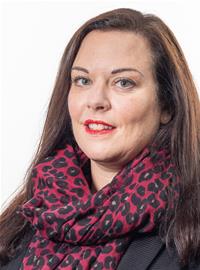
Vikki Howells
Tenures
- Fifth Senedd Pontypridd Cynon Merthyr Welsh Labour
- Sixth Senedd Pontypridd Cynon Merthyr Welsh Labour
- Seventh Senedd Pontypridd Cynon Merthyr Welsh Labour
Ministerial roles
No ministerial roles on record.
Contributions, by sitting day
64 contributions on record, newest first. Official verbatim record.
2
Open this sitting on the stage
8. Welsh Labour Debate: The M4 around Newport en
I'm delighted to support this Labour motion today. The gridlock of traffic congestion on the M4 around Newport has been a national embarrassment for over 30 years. The consequences of all Senedd parties being unable to agree a way forward for the M4 around Newport is ever-rising levels of congestion and pollution in Newport, and the connected Valleys communities north of the M4 in Torfaen and Caerphilly. The Confederation of British Industry and local businesses have been advising for years that the gridlock on the M4 is a brake on economic growth and prosperity for communities along the whole of the M4 corridor in south Wales. One of the key lessons that this Welsh Labour group takes from its losses in the Senedd elections in May is that we must do more for people today. This is why we must speak out against what Plaid Cymru is proposing to visit on the people of Newport and the south-east Wales Valleys through its proposals on the M4 around Newport review. Every party in this Chamber will, of course, be keen to support the public transport proposals developed under the last Labour Government for more rail services on the south Wales main line, and this will eventually offer many commuters a rail-based public transport option. And bus and active travel solutions also have a role to play. But the problem is that these public transport interventions will only take 7 per cent of traffic off the M4 on completion, and that's after six to seven years of construction. This is less than a third of the 25 per cent or more of traffic that needs to be diverted from the M4 around Newport. The last Welsh Labour Government commissioned a series of major road studies in readiness for a new Government, looking at the M4 and also the A55 and the A494 corridors in particular. This work under Labour enabled the Minister to make his announcements on the Menai bridge and the M4 in recent weeks. The most effective intervention for the M4 would be a relief road. It would meet the key criteria of reducing congestion and thereby pollution made worse by stationary and crawl-speed traffic, and improve resilience, providing an alternative route to the M4 in case of accidents. The other options seemingly championed by the Minister are not fit for purpose. For a 3 per cent reduction in traffic on the M4, junction closures will cause congestion mayhem, pollution and economic harm in and around Newport. Widening the Brynglas tunnels is a surprising option, dismissed by all previous reviews. The A48 and blue route are not credible either. They would destroy health and wealth in Newport, and the proposals will face great challenges from new housing and the urban context. Looking at this Welsh Government's half-baked review options, it would need to implement a combination of these that it sets out, and the cost of these combinations would exceed £3 billion, and take nearly 30 years as the works on them cannot be done concurrently. All this in the context of a Government with an annual borrowing limit of £165 million, and a total borrowing cap of £1.1 billion. The Welsh Government cannot deliver an M4 solution on its own. It will need partners prepared to pool financial resources, subject to fit-for-purpose options being agreed. It's time to get real. The proposed junction closures must be ruled out for the benefit of the people of Newport. The only option that delivers reduced congestion, better environmental outcomes by keeping traffic moving and releasing the chokehold of the M4 on the economy is a relief road. We need local leaders empowered to lead the planning of a new relief road for the M4—a partnership of the Welsh Government and local authorities able to consider innovative funding and fully grounded in engagement with the community. Diolch, Lywydd.
10. Short Debate: Full-face coverings are against British values en
Thank you, Cabinet Minister. On Saturday afternoon, like myself, the Member who tabled this debate this evening attended a concert at Afon Taf High School to mark 60 years since the Aberfan disaster. He, like me, listened to the powerful rendition of a song called 'Diversity' by the pupils of Ynysowen Community Primary School, which called for us all to embrace and celebrate cultural differences. Would you agree with me, Minister, that the Member who tabled this debate and a number of his party Members who also spoke could do well to heed the lessons in that song sung by those young people?
2
Open this sitting on the stage
4. Statement by the First Minister: 60th Anniversary of the Aberfan Disaster en
I want to start by thanking the First Minister for agreeing to my request, made in the business statement some weeks ago, in making this statement in Government time today. Diolch, Brif Weinidog. I am a little bit disappointed, though, that today's item takes the form of a statement rather than a debate, as I think a debate would have given Members the opportunity to speak in a more unconstrained and heartfelt manner on this vitally important topic, and to have had longer to do that too. Sixty years ago tomorrow, a little after 9 o'clock, around 100,000 tonnes of slurry, debris and waste from a colliery spoil tip engulfed part of the village of Aberfan in the Taff valley just south of Merthyr Tydfil. One hundred and forty-four people were killed. Sadly, there was nothing novel in lives being lost through tragedy in Welsh coalfield communities. I've seen a figure of 6,000 deaths through pit accidents in Wales since the 1800s, a mix of individual loss of life and large-scale incidents where casualties numbered in the hundreds. But there was, of course, something particularly horrific in the sequence of events that affected the close-knit community of Aberfan and in their aftermath. In part, this is because more could and should have been done to prevent this tragedy. There were warnings that the spoil tips weren't safe. People just weren't listened to. And that was one of the key messages from Sue Bevan, herself an Aberfan survivor, in her excellent play, The Silent Volunteer. I hope that many of us had a chance to see Avant Cymru's performance of this in the Pierhead earlier today. In part, this was because of how the community was treated by the authorities afterwards, that initial offer from the National Coal Board of just a miserly £50 in compensation for a child's life. We all know the disgraceful scandal of the disaster fund, and I am glad that it was a Welsh Labour Government in this place that finally put that right in 2007. As Prime Minister Andy Burnham recognised when he visited Aberfan yesterday, the community and its residents were not treated properly by the authorities. As MS for Pontypridd Cynon Merthyr, I thank him for his candour. In part, it was because this was a very modern disaster, the first televised disaster, with images displayed in homes here in Wales and around the world. It is also within living memory—if not for us, then for our parents and for our relations. My mother tells me of her experience working as a secretary in a colliery in Mountain Ash, and being called out from her office with other office staff to the stores to help hand out shovels to the many local men who joined the recovery efforts. In large part, this was also because of just who the disaster affected. Of those 144 victims, 116, of course, were children. Engulfed in the spoil was Pantglas Junior School. The disaster claimed the lives of five teachers and 109 of the 240 pupils in school that day. Thirty minutes earlier, a day later, the story would have been so very different. As it was, whole classes were lost. Behind those raw numbers we can never forget children who were robbed of their lives, or families whose lives were changed forever. And finally, it's because of how the local community responded in the face of that unimaginable loss. People came from all over to help, but the greatest efforts were expended by people from the village. Then and since, the community of Aberfan has borne a grief that cannot be measured with strength, dignity and compassion. It is imperative that we do all we can to remember the tragic lessons of Aberfan. Remember them and heed them so similar incidents do not happen again. First Minister, I hope you will encourage all MSs who are able to to sign the statements of opinion that Lis McLean and I have tabled separately to show that this Senedd remembers Aberfan. However, as David Davies, another survivor and now chair of the Aberfan memorial charity reminds us, recollection must be based on a continued direct connection in the community. I want to close by drawing out an individual story from that community—as has already been mentioned, that of Nansi Williams, the dinner lady at Pantglas, who used her body to shield children when slurry hit the school. Nansi died, but all five children that she protected survived. A purple plaque will be unveiled to Nansi next week. First Minister, I want to close by asking how we can embed those stories into the curriculum so that the victims of Aberfan and their families will never be forgotten.
-
Thank you, Cabinet Minister, for your statement. Wales has enormous potential to become a nation of clean energy. I'm sure you'll indulge me if I say that much of what you mentioned in your statement is only possible because of the actions that my party took in Government, launching Trydan Gwyrdd Cymru, the first state-owned renewable developer in the UK, and Ynni Cymru to support community-owned energy. We set renewable energy targets, including generating the equivalent of 100 per cent of our electricity consumption from renewable sources by 2035, boosted grid capacity and invested in tidal energy. We took those practical steps too to speed up delivery, including reforming the planning system, shaving at least 12 weeks off the process for renewable energy projects of up to 50 MW, and helped more than 82,000 households benefit from energy efficiency and advised 210,000 households on how to save money on their energy bills. So, there's already a strong foundation for you, Minister, and this Government to build upon. But families do need action now, and businesses in Wales need certainty to invest. Regrettably, there was little in this statement by way of immediate action and the measures risk perhaps adding to investment uncertainty. Your focus, I would argue, should be on outcomes. How many jobs will be created? How much investment will be secured? How much money will families save on their energy bills? Cabinet Minister, I want to ask about the rationale for replacing Welsh Labour's ambitious renewable electricity generation targets with an emissions-based target instead. As the demand for electricity increases, we need more clean energy generated. So, why is the Government creating more uncertainty by replacing these targets? What assurance can you give that this isn't a weakening of ambition? And what guarantees can you give that your new approach won't lead to less renewable electricity being generated in Wales? At the same time, the Government's approach to electricity infrastructure risks creating additional uncertainty about how that energy will actually be delivered. The reality, of course, is that onshore wind is one of the quickest and most affordable ways of delivering clean energy at scale. And I can reassure the Member opposite, who represents the same constituency as I do, that windfarms are actually embraced within the south Wales Valleys and, in particular, the millions of pounds of community benefits that they bring. But with the ban on the use of large steel lattice pylons for new 11 kV to 132 kV lines, the Welsh Government has committed to a policy of undergrounding electricity infrastructure at 132 kV and below. And the significance, of course, of that policy is that it could increase the cost and complexity of building the electricity network needed to connect those renewable energy projects. While the policy aims to reduce the visual impact of pylons, it could slow grid expansion, increase costs for consumers and make it harder, eventually, to deliver Wales's clean energy ambitions. That is my party's concern. Indeed, the Institution of Engineering and Technology estimated that undergrounding costs five times more per mile than overhead lines. So, what assessment, Minister, have you made of the additional costs of this policy? What impact could it have on the viability of renewable energy projects and the speed at which new infrastructure can be delivered? How will you ensure that these costs don't ultimately fall on households and businesses? And what guarantees can you give that families' energy bills won't rise because of the Welsh Government's outright ban on pylons? Lastly, I recognise and acknowledge your comment that energy should not be treated only as a climate issue, and I do agree, but in addition to an economic issue, it's also a social justice one. Welsh Labour established our approach to social partnership, working hand in hand with trade unions to ensure that economic growth delivers fair work. So, I would urge you, Minister, to ensure that social partnership remains at the heart of the Government's approach to energy policy, so that the benefits of the energy transition are felt by workers and communities through the whole of Wales. So, finally, would you agree with Oxfam Cymru's challenge that we can make the transition to a green economy our primary vehicle for reducing structural poverty, advancing equity and fulfilling our duties as a globally responsible nation, and if so, could you please outline the next steps for taking these forward? Diolch.
2
Open this sitting on the stage
2. Questions to the Cabinet Minister for Finance cy
4. Pa drafodaethau y mae'r Gweinidog Cabinet wedi'u cael â'r Gweinidog Cabinet dros Addysg a'r Gymraeg ynglŷn â chyllid ar gyfer addysg bellach? OQ64677
Official English translation
4. What discussions has the Cabinet Minister had with the Cabinet Minister for Education and the Welsh Language regarding funding for further education? OQ64677
No broadcast timestamp published, so this contribution cannot be placed on the stage. Senedd TV Read this in the Record
2. Questions to the Cabinet Minister for Finance en
Thank you, Minister. Supporting learners with additional learning needs in the further education sector is becoming a major challenge, with Coleg y Cymoedd telling me that they have experienced almost a 50 per cent increase in the number of learners with ALN and individual development plans during the last academic year. Similarly, the College Merthyr Tydfil identifies not only increasing numbers of students with IDPs, but a stark growth in the numbers of learners identified with an ALN presently undergoing assessment processes to determine whether they require an IDP or additional support arrangements. Now, I wholeheartedly welcome the supplementary budget deal that Welsh Labour has secured with your Government, with £60 million extra for additional learning needs, including £2.5 million for further education. But to support learners and staff effectively, this funding needs to be sustainable and long term. So, what discussions will you have with colleagues to ensure that this is the case?
3
Open this sitting on the stage
-
I thank the Cabinet Minister for his statement, but this is a disappointing and, I would add, weak statement from the Minister that demonstrates two things: firstly, a lack of ambition from this Plaid Cymru Government and, secondly, a divide on the Government side when it comes to environmental issues. I think people watching will be surprised to learn that Plaid Cymru, a party that says it wants to tackle the nature emergency, is not progressive when it comes to the environment or on improving access to nature, and surprised that, rather than taking steps to consult the public and get Glyndŵr over the finishing line, the Cabinet Minister has instead chosen to duck his responsibility with what is effectively half a decision. We are fortunate in Wales that we have beautiful natural environments, and national parks are a great way of opening up our natural environment so more people can enjoy the beautiful places we have in Wales. In Government, Welsh Labour cherished and protected our natural environment and we recognised the huge potential of a new national park. We were ambitious to press ahead. It was a firm manifesto commitment from us. We launched that public inquiry to take the final steps towards establishing Glyndŵr, which would be Wales's first new national park in almost 70 years. The Campaign for National Parks has said that to not go ahead with a public inquiry, as the Cabinet Minister has laid out, would be a bitterly disappointing retreat from this Government, especially from one that has supposedly committed to the protection and restoration of nature-rich landscapes. So, does the Minister agree that this is a retreat? In your statement, Minister, you said that many respondents supported the proposal and many opposed it. But can you confirm that a majority of respondents were actually in favour of a new national park? Minister, you also said there's now a short opportunity for interested parties to try to change the Government's position. Can you set out the time frame for people to make representations to the Government about this? What advice do you give to those interested about the most effective way of making their case heard? When can we expect you, Minister, to reach a final decision, rather than today's part decision? And why, Minister, do you now think that a 'short opportunity' is preferable to a proper public inquiry, which would have looked in more detail at the evidence and the arguments for and against Glyndŵr? Lastly, people will rightly ask why a Government that across every other aspect of public policy is so in favour of reviews and inquiries has decided not to have a public inquiry on this occasion. Can I ask the Minister whether there was any new evidence that prompted his statement today, or was it always the Government's intention to cancel a public inquiry and stop Glyndŵr from progressing? Diolch.
-
Thank you, Cabinet Minister, for your statement here today. We all know it's devastating when a home or business is flooded and that, because of climate change, far too many people across Wales, including in my constituency of Pontypridd Cynon Merthyr, have been hit hard by flooding over recent years. I recently met with Natural Resources Wales to discuss flooding and what more can be done to keep our communities safe. Their warning yesterday of intense weather this winter will cause real concern for families who are at risk from flooding, especially those who've seen their homes destroyed in the past. NRW also warned that one in seven homes and businesses are at risk from flooding, and, of these, just 27 per cent are signed up for flood alerts. So, it's right that the Government tries to get ahead of this winter's wet weather and helps ensure that families are as prepared as they can be. So, I want to start by asking you, Cabinet Minister, about what the Government is doing to inform households about the practical steps that they can take to prepare for flooding. As residents in my constituency have seen first-hand over recent years, flooding can happen very quickly and leave families with little time to react. So, having these plans in place is crucial. So, what are you doing, Minister, to increase that 27 per cent figure from Natural Resources Wales, so more people are alerted as soon as their home is at risk? And what arrangements are in place to ensure that local authorities, NRW and the emergency services are working together to identify the communities that are most at risk of flooding? I also want to ask about funding for flood defences. In Government, Welsh Labour delivered the highest-ever level of investment in flooding, with more than £377 million committed to flood risk management over the last Senedd term. That investment meant that 52,000 properties were protected from flooding, helping to safeguard homes, businesses and communities across Wales. For this last financial year, we invested that extra £85 million, including almost £43 million in capital funding for new schemes across Wales. There's a great example of this in my constituency that was referred to in your statement, where Rhondda Cynon Taf County Borough Council is carrying out a major flood alleviation scheme in the Maesyffynnon Lane area of Aberaman and Aberdare, using funding from the previous Welsh Labour Government. I noticed you were a bit naughty, Minister, and you didn't mention that fact in your statement. That funding that my party provided will see a range of improvements being delivered there that could be replicated in other areas across Wales, including changes to watercourses, installation of remote telemetry equipment, and the creation of a new attenuation basin that's capable of storing the equivalent of two Olympic swimming pools during storm events. The result from that will be flood risk being reduced for 56 residential properties and three commercial properties, something that I myself and those residents really welcome. So, Minister, are you committed to maintaining and building on that record investment in future years? And what is the Government doing to provide greater certainty over investment in flood defences for future years, especially for local authorities? Similarly, previous Welsh Labour Governments have invested in nature-based interventions to tackle flooding. I can think in my constituency of an attenuation basin in Trecynon, and the really impressive network of attenuation basins along the A465 Heads of the Valleys road between Dowlais and Hirwaun. So, will you commit to further exploring this type of solution? You'll also be aware, Cabinet Minister, of calls for an extreme weather resilience fund to help Wales prepare for increasingly severe weather, including through greater investment in flood management. So, what conversations have you had about the benefits of Wales having an extreme weather resilience fund, and can you tell us if this is something that the Government is considering? And finally, the fire and rescue service hasn't been mentioned in your statement today, but we know they're frequently called upon to assist in flooding events. So, what additional support and funding will you consider for them? Diolch.
-
Thank you, Deputy Minister, for your statement here this afternoon. Climate change is an ever-growing challenge for our transport network. Extreme weather leading to flooding, landslips and wildfires are leading to ever greater disruption. And we know this winter is likely to be worse than those in previous years due to the El Niño weather system aggravating the rapidly growing impact of climate change. So, all parties in this Siambr should welcome your work, Deputy Minister, in seeking to enhance preparedness and reduce disruption to everyday life and economic activity from the potential for extreme weather to force the closure of our transport networks. I particularly welcome the proposed joint exercises with the Irish Government and ferry operators with regard to maintaining access to ferry ports following events at Holyhead port last year. Deputy Minister, you are clearly leading a focused response within Welsh Government and Transport for Wales to reduce transport disruption this winter, with that focus on rail and trunk roads. However, I do have some concerns that maybe not enough is being done to protect the whole system. Most roads are owned and maintained by local government, and in my own constituency, both Merthyr Tydfil County Borough Council and Rhondda Cynon Taf County Borough Council are working hard to clear drains and gullies to improve the resilience of the local road network in advance of those winter months. So, what actions are you taking, Deputy Minister, to ensure that local authorities have the resources they need to enable those local responses to climate adaptation? How much new money is the Government going to make available to improve road maintenance by local government, including drainage works to reduce the incidence of flooding on local authority roads? Rail and roads get a good mention in your statement, Deputy Minister, however we know the most used mode of public transport is bus services. So, what actions are you taking to include the bus industry in climate adaptation and resilience planning? I think this is particularly important in light of Transport for Wales taking ownership of a franchised bus system. I am a little concerned, maybe, Minister, that you might be taking a bit of a supplier-orientated approach to climate adaptation and resilience. So, what will you do to improve information for communities, councils and travellers by rail, car, bus and active travel about the general challenges that we face from transport disruption, and more urgently to support the improvement of communication and information flows for communities and travellers who may be in the throes of a severe weather event? Over the summer, I visited a farm in my constituency that is farmed by the members of the Nature Friendly Farming Network and they highlighted a range of environmental improvements to their farm, some of which were delivered under the sustainable farming scheme, which I know some environmental groups are concerned that maybe this Welsh Government won't continue. They told me something quite interesting relating to transport. There's a major railway line at the bottom of their farmland that had been quite badly affected by seasonal flooding over the years, but since they carried out a range of interventions, including tree and hedge planting, those incidents had really declined, improving the resilience of the railway network. It's something that I mentioned during the rural resilience Minister's statement earlier, but what discussions have you had across Government with him, and others maybe, about how nature-based solutions such as these could be used to reduce the impact on our travel network? Ultimately, however, the effectiveness of climate adaptation and resilience interventions will depend on budgetary provision. So, what new money will you, Deputy Minister, be investing in climate adaptation and resilience across the transport system in the financial year to March 2027 and next year in 2027-28? In short, Minister, are you prepared to put your money where your mouth is?
2
Open this sitting on the stage
1. Questions to the Cabinet Minister for Health and Care en
I'd like to associate myself with the comments that have already been made by the Member who tabled this question, and to go back to that issue that, from April, women and partners who have any type of pregnancy loss will be entitled to that two-week leave period under those major changes announced by the UK Labour Government's Department for Business and Trade, whereas at present, of course, there is no statutory right if the loss happens before 24 weeks. The devastation of pregnancy loss isn't defined by the calendar, so it is sensible and necessary to have these changes. I note the range of interventions that you, Deputy Minister, announced when responding to June's Members' debate on baby loss. But what I'd really like to ask you on this particular issue is: what steps will the Welsh Government take to ensure that people affected by pregnancy loss are aware of these new leave entitlements when the changes take effect?
2. Questions to the Cabinet Minister for Local Government, Housing and Planning en
Residents of Coed Dyffryn and Tir Founder Fields in Cwmbach finally celebrated last month as their estate was adopted by the local council. It took a whopping 15 years for the developer, Persimmon, to bring the estate up to an adoptable standard, something that I've been campaigning for and working with RCT council to deliver since I was first elected in 2016. I was also able, through very persistent badgering, to get the same developer, Persimmon, to carry out the works so two estates in Hirwaun could be adopted in the last Senedd term, nearly 20 years after being built. I'm now working on Persimmon estates in Church Village, Mountain Ash, Pontyclun and Llantrisant, the last of which was built a quarter of a century ago. Cabinet Minister, it's just not acceptable for developers to leave estates unadopted, particularly some of the big four developers who make multimillion-pound profits, whilst they move on to make money with additional projects. Can this new Government make looking at how they can remedy this a priority?
1
Open this sitting on the stage
-
I thank the Deputy Minister for his statement. After 30 talking shops, reviews and expert panels in the Government's first 100 days, I was hoping for something different from you today. I'm sorry to say I've been rather disappointed. Now, progress on that third Menai crossing is very welcome. It builds on the work that Welsh Labour had undertaken in Government. But families in Newport will feel let down that, rather than acting now, the Government is launching yet another review on the M4, and we won't have any answers for 18 months. So, my first question to you today, Minister, is: why will it take that long to come up with some serious road-based answers for traffic around Newport? Aren't you just kicking the can down the road and hoping that families in Newport won't notice? And Deputy Minister, if you'd spoken to people in Newport, we think you wouldn't need that long. You'd have been told unequivocally that junction closures will bring more traffic and more air pollution, that silent killer, into the hearts and lungs of communities. In Government, Welsh Labour took action to help alleviate congestion on the M4 around Newport. We'd secured funding for new railway stations from the UK Labour Government as part of that generational £14 billion commitment to transform rail infrastructure in Wales. We completed the Heads of the Valleys A465 road, the biggest road building scheme in Europe, offering traffic from the north and Midlands an alternative route into south Wales. So, I do welcome your proposals to increase the level of haulage traffic there. We also commissioned independent evidence-based resilience studies, not just of the M4, but the A55, the A494 and the A483 to ensure that roads are fit for the future. Those resilience studies are vital work that should form the basis of future recommendations, but they appear now to be gathering dust on the Government's shelves, with no comment today on the A484 or the A483 or the A55 east of the Menai strait, where you'll know that there are significant traffic problems. Deputy Minister, as you know, Welsh Labour's view is that devolution shouldn't stop at Cardiff Bay, that Wales is too centralised, and local leaders should have a far greater say on the issues that affect their communities, and this decision today is a case in point: trunk roads are maintained and owned by the Welsh Government, but they should be designed and delivered for the regions and economies that they serve. So, will you commit to engaging fully with families, drivers, businesses and local leaders in Newport before any decision is taken about junction closures? Will you also commit to publishing the evidence behind any junction closures in full? And finally, will you also commit the Government to publishing a full response to those resilience reviews that Welsh Labour started in Government?
4
Open this sitting on the stage
2. Questions to the Cabinet Minister for Rural Resilience and Sustainability en
Cabinet Minister, over lunch today we both attended WWF Cymru's briefing on the implications of extreme weather events such as wildfire and flooding, where we heard from speakers including representatives of the fire service and the farming sector. A key takeaway from that session for me was the vital role that nature-based solutions have to play in protecting communities and farm businesses from the impacts of climate change-related weather events. Given the shared commitments of our parties to increase the use of nature-based solutions across Government action, I'm wondering what steps you might intend to take to mainstream their use in the coming months. Both WWF Cymru and the Fire Brigades Union have come forward with funding proposals to ensure Wales is more resilient and better prepared for extreme weather impacts, and a key element of this proposal is seeking commitment to an extreme weather resilience fund that could look to inject tens of millions of new money into the expansion of preventative spend on nature-based solutions. We're at that time of year when everyone is talking about the budget, so, as those conversations go on, will you commit to making it a priority to expand nature-based solution investment within your portfolio?
2. Questions to the Cabinet Minister for Rural Resilience and Sustainability en
Cabinet Minister, I'm really encouraged by your answer there, and I look forward to seeing these developments over the coming months. I think there's particular potential within the optional and collaborative layers of the SFS for that as well. Turning to another matter, a review of the code of practice for the rearing of game birds for sporting purposes in Wales is overdue, with animal welfare organisations such as the League Against Cruel Sports concerned that this is an issue that is being overlooked. This is perhaps borne out by the data. There were no inspections of game bird farms in either 2023 or 2024 and just four since 2025, and those uncovered two breaches of the code of practice. We also have shocking evidence from Animal Aid site visits of three game bird breeding farms in Wales that found conditions falling far below the standards that we all expect. What assessment has the Welsh Government made of the treatment and welfare conditions of game birds bred and reared to be shot for sport, and what plans do you have to ensure that the code is reviewed to ensure it is fit for purpose?
5. Member Debate under Standing Order 11.21(iv): Contaminated land en
Sixty-one years ago, the former Brofiscin quarry was repurposed as a landfill site, and a year later, a similar fate befell the former Maendy quarry. The quarries are a little over 5 miles apart. Both quarries were permeable—the former limestone, the latter sandstone—and over the next seven years, both were used to rehome a bewildering array of toxic substances. Crucially, neither site was capped nor lined to prevent rainfall extracting contaminants into the local environment. Perhaps unsurprisingly, this is exactly what happened time and again over the following decades. After boundary changes at the last election, both sites are now within the constituency I represent, with Brofiscin straddling both my and Kiera Marshall's constituency. I've been contacted by concerned constituents about both sites, so, accordingly, I will spend the bulk of my time talking about them, as they highlight many of the wider issues. Firstly, one of the most concerning points for me about this whole issue is that we simply just don't know exactly what was dumped at these sites. The processes that were put in place were not adequate to deal with the dumping of chemicals. In 2005, the Environment Agency found 75 different substances amongst the 80,000 tonnes of waste that had been dumped at Brofiscin. That includes heavy metals and toxic chemicals. And perhaps most shocking, it even included Agent Orange, the herbicide used as an instrument of war by the US in Vietnam. I find that completely shocking—that a chemical that I used to teach my GCSE history students about, and have to warn them of the graphic nature of photographs of babies born with really serious deformities as a result of that substance, has been found in a site in south Wales. Polychlorinated biphenyls, PCBs, which have been banned by most countries in the world and classified by the International Agency for Research on Cancer as definite carcinogens in humans, were found there too. Such is the concatenation of chemicals at Brofiscin that it has been labelled one of the most contaminated places in Britain. For The Ecologist, it is, I quote, the site of 'one of the biggest environmental crimes ever to have occurred in the UK.' This mix of waste highlights a further point. Whilst we might be aware of the impact of isolated elements, what we don't know is the full impact of this cocktail of different chemicals. That brings me to my third point. Whilst we might not be fully aware of the impact of those substances, we can see numerous aspects of their effect. Farmers were paid compensation in the 1970s for the death of animals grazing at both of these sites. I've been contacted by a constituent who worked as an ecologist, who told me about the devastating ecological impact at Maendy. My constituent tells me that the site previously hosted a rich ecosystem with a range of birds, including owls and raptors, rabbits, three varieties of shrew, foxes and badgers, lizards, grass snakes and slowworms, but now, I'm told, fauna in the quarry is limited to a few rabbits and small birds. Michael Sheen's documentary Buried was inspired in part by the work of the late Douglas Gowan, who noted the impact on farm animals near Brofiscin and Maendy. That programme contained a chilling account of how the health of people living near similar sites elsewhere in Wales was affected—people dying of a variety of cancers and dangerously high levels of PCBs in their blood. Fourthly, as other Members have pointed out, there's the question of accountability, of who is responsible. Monsanto, it seems, knew of the consequences of what it was doing in 1972, but continued producing those PCBs, and continues to avoid responsibility. When Rhondda Cynon Taf council and the Environment Agency did cap Brofiscin in 2011 and 2012, Monsanto and fellow dumpers BP and Veolia did eventually agree to contribute to the clean-up of the site. However, all three denied liability. To conclude, I want to make a few overarching remarks about this scandal. We know it's an issue that predates devolution, so we do need a co-ordinated approach from Welsh and UK Governments. I hope the previous Welsh Labour Government's work on coal tips and the joint funding of remedial works will provide a template for that. But we also need to explore what we can do to ensure the polluter-pays principle is at the core of our approach. We need to know the scale of the challenge. I've seen a figure where the Welsh Government suggests 9,000 sites need investigation. We need to test these sites as a matter of urgency. I endorse Friends of the Earth Cymru's calls for immediate testing. We also need to consider the mental health and well-being of people living near these sites, to provide reassurance and information for communities. I've written to the Cabinet Minister and I've asked the Welsh Government to add that sort of information to its website. I hope, Minister, that it's a suggestion you will take up. Diolch.
6. Reform UK Debate: Default 20 mph speed limit en
Welsh Labour will be opposing this motion today, but we will be supporting the amendment that has been tabled by the Welsh Government. At the start of this debate, it's worth remembering why the previous Welsh Labour Government introduced the 20 mph policy. That's to protect children and families from road collisions, to make our roads safer and, ultimately, to save lives. And let's just take a second to remind ourselves of the evidence base. It's nearly a decade now since the OECD highlighted research that consistently showed that lower speeds reduce deaths and injuries. There's more time to react and collisions will lead to reduced levels of harm. Similarly, a survey of the international evidence base shows that, on average, a person is around five times more likely to be killed when hit by a vehicle travelling at around 30 mph than they are from a vehicle travelling around 20 mph. And taking evidence from closer to home, Dr David Hanna, University Hospital of Wales paediatric emergency consultant said, and I quote, that road traffic accidents are the largest cause of serious injury in children: 'It’s simple, slower speeds save lives! Every year in Wales we see the devastating impacts road traffic collisions have on children and their families. They are the biggest single cause of serious injury in children who are typically walking or cycling. 'Children have less road awareness than adults and can be difficult to see. They also tend to be struck higher on the body than adults due to their smaller height, and more likely to suffer severe injuries as a result. So, the 20mph limit will help reduce the number of collisions and severity of injuries.' And the evidence shows that our roads have become safer. Vehicle speeds have slowed and the number of collisions on 20 mph and 30 mph roads has fallen. Last year, there were 3,000 collisions—3,000 too many of course, but a fall of 300 from 2022. And in the first quarter of this year, there were 621 collisions, a 15 per cent fall compared with the first quarter of 2023. On the second anniversary of the introduction of the policy, the BBC reported that there had been nearly 900 fewer road casualties and 14 fewer deaths at those lower speeds. And I would say to the Reform spokesperson, when you quoted evidence of the number of deaths on our roads going up, you should be transparent with this Senedd and use your closing remarks to clarify, because we've all got a responsibility not to mislead this Senedd, to clarify that the evidence base you were using there is from deaths across roads with all speed limits, and it's not an accurate description of the situation on 20 and 30 mph roads. [Interruption.] No, I haven't got time. [Interruption.] You've got time later, as you well know. However, we have also said that we should have done more to bring people with us when we introduced the policy. That's why we learnt lessons, listened and acted on what we heard. We spoke to drivers up and down the country, as well as businesses, communities and councils across Wales. And my colleague Ken Skates, when he returned to the role of transport Secretary, reviewed the policy and changed the guidance for local authorities. That gave councils greater flexibility, as other Members have already pointed out, to look again at individual roads and to return them to 30 mph where it is safe to do so and if that's what's right for the area. Since then, some local authorities have decided to change speed limits back to 30 mph, whilst others haven't felt the need. To give an example, in my own home area of Rhondda Cynon Taf, 22 roads were returned to 30 mph after a transparent process where local residents and elected members, including me, had the opportunity to express their views. And there's been a similar picture in Merthyr Tydfil too. And that's how it should be: the degree of change being determined locally in each area, not centrally by the Welsh Government. And that's the approach that I believe that this Plaid Cymru Welsh Government should continue to take: listen, learn, and give people a meaningful say in the decisions that affect their communities. So, I would say to the Deputy Minister that those lessons about listening to people and acting should be taken on board by this Government across all policy areas. Diolch.
1
Open this sitting on the stage
-
Thank you, Cabinet Minister, for your statement here today. Let me start by saying that it is a good thing that the Government is in listening mode, but having said that, this national conversation can't become an excuse for Ministers not to act and nor can it be allowed to hold up delivery elsewhere. So far, this Government's instinct has too often been to announce reviews and outsource decisions, rather than take the action needed. We've already seen more than 30 talking shops, reviews and expert panels announced, but precious little action, and planning is an area where we really need that speedy reform, not least to build the homes that Wales needs and to power the clean energy revolution. So, Cabinet Minister, can you confirm that the Government will use every lever available through the planning system to support the growth of Wales's renewable energy sector? Cabinet Minister, you also said today that this national conversation will help co-ordinate a range of plans and strategies in the programme for government. But can you explain exactly what that means? Are other Government policies dependent on the outcome of this conversation, and if so, which ones? Lastly, Cabinet Minister, you say that you want this to be an open, inclusive and meaningful conversation, but today, we've heard about just three events across the whole of Wales—in Cardiff, Aberystwyth and Llandudno. So, what reassurance can you provide, Minister, that communities in every part of Wales will have a meaningful opportunity to be heard? And will you commit to publishing what people tell the Government and what policy changes actually come out of this conversation?
5
Open this sitting on the stage
1. Questions to the Cabinet Minister for Enterprise, Connectivity and Energy cy
1. Beth yw blaenoriaethau Llywodraeth Cymru ar gyfer gwella mynediad at drafnidiaeth gyhoeddus ym Mhontypridd Cynon Merthyr? OQ64484
Official English translation
1. What are the Welsh Government's priorities for improving access to public transport in Pontypridd Cynon Merthyr? OQ64484
No broadcast timestamp published, so this contribution cannot be placed on the stage. Senedd TV Read this in the Record
1. Questions to the Cabinet Minister for Enterprise, Connectivity and Energy en
Thank you, Deputy Minister. Now, capping bus fares at £2 for adults was a key pledge in my party's manifesto from May, building on our work in Government, where we introduced £1 bus fares for young people and provided free bus travel for older people and people with disabilities. Now, Prime Minister Andy Burnham has announced that, from January 2027, single bus fares in England will be capped at £2 for adults. This will, of course, mean a Barnett consequential for the Welsh Government. So, will you use this to introduce a similar £2 cap for fares in Wales? And if not, will you explain why bus users in Wales should lose out?
2. Questions to the Cabinet Minister for Education and Welsh Language cy
6. Sut mae Llywodraeth Cymru yn cefnogi dysgwyr sy'n oedolion ym Mhontypridd Cynon Merthyr? OQ64486
Official English translation
6. How does the Welsh Government support adult learners in Pontypridd Cynon Merthyr? OQ64486
No broadcast timestamp published, so this contribution cannot be placed on the stage. Senedd TV Read this in the Record
2. Questions to the Cabinet Minister for Education and Welsh Language en
Well, Deputy Minister, it is, of course, Adult Learners Week this week, and I was really grateful to the adult learners who met me in Coleg y Cymoedd in Aberdare on Monday, who spoke about their experiences of re-entering education. We know that there's considerable demand for adult education, but figures that I've seen from Adult Learning Wales suggest that demand in 2026-27 outstrips their funding by almost 10 percent, and that means that around 850 potential learners are missing out. I'm told by Adult Learning Wales that they could put additional funding to use immediately, upskilling workers and allowing for more flexible delivery. So, how is Welsh Government making meeting this demand a priority?
6. Welsh Labour Debate: Further education en
I'm really pleased to be able to contribute to today's debate. I had the privilege of leading on higher education and further education in the last two years of the previous Welsh Labour Government. I'd just like to echo the point made by my colleague Lynne Neagle about how pleased we were to be able to allocate that additional £20 million to FE. But that need for additional funding is an upward trajectory, Deputy Minister, and this is a really clear message that you need to take from today's debate about that need for additional funding. One thing I loved when I held that role was the ability to get out and about across Wales, meeting learners and the staff who support them. There were, and are, challenges, but the passion, the dedication to strive and achieve and deliver the very best learning outcomes was clear. That experience will shape my comments today, and I want to start by mentioning the new Welsh Government's higher education review. Now, this is important. The sector does face issues, and it's right that these are looked at, but the focus just on HE stands in direct contrast to the approach that we took in Government. That was based on ensuring the participation and sustainability of the whole tertiary system, and I am concerned that, without that focus, there's a very real danger that the focus on further education will be lost and its funding displaced also. I hope that this is something the Welsh Government will address when responding to the debate. And what will the impact be if we lose this focus on FE? Well, we know that FE plays a key role in providing both vocational and academic pathways, particularly, as others have mentioned, for those young people most at risk of disengaging from education. Indeed, I would suggest that there is, in fact, a moral imperative for the Government to focus on FE to address this challenge. On Monday, I visited Coleg y Cymoedd's Aberdare campus in my constituency, and my thanks to the staff and students who took the time to talk to me there as part of Adult Learners Week. There were some really excellent examples of mature learners re-engaging with education, meeting the need in the way that only FE can. This is another area where there is considerable demand, as I mentioned in my education question earlier today. This is a pattern that has been noted in several years. Those adult learners looking to re-engage should not have to lose out. My conversations with staff and learners in Coleg y Cymoedd sketched out a very similar picture. Overall, that college, just one campus—. That college has over 5,500 full-time learners of all ages on its books, the majority aged 16 to 17, though. But, astonishingly, only just over 83 per cent are funded. Can I take a second just to reinforce that? Nearly one in five of the college's full-time students aren't funded. On the Aberdare campus, that's not just a stat, but 600 individual learners. Without funding, they are in real danger of disengaging. So, there are 400 learners there at level 1 and level 2 who are not on their first-choice courses. That, in itself, represents a risk of disengagement. And for the first year ever, that particular campus has 40 learners that they haven't been able to place that are on a waiting list and unable to be enrolled, in real danger of disengaging from education forever. There were 80 learners there who they were only able to place on courses for two days a week. They would really like to be able to place them for much longer than that, and, of course, the less time they are placed in college, the more the risk of disengagement. That would need a hire drive for staff recruitment to accommodate, and, of course, that all comes down to funding. There's been a 47 per cent increase in that campus alone in this year for individual development plans for learners with additional learning needs, and we all know that it needs resource to be able to cater for those needs. Now, I know a review of FE would not be a panacea, but it could shine a spotlight on the issues and help us work together to determine the solutions to put things right for our learners. I want to close by reflecting on some of the benefits to the individual from engaging in FE: improved educational qualifications, a new path or journey, increased skills or enhanced employment opportunities. And crucially, as Public Health Wales reminds us, education is also one of the biggest preventative mechanisms for mental health as well. So, Deputy Minister, FE can change lives. Please remember that as you take forward your policy decisions over the coming Senedd term.
2
Open this sitting on the stage
1. Questions to the First Minister en
First Minister, my colleague Jayne Bryant, asked you, during your oral statement last week, whether the Welsh Government would consider bringing in a climate resilience fund to help us mitigate the impacts of extreme weather. You didn't really answer her directly, and nor did you answer Anthony Slaughter when he raised a very similar point in his opening question. Now, there's widespread support for this from stakeholders that we on the Welsh Labour benches have engaged with over the summer recess. And with resources for agencies involved in climate mitigation measures being really stretched, this is one way to safeguard those funds and make sure they're channelled in the right way. So, is this something that your Government can explore setting up ahead of your wildfire summit next month?
-
Thank you, Minister, for your statement. I really welcome this update, building on the work of successive Welsh Governments. The appointment of a deposit management organisation for Wales is a vital step forward. Exchange for Change's new role as that common UK administrator makes sense in terms of joined-up working and providing clarity for businesses. I'd like to start by thanking everyone in Wales who recycles. It's due to them that Wales ranks so highly in terms of worldwide recycling rates. In terms of today's statement, firstly, that four-year phased approach for glass is critical in ensuring the success of the wider deposit-return scheme. It's important that businesses and consumers are given that feed-in. We should remember too it's estimated that a phased approach will be more cost-effective. I'd expect lots of work to be going on in the background, so could you set out what the next key milestones are that we can expect as work progresses? Secondly, the examples for low-volume producers and smaller retailers are important. I'd be grateful if you could set out a little more of the Welsh Government's current thinking around this. We know the key determinant of the scheme's viability is linked to things like how the scheme works, the level of fees or wider infrastructure, not necessarily just business size. So, what will constitute low volume and what will be done to ensure there are no unintended consequences? This is my last question. Members may have seen the briefing produced by the last Senedd's cross-party group on littering, which was chaired by Mick Antoniw, on a deposit-return scheme. That document really powerfully makes the case that in addition to the scheme's immediate benefits for reducing litter, the greatest long-term carbon savings will come from well-designed reuse models built on that infrastructure—a once-in-a-generation opportunity indeed. Minister, you hinted at that and the importance of reuse in your statement, but could you say a little more about how this will be embedded across Government so we don't let this opportunity slip?
4
Open this sitting on the stage
2. Questions to the Cabinet Minister for Finance cy
3. A wnaiff y Gweinidog Cabinet nodi blaenoriaethau Llywodraeth Cymru o ran polisi cyllid llywodraeth leol yn ystod y Senedd hon? OQ64434
Official English translation
3. Will the Cabinet Minister set out the Welsh Government’s priorities regarding local government finance policy during this Senedd? OQ64434
No broadcast timestamp published, so this contribution cannot be placed on the stage. Senedd TV Read this in the Record
2. Questions to the Cabinet Minister for Finance en
Thank you for that answer, Cabinet Minister. In the wake of the announcement that the Welsh Government was going to review the local government funding formula, I know that you and the local government Minister received a letter from the leader of Merthyr Tydfil County Borough Council, and this firmly made the case that any review should not have a detrimental impact upon that council or the residents and communities that it serves. So, Cabinet Minister, I'm seeking similar assurances today that any review won't negatively affect either Merthyr Tydfil council or Rhondda Cynon Taf County Borough Council in view of the demographic challenges specifically that they face, and also that all councils will be fully involved in the process as it develops.
6. Reform UK Debate: Cwm Taf Morgannwg University Health Board health visitor pay dispute en
Diolch, Lywydd. I formally move amendment 4. We proposed our amendment as the original motion misses an important point, and that is the fundamental role that health visitors play in giving children the best start in life. So, I hope that Members across this Chamber will join us in supporting that amendment to recognise the role of those health visitors today. And for us, that cuts to the core of this matter and why it's so important that it's resolved. And it also echoes the views of those health visitors. They are desperate to get back to their important role, providing that universal safeguarding service, and that's in terms of infant development, perinatal mental health and picking up on those early warning signs when things go wrong. Health visitors are often the first to identify additional learning needs and to have those crucial conversations about immunisation. Without health visitors, postnatal classes are not running in Cwm Taf Morgannwg and mental health support for parents is just not there. Indeed, since the dispute started, there should have been 23,000 routine appointments under the Healthy Child Wales programme across CTM, but only 900 have been provided. When health visitors are on strike, children and families are not getting the support they need. This must change. Cabinet Minister, I know my colleague Sarah Murphy recently wrote to you about this, and in your reply you say that the Welsh Government does not have the powers to intervene and you cannot become involved in the dispute itself. That's not correct. Welsh Labour and Unite the Union believe Welsh Government needs to instruct CTM to pay health visitors at band 7, as determined by the independent pay evaluation process. [Interruption.] I haven't got long so I won't be able to, I'm sorry. Saying you urge parties to get back around the negotiating table is insufficient. There's nothing to negotiate on here. Band 7 pay has been determined by an independent pay evaluation process. And there are precedents too, as to how you could intervene. Vaughan Gething stepped in in Betsi Cadwaladr to resolve a shift pattern issue for nurses there; Eluned Morgan sacked non-executive members of the same health board when she wasn't happy with their work. So, we urge you to look at these precedents, listen to Unite and the health visitors they represent, use the powers you have under section 12 of the NHS Act, and not listen to those siren voices urging caution. Your immediate predecessor, Jeremy Miles, made a very clear instruction to CTM that they need to honour that job evaluation process. And as they've not done so, Cabinet Minister, you must step up. By saying you can't intervene, that it's not an issue for Government, you set a dangerous precedent for all NHS staff who come under 'Agenda for Change', from nurses to radiographers to porters to cleaners. I've had so many e-mails from constituents about this issue. Many voted for your party, some perhaps swayed by the intervention of your party leader on this issue, not least in this letter referred to in the Conservative amendment. In that, your leader wrote, during the election campaign, that the current situation cannot be allowed to continue. He called for immediate action to bring this dispute to a close. Well, you are in power now, Cabinet Minister. The buck stops with you. We've all seen the open letter from Unite the Union deploring your Government's inaction. We in Welsh Labour have stood on the Senedd steps, alongside striking health visitors, each and every time they've demonstrated here, and we've seen their T-shirts bearing the slogan 'Plaid lied’, and heard that chant echo around our Parliament. The First Minister said the ongoing failure to reach a fair settlement is unacceptable—
6. Reform UK Debate: Cwm Taf Morgannwg University Health Board health visitor pay dispute en
—but now your Government's inaction is starting to look worse.
2
Open this sitting on the stage
2. Business Statement and Announcement en
Trefnydd, you will be aware that 21 October will mark 60 years since the Aberfan disaster, in which 144 people were killed, including 116 children. It was incredibly moving to be at the launch of a new photographic exhibition to mark this anniversary at Cyfarthfa museum last week, and it was good to see you there also. The Aberfan disaster rocked the communities that we represent and, as the first major disaster seen through the lens of a television camera, it truly reverberated around the world. The depth of the grief felt by the bereaved and the psychological burden borne by survivors is something that is impossible for us to truly comprehend in this Senedd. But I believe that this Senedd needs to pay tribute to the dignity and strength of the community, which has been so apparent as the people of Aberfan have come together to make arrangements to mark this sixtieth anniversary. So, Trefnydd, I'd like to ask for a debate in Government time to mark the significance of this event.
5. Statement by the Deputy Minister for Skills and Tertiary Education: Review of Higher Education en
Deputy Minister, fear of debt is a growing reason for many young people opting out of studying for a degree. I recall the days as recently as two years ago when the money-saving expert Martin Lewis advised students who were eligible for plan 2 loans to take them even if they didn't need them, and invest them, because the interest rates in those days were so low. All of that has changed very quickly with the hiking of interest rates on plan 2 loans and the UK Government's education Secretary calling these egregious and at the top of her in-tray. That's why, in our manifesto for the Senedd election as Welsh Labour, we included a plan to decouple our plan 2 loans from the English system so that Wales can set fair and affordable interest rates, ensuring all young people who may wish to go to university do not feel cost is a barrier. That's also why when I held your position I rejected the freezing of the repayment threshold, ensuring graduates on lower incomes were not drawn into repayments at a time when they might not be able to afford it. In your review, will you commit to working with the UK Government on the issue of plan 2 student interest rates, exploring the importance of continuing to reject a freeze of that repayment threshold, and, perhaps most importantly, exploring the decoupling of plan 2 to create a Wales-only fair system that students and graduates can have faith in over the long term?
6
Open this sitting on the stage
1. Questions to the Cabinet Minister for Health and Care cy
3. Sut mae Llywodraeth Cymru yn bwriadu gwella mynediad at wasanaethau diagnostig ac orthopedig ym Mhontypridd Cynon Merthyr? OQ64372
Official English translation
3. How does the Welsh Government intend to improve access to diagnostic and orthopaedic services in Pontypridd Cynon Merthyr? OQ64372
No broadcast timestamp published, so this contribution cannot be placed on the stage. Senedd TV Read this in the Record
1. Questions to the Cabinet Minister for Health and Care en
Diolch, Minister. I've been really supportive of the exciting plans for the Llantrisant Health Park, a cross-health-board initiative developed and funded under the last Welsh Labour Government, with over £200 million invested to date. This surgical hub will expand capacity, reduce waiting times and improve patient experience across south-east Wales, including for my constituents in Pontypridd Cynon Merthyr. The first phase of the scheme, which is expected to be delivered next year, will see the creation of that state-of-the-art community diagnostic hub, followed later by orthopaedic surgeries. Improving access to diagnostic and orthopaedic services through investment and collaboration was a priority for the last Welsh Labour Government, so I'd like to ask if these are priorities for you too.
7. Reform UK Debate: Bovine TB en
Diolch, Lywydd, and I formally move the amendment. I'll start by addressing the one element of Reform's motion that Welsh Labour wholeheartedly agrees with and that we don't seek to amend, and that's the effect on farmers, their families and farming communities when a herd has a breakdown. We recognise the emotional and financial impact this, the sheer devastation and the longer term consequences of dealing with this status. So, it's important that we are honest with farmers and farming communities, that we take measures that will make things better for them and not take measures that won't have an impact. And that's the case with some of the items contained in Reform's motion, and I will take some time to explore these. Point 2: whilst bTB is a complex disease and there are multiple routes by which it can be transmitted, not all routes are equal. The main transmission overwhelmingly is between cattle. That makes up 94 per cent of infection in herds—19 out of 20 cases. Point 3: I'm sorry for any loss of faith in the previous Welsh Government's approach, but our amendment serves as a reminder of that partnership approach based on tackling cattle-to-cattle transmission taken by the previous Government, working together with farmers and with vets. It delivered and is delivering positive outcomes. Herd prevalence of bTB currently stands at its lowest value since January 2017. The number of new herd instances has more than halved. Almost 95 per cent of herds in Wales are currently free from bTB, and the number of cattle slaughtered has reduced by over a fifth. Of course, there's always more that can be done, and we need to do that, building on the evidence base, but we need to recognise that we are building on solid foundations. I'm grateful to Laura Anne Jones for clarifying in the Chamber today that she is talking about a targeted approach rather than mass culling, but I do want to also say that there is no faith in mass culling. Three out of five members of the public are against a mass cull and even more are against the notion of spending, wasting public money on a mass cull. I'd note that such an approach, if adopted, would fritter away financing that could otherwise be used to support farmers or the interventions that really would make a difference. And in this vein, I'm sure we can all remember the ludicrous comments of a former Tory environment Secretary justifying the failure of a cull in England by saying badgers moved the goalposts. Hardly comments on which to base confidence or public policy. That brings us on to point 4. It makes lots of reference to the TB technical advisory group, and that's good. It was the previous Welsh Labour Government that established this body, and it's good to see confidence in it from Reform, and I hope from across the Chamber as well. But more than that, we must remember the advisory group's position, namely that more evidence is needed before any change in policy should be considered, and that this should be done without political interference. Taking a broader view of the science must underpin our decision making on this subject. So, there is one key point that I would like to stress: there is simply no scientific consensus that the culling of wildlife, of badgers, is effective in dealing with bTB. There is a growing number of recent peer-reviewed studies that have considered the impact of badger culling in England, and these studies draw on two principal conclusions: badger culling is ineffective in reducing bTB in cattle and that badgers are not the source or the reservoir of the disease. I expect to hear mention in the Chamber today—
7. Reform UK Debate: Bovine TB en
Yes.
7. Reform UK Debate: Bovine TB en
I think, James, you're quoting from Birch et al and Downs et al, which I know has been referenced in some of the stakeholder documents that have been sent to us today. But the Royal Society for the Protection of Cruelty to Animals' conclusion is that those studies conflate badger culling and other measures aimed at cattle, and that the authors acknowledge that they were unable to determine whether badger culling is effective in reducing bTB in cattle. That's why we need this steering group to really look at the scientific evidence in the round. Progress has been made by earlier and more sensitive cattle testing, improved movement controls, enhanced biosecurity and improved herd management, with better Government support to farmers. We know there's a highly effective vaccine; it's the same one used in humans. With the bulk of bTB transmission being cattle to cattle, I'm interested to see what our technical advisory group says regarding more widespread use of vaccine in herds, the practicalities of this and how those costs might be borne. So, Llywydd, I will conclude by saying to Plaid Cymru MSs in particular that I know that many of you are passionate about our environment, protecting it and nurturing it so that it can be enjoyed by future generations, and I believe that Reform's motion, with its suggestions of slaughter in the countryside, not based on scientific evidence, will not achieve this. Diolch.
8. Welsh Conservatives Debate: Deposit-return scheme en
I welcome the fact that the Conservatives have tabled this debate today and that they agree that Wales needs a deposit-return scheme, and I'm hopeful that that is something that we'll all agree on, actually, this afternoon. What we're talking about when we talk about a deposit-return scheme is a very effective way to tackle the scourge of litter by providing a network of deposit facilities that match up with the increasing prevalence of patterns of on-the-go eating and drinking, which is such a common feature of today's busy society. Janet has talked about litter, and I agree with her. Litter is on our streets, in our parks, in our rivers, on our railway tracks and on our roadside. Litter finds its way into our areas of natural beauty and, sadly, into our seas also. I think we could say that there's cross-party consensus that litter is a blight on all our communities, and it's one of the issues that always comes up in conversations with our constituents. I'm pleased that, under the previous Welsh Labour Government, we passed legislation to enact a deposit-return scheme and that schemes are also set to be enacted across the rest of the UK. And, as others have mentioned, Wales should be very proud of the fact that we are the second best recycling nation in the world, but litter persists as a problem, and evidence actually suggests that it's getting worse, despite the sterling efforts of local authority street cleaning teams, Keep Wales Tidy and volunteer litter pickers across Wales. The debate here today is about the form that this deposit-return scheme will take. I've heard the calls, as others have also, from the drinks industry, calling for glass to be excluded from the scheme, but I don't agree that we should follow that path. And the reason for that is because of the increase in prevalence of glass litter. And the figures here are really stark. The occurrence of glass bottles in our litter in Wales has more than doubled over the last four years. By including glass, the scheme will offer a greater environmental benefit, but also, importantly for us on these benches, economic opportunities for green growth, while also exemplifying the approach outlined in the Well-being of Future Generations (Wales) Act 2015. Now, 'green growth' is a small phrase, but it's really important because what it means is jobs. There's an opportunity here for Wales to lead the rest of the UK when they eventually catch up with us and include glass in their deposit-return schemes, with glass recycling plants in Wales that could lead the way on that, building expertise in an industry that is a sustainable, futureproof green industry. Many other European countries manage to recycle glass through deposit-return schemes without harming the businesses that sell beer bottles and other drinks in glass. Finland is a really good example. It's been offering a deposit-return scheme for glass since 1952. So, I would ask Reform and the Conservatives why they think if other countries can do it, we can't here in Wales. It seems to me that that kind of thinking is talking Wales down, and that's not where I want us to be. The statistics show that deposit-return schemes work to reduce litter and improve our environment, and I want to see the widest possible scheme offering the widest possible benefits and a chance for Wales to create those green jobs for the future. Diolch.
1
Open this sitting on the stage
-
With just nine universities and 13 FE colleges in Wales, an effective Minister should be able and willing to hold direct talks with institutions and trade unions when issues arise. You'll know that that's how I operated when I held that portfolio. So, with that in mind, I'm focusing on my constituency. What direct discussions have you had with Coleg y Cymoedd regarding the participation pressures it faces, with over 500 students now on waiting lists for courses beginning in September? Five hundred students are at high risk of becoming NEET unless that extra funding is made available. What direct discussions have you held with the trade unions University and College Union and Unison regarding the threat of compulsory redundancies at the University of South Wales? Job cuts look to be focused mainly within student support, which is a crucial area for encouraging and increasing participation and to ensure that students complete their courses successfully. What direct talks have you had on these two crucial issues, Deputy Minister?
2
Open this sitting on the stage
2. Questions to the Cabinet Minister for Rural Resilience and Sustainability en
Cabinet Minister, this week is Wales Nature Week, but, like the rest of the world, Wales is in the grip of a nature emergency. I'm proud that the previous Welsh Labour Government was the first in the world to recognise this formally by declaring a nature emergency in 2021, introducing a wide range of policies and initiatives to help improve the condition of habitats and reverse biodiversity loss by addressing the root causes and drivers of decline. Yet the global target to halt the loss of nature by 2030 looms ever closer. One in six species in Wales are threatened with extinction, and we have only five years to meet our ecosystem target of 30x30. One of the last initiatives established by the previous Government was Nature Estate Cymru, bringing together organisations responsible for significant areas of land. It's a great way of making the most of large areas of land as we strive to meet our restoration targets. Linked to this are the Naturfa sites, four announced by the end of the last Government. So, Cabinet Secretary, what is your assessment of the value of these two projects in contributing to our targets for nature restoration, and will you commit to continuing them?
2. Questions to the Cabinet Minister for Rural Resilience and Sustainability en
Thank you, Cabinet Minister. I'd be happy to meet you and talk at length, passionately, about those two projects. My second question is about the fact that a crucial part of protecting and restoring nature in Wales is making sure we have the right regulations in place. Minister, you recently announced a review of farming bureaucracy. Let me be clear that farmers are the custodians of our land, they work incredibly hard, and I know they are very passionate about protecting the environment. So, of course, reducing unnecessary bureaucracy is a worthy aim, but not all regulation can be badged as red tape. Many of the regulations for the agricultural sector serve an important environmental purpose, for example, the regulations in place to reduce agricultural pollution and improve the water quality of our rivers and seas. So, Minister, can you guarantee today that regulations designed to protect water quality won't be slashed or watered down as part of the review?
2
Open this sitting on the stage
4. Statement by the Cabinet Minister for Education and the Welsh Language: Welsh Language Priorities en
Diolch, Cabinet Secretary, for your statement here today. I agree with the spirit of it. However, I am disappointed to see only a fleeting reference to post-16 education. Given that you have scrapped the all-encompassing review of participation and sustainability of the whole tertiary sector, which I had begun during my time as Minister for Further and Higher Education, in favour of a narrow focus on universities alone, what assurances can you give that the evidence collected from my call for evidence, including a substantive body of evidence from the Coleg Cymraeg Cenedlaethol, will be used in order to effectively plan for increased delivery through the medium of Welsh in school sixth forms, further education colleges, universities and adult learning settings?
5. Statement by the Deputy Minister for Transport: Our Vision for the Devolution of Rail en
Thank you, Minister, for your statement today. At its core, transport is about connecting people with jobs, with opportunities and with communities. That's why I'm so proud of how the previous Welsh Labour Government invested £800 million in new trains across Wales, launched network north Wales as a long-term programme of rail improvements in north Wales, and created the £1.1 billion south Wales metro, including electrifying 170 km of Victorian railway. In the constituency I represent and live in, I've seen first-hand myself and from fellow commuters how the investment in the core Valleys lines and the south Wales metro has transformed people's daily lives. And of course, that's why I'm also proud that the previous Welsh Labour Government, with my colleague Ken Skates as transport Secretary, secured that generational £14 billion commitment of rail investment in Wales from the UK Labour Government, ending more than a decade of Tory neglect. In your statement, Minister, you referred to Transport for Wales's vision and intent for rail in Wales, 'Today, Tomorrow, Together'. This is, of course, a long-term commitment for Wales and the borders rail, to deliver a pipeline of new stations, upgraded rail lines and improved train services. And it embraces both the non-devolved and the Welsh Government-owned networks. And you've touched today, Minister, on your discussions with the UK Government. That £14 billion commitment is a huge win for Wales, and making it a reality will rely on the two Governments working closely together, along with a range of crucial partners. So, do you, Minister, stand steadfastly behind the vision for 'Today, Tomorrow, Together'? And since coming into Government, what progress have you made towards working collaboratively and in partnership with the UK Government to deliver it? What progress has been made over recent weeks in progressing the Burns stations, the Deeside parkway experiment and the Padeswood rail enhancement project? And secondly, when we talk about devolution in this Siambr, the focus is often on devolving more from Westminster to Cardiff Bay. But devolution doesn't just end in Cardiff Bay. I'm just as interested in how we move power closer to people, right across Wales, to the regions, the councils, and communities who know what they need best. That's why, in Government, we modernised local transport grants, moving from councils having to bid to numerous funds for small local schemes to regional corporate joint committees receiving that single pot of funding from which they will develop a forward programme. Devolution is about power closer to home. Devolving decision making about rail and transport should be about putting decisions back into people's hands, more efficiency and more responsiveness to local priorities. So, can you, Minister, set out today what specific decision-making powers you plan to devolve from Welsh Government to the regions of Wales, and by when?
3
Open this sitting on the stage
1. Questions to the Cabinet Minister for Enterprise, Connectivity and Energy en
Diolch, Lywydd. Minister, we all know that the M4 is a heavily used artery for commuters, tourists and businesses. Congestion on the Newport section of the M4 is an issue that this Plaid Cymru minority Government has indicated it wants to solve, but we hear loudly and clearly from the leader of Newport council and others that junction closures around Newport are not something that the people of the city want. Junction closures would force more traffic onto local roads and into some of the least affluent areas of the city, compounding health and well-being issues already faced by the people who live there. So, what consultation do you intend to have with local communities who could be affected by junction closures, and do you acknowledge that the communities affected go far beyond the boundaries of Newport, including all the way to the Heads of the Valleys, Cwmbran and Abergavenny?
1. Questions to the Cabinet Minister for Enterprise, Connectivity and Energy en
Technical briefings for local Members and conversations locally should obviously be welcome, but they shouldn't replace a formal consultation process with those communities that will be the deepest affected by any changes. And sticking to the M4 congestion, I note that you've committed to renewing work undertaken by the previous Welsh Labour Government to identify a clear and evidence-based way forward, making use of the substantial body of evidence that's already available. And I and my Welsh Labour colleagues certainly look forward to you reporting back in the autumn on your Government's planned way forward. Part of the solution has always been to offer high-quality public transport alternatives for commuters. So, what work have you done to date to speed up work on the public transport offer, the so-called Burns stations, and what conversations have you had with UK Government on this?
-
Diolch, Ddirprwy Lywydd. I speak today in support of the motion tabled by my colleague Lynne Neagle, and I'll focus on support for learners within our colleges, our further education sector. Because this isn't just an issue that stops when our young people leave school. I want to make it clear that I understand the points that Plaid Cymru have made and will make about the Barnett consequentials. I understand them, but, in this case, I reject them. Firstly, it's a practical point. This is a Senedd without one party having a majority. That's nothing new; we've been here before. But we know that that means policy and decision making need to be approached in a spirit of consensus. And I would urge the First Minister and his Government to listen. And, secondly, it's a point of principle. It's about supporting some of our most vulnerable children and young people. No urge to do things differently from Westminster can justify taking away money that is available to support learners with ALN, so that they lose out, so that they get a worse deal than young people in England. And my position is informed by my own experience as a previous Minister for Further and Higher Education in the last Senedd term. During my time in Government, I visited every college in Wales more than once and, consistently on those visits, the No. 1 pressure that was raised with me by principals, by staff and by students was ALN. And I have to say I find it very disappointing that my successor, the Deputy Minister for Skills and Tertiary Education, is not in the Chamber today to hear these points. My thanks to ColegauCymru and everyone in the sector who has spoken to me in preparation for this debate today. We're in the first full year of ALN implementation within the FE sector. Colleges face significant challenges in meeting aspects of their statutory duties. These include increased workload linked to transition—a point identified in the previous Welsh Government's review of the ALN legislative framework early last year—and other challenges around information management and engagement with learners and stakeholders. And a key challenge has emerged from the design of the Additional Learning Needs and Education Tribunal (Wales) Act and code, particularly during the autumn term. Colleges are expected to undertake person-centred reviews, individual development plans, and implement additional learning provision, while managing a growing volume of examination access arrangements, and the sector tells me consistently that this is proving extremely difficult to deliver concurrently. In Government, Welsh Labour was able to deliver an additional £3.2 million of funding to FE institutions earlier this year, building on tens of millions of additional funding that we'd already allocated. That is on top of a £5 million capital investment to create more accessible and inclusive learning environments in our colleges. Other concerns in the sector relate to how they are meeting staffing requirements to ensure they can fulfil their duties in the coming year. Of the 13 FE colleges in Wales, only four feel confident they can do this. There are further challenges linked to the absence of a coherent, sector-wide digital platform for IDPs. Addressing this requires investment, something that the sector feels is currently beyond their financial capacity. It may sound like I am focusing on structure and staffing, but this is the scaffolding that is needed to ensure the needs of those learners are met. There’s also the issue of how best to meet the education and training needs of young people with very complex needs. Demand for high-cost placements at independent specialist provision has been increasing. Local authorities are encountering growing challenges in funding these, and this pressure is likely to intensify following last year's judicial review, which clarified expectations around the potential for extended periods of placement. The long-term financial implications of meeting these needs, taken in the most equitable and effective way, must be considered. All of this underscores why I find it so unfathomable that this Plaid Government is ditching all of the work that I had completed in Government to prepare for an overhaul of the whole tertiary system—our colleges, our adult learning networks and our universities. They’re doing this in favour of a new review that will focus solely on HE, neglecting the needs of our post-16 learners who are furthest from the job market, neglecting the needs of post-16 learners with ALN, turning their backs on those most vulnerable young people in society. These are certainly not the actions of the progressive Government they claimed they would be. And Plaid's refusal to support Welsh Labour's call to invest this consequential funding in the futures of our young people makes this clear. Before I close, I just want to turn to the Government's amendment. It sets out the unsustainability of the current funding model and recognises pressures within the system, but it does not commit to take action and use the money that’s available to make things better. That’s inexplicable and, worst of all, it lets down our learners, it lets down their families and it lets down Wales.
2
Open this sitting on the stage
1. Questions to the First Minister en
First Minister, the record-breaking heatwaves and erratic weather patterns that we have seen this past month are a direct threat to our long-term food security. Recent research by the Green Alliance shows that extreme weather and climate impacts added an estimated £361 a year to the average UK household food bill, while reports from the Autonomy Institute warn that unchecked heatwaves and floods could drive up food prices by a further 34 per cent by 2050—shocks that hit our lowest-income families hardest. Given that true food security relies on a healthy natural environment, healthy soils and thriving ecosystems, and noting that, last week, the Minister for rural resilience officially announced work on a new climate and nature plan and a national food strategy for Wales, what immediate action is this Welsh Government taking to ensure that these strategies protect real lives by protecting families from skyrocketing food bills, supporting local farmers to adapt and using public procurement to get healthy Welsh-grown produce onto school plates?
5. Statement by the Deputy Minister for Transport: Integrated Transport: North-South Coach Services en
Thank you, Minister, for your update on bus services, including the express link between Bangor and Carmarthen, which the Welsh Labour Government had already set the wheels in motion for. I think anyone who's had to do that journey via public transport with trains will know that it necessitates a journey into England via Shrewsbury and takes more than six hours currently. Towards the end of the last Senedd, we were carrying out a review of the possibility of introducing more limited-stop coach services linking north, mid and south Wales and west Wales, so I welcome the fact that you're continuing along the previous Welsh Labour Government's road map. Unlike the Reform benches over there, we recognise the fact, as you stated in your statement, that the estimated price tag for reopening rail links between Bangor and Carmarthen via Pwllheli and Aberystwyth was up to £2 billion. I don't know if Jason O'Connell has got £2 billion in his back pocket, but we on the Labour benches certainly agree that a high-speed bus alternative is eminently sensible, and we welcome your announcement on this. I'm sure the investment we had already put into TrawsCymru services in the region of £7.3 million to provide quality bus services on strategic routes across Wales will have helped enormously. I have some questions on your announcement here this afternoon. I note that you say that this new express service will be a bookable service. What consideration have you given to those who would find online booking difficult and may be digitally excluded? Thinking about the eight new buses that you've commissioned, will they have capacity to store wheelchairs and bikes, and will they be accessible for passengers with mobility problems? You will know that Welsh Labour had committed in our Senedd election manifesto to 100 new bus routes across Wales. With that in mind, while this express service is really welcome, would you set out whether there will be other services that offer more stops for shorter journeys serving communities up and down the route as well? What provision have you made for dovetailing with local authority active travel maps and initiatives at stops along the route? Turning to the £1 bus fare scheme, we obviously need to offer ambitious, innovative and meaningful policies if we want to get more people using public transport and encourage the modal shift that we need to reach net zero. I was proud of my party's delivery of that £1 bus fare scheme for young people during the last Senedd term and our manifesto commitment to make that a permanent scheme, as well as capping fares across the board. These policies are key in improving the affordability of public transport, so I'm a bit disappointed that your statement confirms that the current Welsh Government is only willing to offer a short-term commitment to extend the scheme for young people until the end of 2026-27. So, to conclude, I'd like to ask if you would revisit that decision. If not, how else will you make sure that young people are not only encouraged but can afford to travel on public transport?
5
Open this sitting on the stage
5. Member Debate under Standing Order 11.21(iv): Stillbirth and neonatal mortality en
My thanks to Sara for tabling this motion today and for inviting me to be a co-submitter. During the recent Senedd campaign, I'm sure like many candidates across Wales, I received the greatest number of campaign e-mails to me in response to the Sands pledge to save babies' lives and improve the care and support for parents. So, my thanks to Sands. It was a really successful piece of lobbying, which has paid off in terms of today's debate, and I hope will pay off in terms of Government action too. I'd also like to thank all those constituents who reached out to their prospective representatives calling for change and often sharing the most heartbreaking stories. I believe, in today's debate, there will, rightly, be a lot of duplication of key points, and I'll try not to cover the same ground as Sara did, but I do want to go back to that story that Sara started the debate with, about our constituents Brooke, Wil and their son Gwilym. This is crucial because, when we have such a strong statistical evidence base, it is all too easy to lose sight of what a debate is about. This is about, as Sara said, families losing babies during pregnancy or shortly after birth, lives being transformed in an awful and overwhelming way, and then the support needed at this terrible moment just not being there. I've met with Brooke and have been struck by her courage and the way that she is using her experience and the memory of Gwilym to make things better for others, particularly around that support that parents affected by bereavement can and should expect. One aspect of that is how parents can get answers as to why this traumatic and awful event has happened. A report earlier this year from the Royal College of Pathologists said that paediatric and perinatal pathology is in crisis. Two out of five consultant PPP posts in the UK are vacant, and there are just 46 full-time PPP consultants in the whole of Britain, and only two covering Wales. This leads to longer turnaround, longer periods just waiting for answers, with one in five recently bereaved parents now routinely waiting six months or more for post-mortem results. However, it is also about the support that parents access after this loss. In my own local health board, I understand there is not currently a specialist bereavement counsellor in place. What makes this particularly inexplicable to me is that having this role in place shouldn't be radical or revolutionary or out of the ordinary. Sadly, that is even more the case when we recall the breakdown in maternity services in the former Cwm Taf health board some years ago. The review that went on into that was a really thorough piece of work. Families contributed, sharing their experiences and dredging up their deepest psychological traumas. There were some positive outcomes from that. I'm thinking of the Primrose suite in Prince Charles Hospital, a specially designed room with caring, dedicated and protective staff who guide the family through their loss. But the overall picture still is that there are problems that just shouldn't be there. I've raised the lack of a specialist bereavement counsellor with Cwm Taf Morgannwg health board, but I'm also keen that Welsh Government ensures sufficient support across Wales too. This is a point captured in our motion and one that's really crucial to drive change and make things better across Wales. Indeed, a really stark figure from Sands is that only 5 per cent of bereaved parents in Wales could access the mental health support that they wanted and needed through the NHS. It's not right that Cardiff and Vale is the only health board providing a specialist psychological support pathway for pregnancy and baby loss. I've written to the Welsh Government about this, and I look forward to the reply from the Deputy Minister for Social Care, Mental Health and Women's Health. Although, if you want to cover that in your response to the debate today, I know that bereaved families watching would really appreciate it. Finally, I just want to mention the motion on baby loss carried by the TUC congress in 2024, which was brought by Rhondda Cynon Taff's Trades Union Council. This aimed to tackle the loophole whereby there was no support for parents who had lost a baby up to 24 weeks gestation. That motion was carried unanimously, and the TUC has worked with the GMB—for the record, that is the trade union of which I am a member—to develop a baby loss policy. This aims to provide support but also challenge stigma. I would be hopeful that the Welsh Government could work with the devolved public sector to embed this policy here in Wales. It is being done in England, and it would be good if that was something that we could do here. Diolch.
7. Reform UK Debate: A Welsh Rivers Act en
I move.
7. Reform UK Debate: A Welsh Rivers Act en
Apologies, Dirprwy Lywydd. Thank you. I formally move the amendment tabled in the name of Lynne Neagle. As I do, as we gather here in this extreme heat, I think we can all agree that water is at the forefront of our minds, whether it's water for the garden, water for farm crops or water to cool down in. Water is essential for life and it is also part of our identity here in Wales. Our rivers have a unique place in our hearts, but they also perform a necessary function in enabling nature to thrive. If we are to meet biodiversity and nature recovery targets, they are vital. Since the Tories privatised the water industry in an ideological crusade in 1989, we cannot say that things have got better for our rivers. We can and must do better to regulate, and I'm pleased that we have a once-in-a-generation opportunity to right past wrongs with a fundamental reset of water governance in Wales. Our Welsh Labour and UK Labour Governments have laid the groundwork for this. We recognise the urgency of cleaning up our rivers and seas and improving our water system. We also recognise this is something for which there is overwhelming public demand, as recent polling for the WWF has emphasised. Last year, both Governments jointly established the Independent Water Commission to undertake the most comprehensive examination of the water sector since privatisation. It told us that the current system is too complex. It lacks the transparency and responsiveness people expect. I think we can all agree on this. That's why we support the creation of a new Welsh economic water regulator, with the authority and independence to act decisively for Wales. We need to strengthen accountability, rebuild trust and create a system that is simpler, stronger and more transparent. We want to see that new water watchdog underpinned by new legislation and a modern regulatory framework that encourages investment and drives a water system that works for Wales. In our manifesto, we said we wanted to introduce a clean water Bill for Wales to address all forms of water pollution, not just in our rivers, but in our seas also. Many voices in this Siambr today will no doubt make similar calls. And we must go further in addressing the causes of this pollution. Will the Plaid Cymru Government urge Dŵr Cymru and Hafren Dyfrdwy to prioritise investment to tackle the scourge of sewage pollution? But it's not just the water companies that pollute our rivers. We want to reduce agricultural pollution, which harms water quality. The control of agricultural pollution regulations are designed for this purpose. So we urge this Plaid Cymru Government to adhere to all the recommendations of Dr Susannah Bolton's independent review of the control of agricultural pollution regulations and increase enforcement of these regulations. It's important to note that Dr Bolton did not recommend removing closed periods at this time, and highlighted that any alternative developed should require a farm to, and I quote, 'demonstrate there is a crop need for the nutrients being applied and the risk of nutrient losses to water is minimal.'
7. Reform UK Debate: A Welsh Rivers Act en
Yes.
7. Reform UK Debate: A Welsh Rivers Act en
Yes, absolutely, James. Thank you for the intervention. I take your point on board. In fact, when I was a member of the agriculture and environment committee, we undertook a really interesting visit to see some of these new forms of technology in action. We absolutely support them. It's just really important that we ensure that they are fit and ready for purpose before we move to that form of ending the closed periods. Alternatives that meet this bar then, as quoted from Dr Bolton, present technical, financial and regulatory challenges for Government agencies and farmers at the moment, and, on this point, we must remember that reducing nutrient run-off or the need for overapplication actually improves the financial resilience of farm businesses too. Wastage of available nitrogen resources costs our farmers approximately £21 to £52 per hectare per year in fertiliser costs. Lastly, I want to turn to the final part of our motion, namely support for citizen scientists, who can be so valuable in monitoring river pollution. There are groups right across Wales, including Friends of the River Wye, who are doing a great job in collecting that data. They say—and I agree—that we need better monitoring to find out where nutrients, particularly phosphates, are entering our watercourses, so that we can identity pollution hotspots and use that information to drive change to clean up our rivers. We need to better engage with citizen science groups and a wider range of partners in a system-based approach to restore our rivers through catchment level management. People across Wales want the Government to clean up our rivers and seas, and we believe this Welsh Labour amendment goes far further than the proposals from other parties towards achieving just that. Diolch.
1
Open this sitting on the stage
-
Thank you, Minister, for your statement on your priorities within your portfolio, and I look forward to playing my role in scrutinising you, with a glass half full, to get the best for our country, supporting you where we agree, but challenging you robustly when needed. So, to start with, then, I note your comments around coal tips and contaminated land, and I'm pleased that they are in your list of priorities, as they are also priorities for so many of my constituents who live in the shadow of our industrial legacy. You mentioned the UK Government, and I note that this Welsh Government's promises for the first 100 days included a similar call to press the UK Government on environmental justice for coalfield communities and funding for restoring coal tips and contaminated land—so, virtually word for word there. So, I'd like to ask what conversations you've had with the UK Government about this, and are you planning to schedule a meeting about this before the end of August, which would mark that 100-day point? Similarly, I want to refer back to your answer to my question earlier this month on mining legacy sites, such as opencast. I asked if you would take forward the work that the previous Welsh Government had started and if you would ensure that stakeholders and local residents were involved in the process. I was really pleased with your positive answer to my question and I hope you agree to all of my requests in a similar manner. I recently met with constituents living near Ffos-y-fran in Merthyr to discuss the impact that living near this opencast site has on their lives and on their well-being. So, Minister, can you sketch out how you will ensure that local residents are fully involved in this work, and also how groups advocating on their behalf, such as Coal Action Network, are not only involved as stakeholders, but are called on to really help shape the process? Another issue affecting all of our communities, of course, is how we respond to flooding, and I note your plans around the flood resilience and preparedness forum for Wales. My constituency is no stranger to flooding, and, indeed, I've worked closely with the residents of Clydach Terrace in Ynysybwl, whose homes were recently purchased by Rhondda Cynon Taf council, enabling them to move to safer grounds. So, I know, first-hand, how important it is that any talk in this Chamber is backed up by the investment needed to make sure that the people we represent feel safe and are safe. The previous Welsh Government set a record-breaking level of funding for flood defences in the last budget, with 52,000 properties protected from flooding. So, will this Government commit to maintaining that funding level as a minimum for the rest of this Senedd term? Finally, I want to turn to another issue that I've raised with you, about how we tackle bovine TB. The tone of that answer and the suggestion that the approach taken by the previous Welsh Government did not work is, I believe, incorrect and does need challenging. I know that you don’t want to focus on emotive issues like needlessly slaughtering potentially thousands of a protected species—and I should declare an interest here as a member of the Badger Trust—and I know that you said you want to focus on the science, and I really do welcome that, as the science shows that the approach of the previous Welsh Government was actually working. Data published on 17 June shows a decrease of 23 per cent in relation to new herd instances in Wales covering the 12 months to March 2026. The number of animals slaughtered also decreased by 21 per cent over the same period, and the number of new herd incidence of bTB has declined by over 40 per cent since 2010. So, according to the latest quarterly data, herd prevalence is currently at its lowest value since January 2017, and almost 95 per cent of herds in Wales are now currently free from bTB. So, this shows that our programme was working. So, again, will you commit to following the science—all of the science—especially with your statement's rhetoric around nature, our environment and supporting thriving ecosystems? Diolch.
5
Open this sitting on the stage
2. Questions to the Cabinet Minister for Health and Care en
Cabinet Minister, I'd like to start by placing on record my thanks to the tremendous stroke staff working at Cwm Taf Morgannwg. A close family member of mine was recently treated at Prince Charles Hospital for a stroke, and they received excellent compassionate care and follow-up. I think it's important that, while we remember the acute stroke unit has been moved from Prince Charles, the hospital's emergency department is still able to treat those attending with stroke or suspected stroke. This could make all the difference. Can I ask you, Minister, to work with the health board to make sure that that message is out there loud and clear in case of emergency?
2. Questions to the Cabinet Minister for Health and Care cy
7. A wnaiff y Gweinidog Cabinet ddatganiad am yr anghydfod diwydiannol parhaus gan ymwelwyr iechyd ym Mwrdd Iechyd Prifysgol Cwm Taf Morgannwg? OQ64134
Official English translation
7. Will the Cabinet Minister make a statement on the ongoing industrial dispute by health visitors within Cwm Taf Morgannwg University Health Board? OQ64134
No broadcast timestamp published, so this contribution cannot be placed on the stage. Senedd TV Read this in the Record
2. Questions to the Cabinet Minister for Health and Care en
Minister, I and my Welsh Labour colleagues stand in solidarity with the health visitors in Cwm Taf Morgannwg, who play an invaluable role in supporting families. They want to be back in the job that they love. Welsh Labour Senedd Members and MPs have written jointly to the health board, urging them to get back around the table and work in social partnership to resolve this dispute. But this isn't just a local issue. My office has checked with other health boards about how they pay their health visitors. One is evaluating the job role. Three use various bandings, which, in one case, vary from 'Agenda for Change' band 5 to 8B. But two others only pay health visitors at band 6, the banding that has ignited industrial action in Cwm Taf Morgannwg, which is now, of course, in its seventeenth week. So, clearly, we need a Wales-wide approach, so that health visitors get the pay and banding they deserve, that their role, education and experience actually show they deserve, and that they can get back to work supporting families. So, will you make a Wales-wide solution to this a priority?
-
June is Pride Month, the annual celebration of LGBTQ+ identities. The original Pride marches were held to commemorate the Stonewall riots in New York city in 1969. Events are now held around the world across the year. This year's theme for all of us focuses on unity, inclusion and advocacy for marginalised LGBTQ+ groups. It's also a powerful reminder that Pride Month is both a celebration and a call to action. This is especially true when we see LGBTQ+ identities being threatened around the world. Our trans brothers and sisters are particularly vulnerable. I am proud of what Welsh Labour delivered in Government: the LGBTQ+ action plan, expanding free post-exposure prophylaxis, supporting Pride events. But there is always more that we can and must do. Last Saturday saw Pride Cymru being held here in Cardiff. Thousands of people came along to rejoice, to be themselves and also to boost the local economy. With this year's theme, we are reminded that grass-roots Pride organisations are more important than ever, giving people visibility in their own communities and ensuring a safe space for all wherever you live in Wales. In my constituency we will celebrate Rhondda Cynon Taf Pride on 25 July in Ynysangharad park and Merthyr Pride, three weeks later, on 15 August. To all the volunteers who make this happen, thank you for what you do for all of us.
7. Reform UK Debate: Statutory register for lobbyists en
The motion before us today is an important topic, and one that cuts to the heart of how citizens can and should expect a modern democracy to work in practice to ensure decisions are made for the right reasons, that they are taken transparently and with the best interests of our country at heart and not as a result of undue influence, money or corruption. As we look to make sure this is the case, that our democracy is fit for purpose, it's important to remember, as noted by my colleague Huw Thomas and Peredur Owen Griffiths, that we're not starting with a blank slate here. This is a point captured in the Welsh Labour amendment tabled in the name of my colleague Lynne Neagle, and that notes the work carried out in the last Senedd term by the Standards of Conduct Committee. In reflecting on this, I just want to draw on my own experience as Chair of that committee for the first three years of the term. So, as a committee, we started to look at lobbying early on, but then we folded that into a wider inquiry around individual Member accountability. And in May 2024, we responded to a request for a register of lobbyists in Wales. Now, this work hadn't been completed by the time I left the committee later that year, but I did follow the progress of it with interest. I think we need to remember one key point in all of this, and that's the fact that Wales has got a large number of really small charities that frequently want to reach out to Members of this Senedd on issues close to their heart. I recall that some concerns had been raised that any register could serve as a deterrent to smaller charitable organisations who could struggle with the bureaucracy and the costs that may be put in place. So, safeguards will definitely need to be taken forward on any register of lobbyists to ensure that there are no unintended consequences whereby, for example, a small charity might feel it has to pay for a lobbyist to take up advocacy on their behalf. I'm sure that's something we could all agree we wouldn't want to see. So, I welcome the previous Standards of Conduct Committee identifying that we need an improved definition that better distinguishes between lobbying and advocacy. Now, this recognises, of course, that, as other Members have alluded to, lobbying can be a positive thing, deepening understanding, sharpening policy and capturing that lived experience, but it has to be carried out in a way that is transparent and accountable. These are issues set out in the committee's legacy report, and I hope that the new Standards of Conduct Committee will take them forward in due course. As we are electing a Chair of the next standards committee this afternoon, I hope that the candidates for Chair will bear these points in mind. I was interested also that the legacy report called for the committee to consider within this context further work around the question of donations. Now, this is critical. So, alongside my thanks to Reform UK Ltd for tabling this motion, I will also express an element of surprise at the motion that they've tabled today. The leader of Reform UK Ltd, its former majority shareholder, is well known for racking up a staggering sum in donations; I understand it's in excess of £2 million since he became an MP. That's not including the £5 million 'gift' from Christopher Harborne prior to the 2024 general election, which Mr Farage seemed to forget all about. So, to close, I do welcome Reform UK Ltd's new scrutiny of the influence of money on politics and, in that purpose, I hope that all parties can work together to make sure we get this right. Diolch.
1
Open this sitting on the stage
3. Business Statement and Announcement en
Trefnydd, can I ask for a statement from the Cabinet Minister for Health and Care on the MBRRACE-UK 'state of the nation' report that was published last week, which shows that Wales has recorded the highest stillbirth rate in the UK for the third consecutive year, and, between 2022 and 2024, had the highest combined rate of stillbirths and neonatal deaths across all four of the UK nations? Given these concerning findings, what specific actions is the Welsh Government taking to reduce stillbirths and neonatal deaths and improve outcomes for babies and families in Wales?
3
Open this sitting on the stage
1. Questions to the Deputy First Minister and Cabinet Minister for Social Justice and Equality en
Four and a half million free school meals for primary pupils served in Rhondda Cynon Taf and Merthyr Tydfil, 55,000 school holiday enrichment programme places, the child poverty innovation and supporting communities grant, the pupil development grant, the discretionary assistance fund and universal access to Flying Start: since 2022, over £7 billion has been spent on these and other schemes by the Welsh Labour Government, making a real difference to tackling child poverty and improving the lives of children and families across Pontypridd Cynon Merthyr. Cabinet Minister, I know so many families and children who've benefited personally from these. So, Deputy First Minister, will you commit to maintain these policies and, importantly, their funding?
2. Questions to the Cabinet Minister for Rural Resilience and Sustainability en
Minister, as you will know, our country's industrial legacy means that there are over 2,500 coal tips in Wales, of which around 14 per cent are in the highest risk category and in need of the most frequent monitoring. Many of these are in close proximity to homes, and one of the priorities of the previous Welsh Labour Government was to make these safe by investing £220 million and developing the first law in the UK to protect communities. Work has started on turning mining legacy sites such as opencast sites into community assets, and I know you will be familiar with this from your former role as Chair of the Climate Change, Environment and Infrastructure Committee. So, will you commit to continuing this work of turning mining legacy sites into community assets? And equally importantly, if you do take it forward, will you make sure that the voices of people living in the shadow of these sites, and the stakeholders advocating on their behalf, will be heard centrally within this process?
2. Questions to the Cabinet Minister for Rural Resilience and Sustainability en
Diolch, Minister. And I hope for a similar swift answer to my second question. And for that question, I should declare an interest as a member of the Badger Trust. So, I am, of course, turning to the worrying news that part of this Welsh Government's response to bovine TB could be the slaughter of this protected species. Polling shows over 60 per cent of people in Wales oppose a badger cull, so, unlike the First Minister yesterday, I do consider this to be a serious question that we need to engage with. The First Minister did say yesterday that the Government would follow the science. Much of that science shows that culling badgers is not the answer. Take, for example, the study published in Royal Society Open Science last year that said that the review of the 2006 randomised badger culling trial, which forms the justification of culling as a policy, was actually based on error. So, will you, Minister, commit to fully considering all of the science, including the overwhelming amount of data that says that culling badgers is not the answer?
1
Open this sitting on the stage
5. Statement by the Deputy Minister for Transport: Key Infrastructure Resilience en
I'd like to thank you, Minister, for your statement today and welcome you to your new role. The transport role, of course, holds particular responsibility. It's not just about how we get from A to B, it's also key to investment into Wales. We need road networks that don't hold people up, buses that support people getting to work, an accessible train network, a national airport to raise Wales's global profile and attract inward investment, and we need to ensure that our active travel infrastructure works right across Wales. That's why I'm proud of the work of the last Welsh Government. The Menai bridge crossing will rightly be a concern to many, not only those living on Ynys Môn, but those working across the island and relying on the port of Holyhead. So, I welcome your early statement on this topic, but, crucially, we need some firm commitments. You talk of the Government acting with urgency and a focus on short-term measures and long-term solutions. Can you therefore tell me: will the bridge work be completed before spring 2027, as had previously been planned for by the last Welsh Government? Moving on to the M4, I'm pleased to hear that you'll be using an evidence-based way forward, as was previously commissioned by my colleague Ken Skates. So, will you be sticking to the time frame for the roads reliance review to report this summer? Can you inform us of any junction closures that will be necessary on the M4 with measures to improve flow and resilience on that existing network? Will you commit to better integration between strategic and local transport systems that won't lead to more traffic and therefore more pollution on local roads? And finally, as ever, commitments require funding. What assessment has your Government made of the costs required, and where will this funding be drawn from?
2
Open this sitting on the stage
4. Business Statement and Announcement en
Trefnydd, I'd like to welcome you to your new role. Along with environmental campaigners, I was very concerned to hear the recent comments from the Cabinet Minister for Rural Resilience and Sustainability on slurry spreading. The regulations that are in place were brought in by the previous Welsh Government because of the very real threat of climate change and the failure of attempts to protect our waterways through voluntary measures. When so many of your Government's promises seem to be getting kicked into the long grass, it's really concerning that priority has been given to measures that can only damage our environment. So, please, could we have a statement from the Cabinet Minister giving the real detail on what this means and how water quality will be protected? In addition, on the same matter, I do find it really disappointing that Senedd protocol was not followed and that this news was announced to the media before MSs had a chance to properly scrutinise it. The regulations that are in place were voted on by the previous Senedd, so it's only right that any changes should be considered here first. With that in mind, could I also request a statement from the Welsh Government on how it will ensure announcements are made here and subject to the appropriate scrutiny, going forward?
-
Thank you, Cabinet Minister, for your statement. I'd like to welcome you to your role. I know from working with you previously on the economy committee that this is a portfolio area that you are truly passionate about. I'd like to focus on energy. We've all seen how rocketing energy bills are having a devastating effect on family finances across Wales because of unstable global markets, so it's more important than ever that we produce the home-grown, clean energy that we need, faster than ever before. Building on a point raised by my colleague Shav Taj, we know that Plaid Cymru have said that they would prohibit large steel lattice pylons immediately. Now, we all want to protect our landscapes—let's be clear on that—but this immediate approach risks making it slower, less attractive and more expensive to produce the clean energy that we need. So, I do believe there are crucial questions for this Plaid Cymru Government to answer. Can you guarantee that the cost of this new infrastructure won't be passed on to consumers in even higher energy bills? And can you guarantee that we will meet our legally binding target of 100 per cent of electricity from renewables by 2040, with these limits in place?
Roll-call divisions, by sitting day
70 recorded votes. Official division result.
- For
- 41
- Against
- 27
- Abstain
- 2
- Did not vote
- 0
Counted by Siambr: a sum of the official division rows.
For Against Abstain Unlit desk: did not vote
3 divisions
Members' Legislative Debate under Standing Order 11.21(iv): An NHS first Bill
Watch it in the chamber Read the debate
- Motion Abstain Agreed
Reform UK Debate: Prostate cancer strategy
Watch it in the chamber Read the debate
- Motion For Agreed
Welsh Labour Debate: The M4 around Newport
Watch it in the chamber Read the debate
- Motion For Agreed
3 divisions
Reform UK Debate: Local referendums on council tax rises
Watch it in the chamber Read the debate
- Motion Against Not agreed
- Amendment 1tabled in the name of Heledd Fychan For Agreed
- Motion as amended For Agreed
6 divisions
Reform UK Debate: Regional rugby
Watch it in the chamber Read the debate
- Amendment 1tabled in the name of Heledd Fychan Against Not agreed
- Motion For Not agreed
Reform UK Debate: Access to HMOs and social housing for foreign nationals
Watch it in the chamber Read the debate
- Motion Against Not agreed
- Amendment 1tabled in the name of Heledd Fychan a Lynne Neagle For Agreed
- Motion as amended For Agreed
Member Debate under Standing Order 11.21(iv): Family Drug and Alcohol Courts
Watch it in the chamber Read the debate
- Motion For Agreed
1 division
Debate: Fiscal Reform
Watch it in the chamber Read the debate
- Motion For Agreed
4 divisions
Reform UK Debate: Default 20 mph speed limit
Watch it in the chamber Read the debate
- Motion Against Not agreed
- Amendment 1tabled in the name of Heledd Fychan For Agreed
- Motion as amended For Agreed
Welsh Conservatives Debate: The defence sector
Watch it in the chamber Read the debate
- Motion For Agreed
5 divisions
Reform UK Debate: Wales and the United Kingdom
Watch it in the chamber Read the debate
- Amendment 2tabled in the name of Lynne Neagle For Not agreed
- Motion as amended Abstain Agreed
- Motion For Not agreed
- Amendment 1tabled in the name of Heledd Fychan For Agreed
Welsh Labour Debate: Further education
Watch it in the chamber Read the debate
- Motion For Agreed
10 divisions
Reform UK Debate: Grooming gangs
Watch it in the chamber Read the debate
- Motion Against Not agreed
- Amendment 1tabled in the name of Heledd Fychan For Agreed
- Amendment 2tabled in the name of Paul Davies Against Not agreed
- Motion as amended For Agreed
Reform UK Debate: Cwm Taf Morgannwg University Health Board health visitor pay dispute
Watch it in the chamber Read the debate
- Motion Against Not agreed
- Amendment 1tabled in the name of Heledd Fychan Against Agreed
- Amendment 2tabled in the name of Heledd Fychan Against Not agreed
- Amendment 4tabled in the name of Lynne Neagle For Agreed
- Motion as amended For Not agreed
- Amendment 3tabled in the name of Paul Davies For Not agreed
5 divisions
Welsh Conservatives Debate: Deposit-return scheme
Watch it in the chamber Read the debate
- Motion Against Not agreed
- Amendment 1tabled in the name of Heledd Fychan For Agreed
- Motion as amended For Agreed
Reform UK Debate: Bovine TB
Watch it in the chamber Read the debate
- Motion Against Agreed
Member Debate under Standing Order 11.21(iv): Young people and employment
Watch it in the chamber Read the debate
- Motion For Agreed
2 divisions
Legislative Consent Motion: Steel Industry (Nationalisation) Bill
Watch it in the chamber Read the debate
- Motion For Agreed
Debate: The First Supplementary Budget 2026-27
Watch it in the chamber Read the debate
- Motion Against Not agreed
4 divisions
Member Debate under Standing Order 11.21(iv): Ophthalmology services
Watch it in the chamber Read the debate
- Motion For Agreed
Reform UK Debate: The tourism sector
Watch it in the chamber Read the debate
- Motion Against Not agreed
- Amendment 1tabled in the name of Heledd Fychan For Agreed
- Motion as amended For Agreed
4 divisions
Debate: Fair Funding
Watch it in the chamber Read the debate
- Amendment 1tabled in the name of Lynne Neagle For Not agreed
- Amendment 2tabled in the name of Llŷr Powell Against Not agreed
- Amendment 3tabled in the name of Paul Davies Against Not agreed
- Motion Against Not agreed
4 divisions
Reform UK Debate: Nation of Sanctuary
Watch it in the chamber Read the debate
- Amendment 1tabled in the name of Heledd Fychan For Agreed
- Motion as amended For Agreed
- Motion Against Not agreed
Welsh Labour Debate: Funding for additional learning needs in the first Supplementary Budget 2026-27
Watch it in the chamber Read the debate
- Motion For Agreed
10 divisions
Welsh Conservatives Debate: Hospital services and hospital closures
Watch it in the chamber Read the debate
- Motion Against Not agreed
- Amendment 1tabled in the name of Heledd Fychan Against Not agreed
- Amendment 2tabled in the name of Lynne Neagle For Agreed
- Amendment 3tabled in the name of Llŷr Powell For Agreed
- Amendment 4tabled in the name of Lynne Neagle For Not agreed
- Motion as amended For Agreed
Reform UK Debate: A Welsh Rivers Act
Watch it in the chamber Read the debate
- Motion Against Not agreed
- Amendment 1tabled in the name of Heledd Fychan Against Not agreed
- Amendment 3tabled in the name of Paul Davies Against Not agreed
- Amendment 2tabled in the name of Lynne Neagle For Not agreed
4 divisions
Reform UK Debate: Government international spending
Watch it in the chamber Read the debate
- Motion Against Not agreed
- Amendment 1tabled in the name of Heledd Fychan For Agreed
- Motion as amended For Agreed
Reform UK Debate: Statutory register for lobbyists
Watch it in the chamber Read the debate
- Motion Against Agreed
5 divisions
Reform UK Debate: Childcare offer
Watch it in the chamber Read the debate
- Motion Against Not agreed
- Amendment 1tabled in the name of Heledd Fychan Against Agreed
- Amendment 2tabled in the name of Lynne Neagle For Agreed
- Motion as amended Against Agreed
Welsh Labour Debate: School support staff negotiating body
Watch it in the chamber Read the debate
- Motion For Agreed